
What Sea is in Albania? A Complete Guide to the Albanian Coast
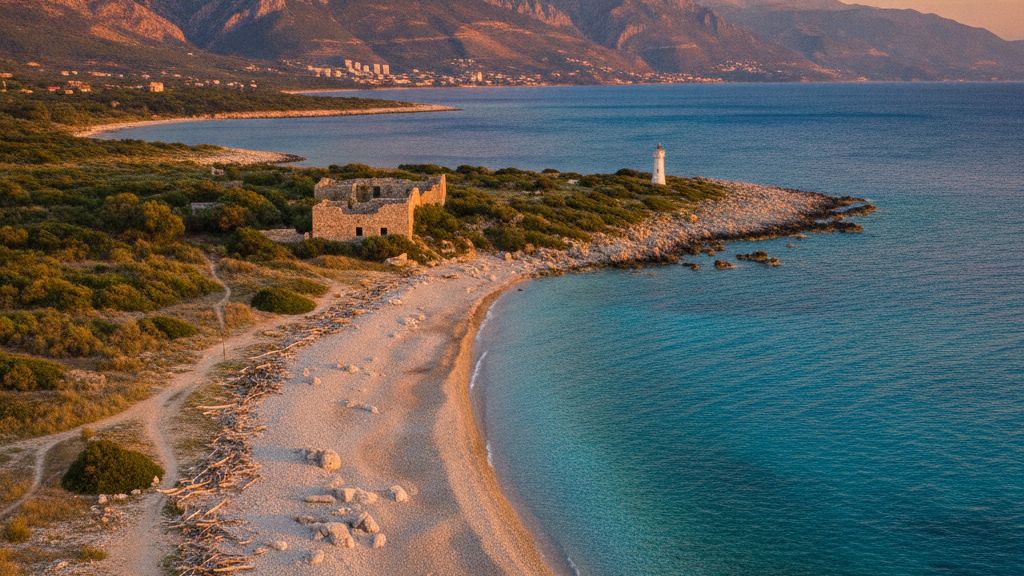
Albania is bordered by two distinct seas - the Adriatic Sea to the northwest and the Ionian Sea to the southwest. Together, these Mediterranean waters create a 476-kilometer coastline that remains one of Europe's most unspoiled coastal destinations. The transition between the two seas occurs near the port city of Vlora, where the Strait of Otranto connects the Adriatic basin with the deeper Ionian waters.
This geographical position makes Albania unique in the Balkans. While neighboring Montenegro enjoys only Adriatic shores and Greece primarily faces the Ionian and Aegean, Albania benefits from both maritime environments. The Adriatic coast from the border town of Velipoja down to Vlora offers broader beaches and gentler topography, while the Ionian stretch from Vlora to the Greek border at Konispol features dramatic cliffs, hidden coves, and the celebrated Albanian Riviera.
The Geography of Albania's Two Seas
The Adriatic Sea along Albania's northern coast extends from the Buna River delta near Shkodra to the Bay of Vlora. This section encompasses major port cities including Durres - Albania's primary commercial harbor located 39 km west of Tirana - and the ancient coastal settlement of Apollonia. The Adriatic coastline here is characterized by sandy and mixed sand-gravel beaches, with relatively shallow nearshore waters that warm quickly in summer months.
The Ionian Sea begins south of Vlora and continues 175 km to the Vivari Channel near Butrint. This is where Albania's most dramatic coastal scenery unfolds. The Ceraunian Mountains descend directly into the sea between Palasa and Himara, creating a landscape of vertical limestone faces, pine-forested slopes, and turquoise bays. The Ionian waters here are notably deeper and clearer than the Adriatic, with visibility often exceeding 20 meters during calm summer conditions.
The Strait of Otranto, which marks the division between these two seas, is only 72 km wide at its narrowest point between Albania's Karaburun Peninsula and Italy's Salento Peninsula. This relatively shallow strait - averaging 800 meters deep - serves as the gateway between the Adriatic basin and the broader Mediterranean. The strait generates distinctive current patterns that influence water temperature and marine biodiversity along Albania's southern coast.
Major Coastal Destinations Along the Albanian Seas
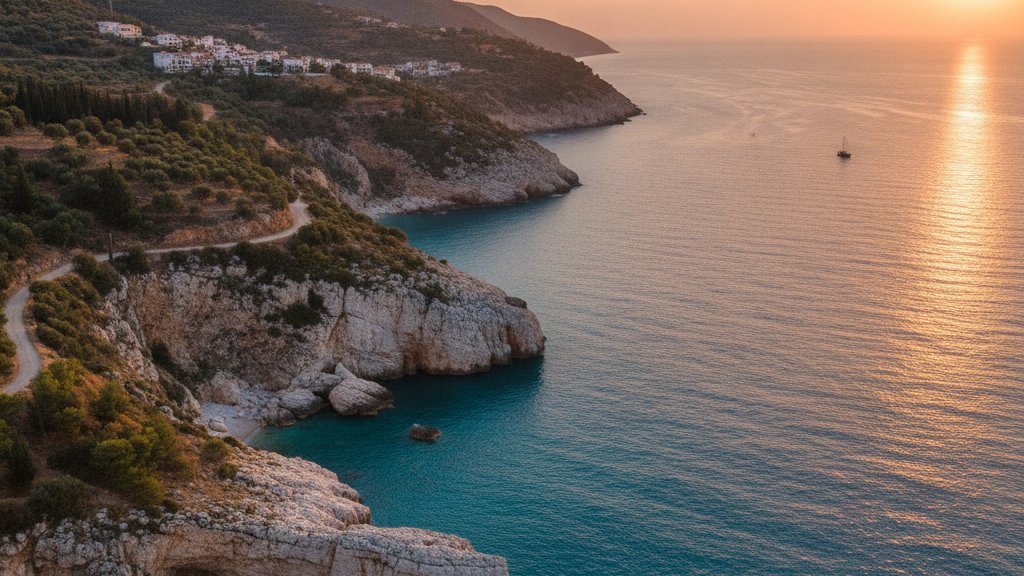
The Adriatic coast features several key destinations accessible from Tirana within two hours by car. Durres combines a functioning commercial port with public beaches and a restored Roman amphitheater dating to the 2nd century AD. During July and August, the city's beaches accommodate significant domestic and international visitor numbers, particularly from Kosovo and North Macedonia. The beach resort towns of Golem and Shengjin further north offer more relaxed environments with family-oriented facilities.
The Ionian coast hosts Albania's most internationally recognized beach destinations. Saranda, located 14 km north of the Greek border, serves as the gateway to the Ksamil Islands - four small limestone formations surrounded by shallow, transparent waters. The town itself provides ferry connections to Corfu Island, making it a practical base for visitors combining Greek islands with Albanian coastal exploration. Water temperature at Ksamil averages 26 degrees Celsius in August.
Between Vlora and Saranda, the Llogara Pass on road SH8 climbs to 1027 meters before descending to the Ionian shore near Palasa Beach. This stretch encompasses Dhermi - a village built on terraced slopes above three separate beach areas - and Jale Beach, known for its pebble shoreline and beach camping facilities. The drive from Vlora to Saranda requires approximately three hours, with multiple viewpoint stops recommended for photography and route planning.
Planning to explore Albania's diverse coastline? Rent a car in Saranda to access hidden beaches and coastal villages along the Ionian Sea that public transport cannot reach. Our local rental partners provide vehicles suitable for both coastal highways and mountain pass roads.
Seasonal Patterns and Water Conditions
The Albanian seas follow a Mediterranean climate pattern with distinct seasonal variations. Water temperature ranges from 13-15 degrees Celsius in February to 25-27 degrees in August along the Ionian coast. The Adriatic waters near Durres tend to warm slightly earlier in spring due to shallower depths and broader continental shelf exposure. Swimming season effectively runs from late May through early October, with July and August experiencing the highest visitor concentrations.
Wind patterns significantly affect coastal conditions. The summer Maestral wind - a northwesterly breeze arriving around midday - provides natural cooling during peak heat but can generate moderate waves on west-facing Ionian beaches like Dhermi and Himara. The autumn and winter months occasionally bring the Sirocco, a south-southeasterly wind that raises temperatures and can transport Saharan dust particles across the Mediterranean. These conditions typically last 24-48 hours.
Precipitation along the coast is concentrated between November and March, with Saranda receiving approximately 1,100 mm annually compared to 1,400 mm in Durres. The summer months from June through August are characterized by consistent sunshine, minimal rainfall, and stable high-pressure systems. This reliability makes coastal route planning straightforward during peak season, though inland mountain areas can experience afternoon thunderstorms even in July.
Marine Biodiversity and Fishing Heritage
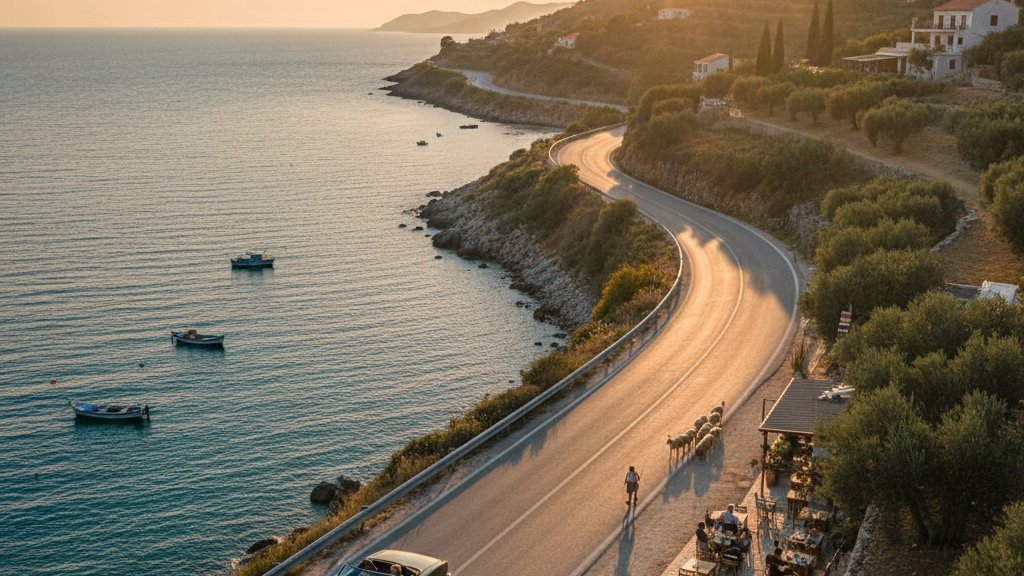
The Albanian seas support diverse marine ecosystems adapted to both Adriatic and Ionian conditions. The northern Adriatic coast provides nursery habitat for European anchovy and sardine populations that migrate seasonally along the eastern Mediterranean coastline. These pelagic species form the foundation of Albania's traditional fishing industry, with Durres and Vlora hosting the largest commercial fishing fleets. Annual catch volumes have stabilized around 8,000 tons following EU-aligned sustainability regulations introduced in 2020.
The Ionian waters host different species adapted to greater depths and clearer conditions. Grouper, dentex, and sea bream inhabit rocky reef environments around the Karaburun Peninsula and near the Ksamil Islands. These areas also support populations of octopus and cuttlefish targeted by small-scale fishermen using traditional pot methods. The deeper offshore waters occasionally yield Atlantic bluefin tuna during spring and autumn migration periods, though directed tuna fishing remains limited compared to Italian and Greek operations.
The Karaburun-Sazan Marine Park, established in 2010 as Albania's first marine protected area, encompasses 125 square kilometers of Ionian coastline and offshore waters. The park protects Mediterranean monk seal habitat - though sightings remain rare - and serves as a reference area for marine research. Access to certain zones within the park is restricted seasonally to minimize disturbance during critical breeding periods for seabirds and marine mammals.
Coastal Transportation and Maritime Connections
Albania's ports provide essential links to Italy and Greece. The Durres-Bari ferry route operates year-round with daily departures during summer months, covering the 200 km crossing in approximately eight hours. Multiple operators including Adria Ferries and European Seaways provide both passenger and vehicle transport, making this the primary route for travelers bringing their own cars from western Europe. Advanced booking is essential during July and August when capacity fills quickly.
Vlora port handles a combination of commercial cargo and seasonal passenger traffic to Italy's Brindisi. The crossing takes approximately six hours, offering an alternative to the busier Durres route. Saranda port operates frequent ferry connections to Corfu throughout summer, with crossing times under 40 minutes. This route serves day-trippers as well as travelers continuing to other Greek islands via Corfu's ferry network. Note that passport control procedures apply despite Albania and Greece sharing Mediterranean waters.
The coastal road SH8 connects all major settlements from Vlora to Saranda, though the section crossing Llogara Pass requires careful driving due to sharp curves and occasional rockfall during winter months. Road surface quality has improved significantly since 2020, with the final unpaved sections near Borsh now asphalted. Renting a car in Vlora provides flexibility for exploring isolated beaches like Gjipe and Bunec that remain inaccessible by public transport. Journey time from Vlora to Saranda is approximately 2.5 hours without extended stops.
| Coastal Section | Sea | Distance from Tirana Airport (TIA) | Typical Beach Type | Best Season |
|---|---|---|---|---|
| Velipoja - Shengjin | Adriatic | 95-120 km (via SH1) | Sandy | July - August |
| Durres - Golem | Adriatic | 35-45 km (via A1) | Sandy | June - September |
| Vlora | Adriatic/Ionian transition | 147 km (via SH4/A2) | Mixed sand-pebble | June - September |
| Llogara - Himara | Ionian | 215-245 km (via SH8) | Pebble, rocky coves | May - October |
| Saranda - Ksamil | Ionian | 284 km (via SH4/SH8) | Sandy, shallow bays | May - October |
Practical Considerations for Coastal Visitors
Beach facilities vary significantly between developed resort areas and isolated coves. Durres and Saranda offer comprehensive services including sunbed rentals, beachfront restaurants, and water sports operators. Prices for two sunbeds and an umbrella typically range from 1,000-1,500 leke (8-13 EUR) depending on location and season. In contrast, beaches like Gjipe accessed by hiking trail or small boat remain completely undeveloped - visitors must bring all supplies including drinking water and sun protection.
Parking near popular beaches becomes challenging during peak season. Saranda's main beach area has paid parking zones charging 200 leke per day, while Ksamil beach parking often fills by 10:00 in July and August. Arriving before 09:00 or after 17:00 significantly improves parking availability. Some smaller beach access points along SH8 between Vlora and Himara offer informal roadside parking, though vehicles must not obstruct traffic on narrow coastal sections.
Mobile network coverage is reliable along the main coastal highway and in all towns, but isolated cove beaches may have weak or no signal. The Albanian Mobile and Vodafone Albania networks provide the most consistent coverage. Emergency services can be reached via 112 throughout the coastal region, though response times to remote locations will naturally be longer than urban areas. The nearest medical facilities with 24-hour emergency capability are located in Durres, Vlora, and Saranda.
FAQ
What is the difference between Albania's Adriatic and Ionian coasts?
The Adriatic coast from Velipoja to Vlora features broader, sandier beaches with gentler topography and slightly cloudier water due to river sediment input. The Ionian coast from Vlora to Saranda offers dramatically clear water, pebble beaches nestled between limestone cliffs, and more secluded cove environments. Water visibility is noticeably higher on the Ionian side, often exceeding 15-20 meters. Both seas reach similar summer temperatures of 25-27 degrees Celsius, though the Adriatic warms slightly earlier in spring due to shallower depths.
Can you swim in the Albanian seas year-round?
Swimming is comfortable from late May through early October when water temperatures exceed 20 degrees Celsius. July and August provide optimal conditions with temperatures of 25-27 degrees. While hardy swimmers do enter the water in April and November, temperatures of 16-18 degrees limit swim duration. Winter swimming from December through March is practiced by local enthusiasts but water temperatures of 13-15 degrees make it unsuitable for typical beach recreation. The Ionian coast around Saranda retains warmth slightly longer into autumn compared to the northern Adriatic.
Which Albanian beaches are best for families with children?
The northern Adriatic beaches between Durres and Golem offer the most family-friendly conditions with gently sloping sandy entrances, shallow nearshore zones, and comprehensive facilities including restaurants and shade structures. Ksamil in the south provides exceptionally clear, shallow water around the small islands but can become crowded in peak season. The pebble beaches along the Ionian Riviera between Dhermi and Himara are less suitable for young children due to steeper shore profiles and larger stones, though older children typically enjoy the clearer water for snorkeling activities.
How far is Tirana from the nearest beach?
Durres Beach is 39 km from Tirana International Airport Nene Tereza (TIA) and approximately 36 km from central Tirana. The drive via highway A1 takes 40-50 minutes depending on traffic conditions. This makes Durres the most accessible coastal option for short beach visits from the capital. For superior water clarity and less development, the Ionian coast near Himara requires 215 km from TIA and approximately three hours driving time via SH4 and SH8. Many visitors combine beach time with overnight stays in coastal towns rather than day-tripping from Tirana.
Are there dangerous marine animals in Albanian seas?
The Albanian seas contain no dangerous shark species and serious marine animal incidents are extremely rare. The most common concern is jellyfish, particularly the Pelagia noctiluca species which appears in cycles typically during August when water temperatures peak. Stings cause temporary discomfort but are not medically serious for most people. Sea urchins inhabit rocky areas along the Ionian coast - waterproof footwear prevents stepping incidents. Weever fish buried in sandy shallows can deliver painful stings if stepped on, though encounters are infrequent. Standard precautions include wearing water shoes on rocky or sandy bottoms and avoiding jellyfish aggregations visible from shore.

Comments (14)
"Wooohoooo! I just found out that Albania boasts the stunningly beautiful Adriatic Sea!! Can't wait to plan my next beach holiday there!"
Mila is a great choice! Have a great holiday!
The Adriatic Sea borders Albania.
Not only the Adriatic Sea washes the shores of Albania, but also the Ionian Sea.
Oh my gosh, I just found out that Albania has access to the beautiful Adriatic Sea! I can't believe I never knew this before. I mean, Albania already had so much going for it with its gorgeous landscapes and rich history, but now it has even more to offer. I can't wait to plan a trip and soak up some sun on the Albanian coast. The Adriatic Sea is known for its crystal clear waters and stunning beaches, so I'll definitely be packing my swimsuit. Albania, here I come!
The beaches of Albania are waiting for you )
OMG, did you know that Albania has access to the beautiful Adriatic Sea?! This is amazing news for anyone planning a beach vacation, as the Adriatic is known for its clear turquoise water and stunning coastline. I can't wait to book my trip and explore all the amazing beaches and hidden coves that Albania has to offer. Plus, with the country's rich history and culture, there's sure to be plenty of fascinating sights and experiences to enjoy. Albania, here I come!
Yes, Albania's coastline along the Adriatic Sea is indeed a beautiful destination for a beach vacation. With crystal clear waters and picturesque scenery, it's no wonder that it's becoming a popular tourist spot. And with Albania's unique blend of history and culture, visitors can have a truly unforgettable experience. Have a great trip!
I just want to express my gratitude for the wealth of information provided on this website, especially regarding the sea in Albania. As someone who is fascinated by geography and the natural beauty of different parts of the world, I found the detailed descriptions and stunning photos of the Ionian Sea in Albania to be a true treasure trove. It's clear that the authors of this website are passionate about this topic, and I'm so glad they shared their knowledge and insights with the world. Thank you for enriching my understanding of this fascinating country and its stunning landscapes!
Thank you for your kind words! We're thrilled to hear that you found our website informative and helpful. The Ionian Sea is truly a stunning part of Albania, and we're glad that we could share our passion and knowledge about it with you. We hope that you have a wonderful time exploring Albania and all its natural wonders.
Albania is a small country located in southeastern Europe, bordered by the Adriatic and Ionian seas. The Ionian Sea is the sea that lies to the southwest of Albania, while the Adriatic Sea lies to the northwest. Both seas are known for their idyllic coastlines, stunning waterfronts, and crystal-clear waters that provide for a wide range of adventurous activities such as swimming, snorkeling, and scuba diving. Albania's strategic location on the shores of these seas has made it a popular tourist destination, drawing visitors from all over the world.
thanks for your commetn man!
Thank you for providing such valuable information about Albania's sea. As a traveler myself, I find it essential to have access to accurate and comprehensive data. Your page is concise, informative, and very well-structured, making it easy for me to learn about the country's beautiful coastline. Your dedication to delivering quality content is evident, and I appreciate everything that you do to make planning a trip to Albania an enjoyable and stress-free experience. Keep up the fantastic work!
Yeah, you right =)