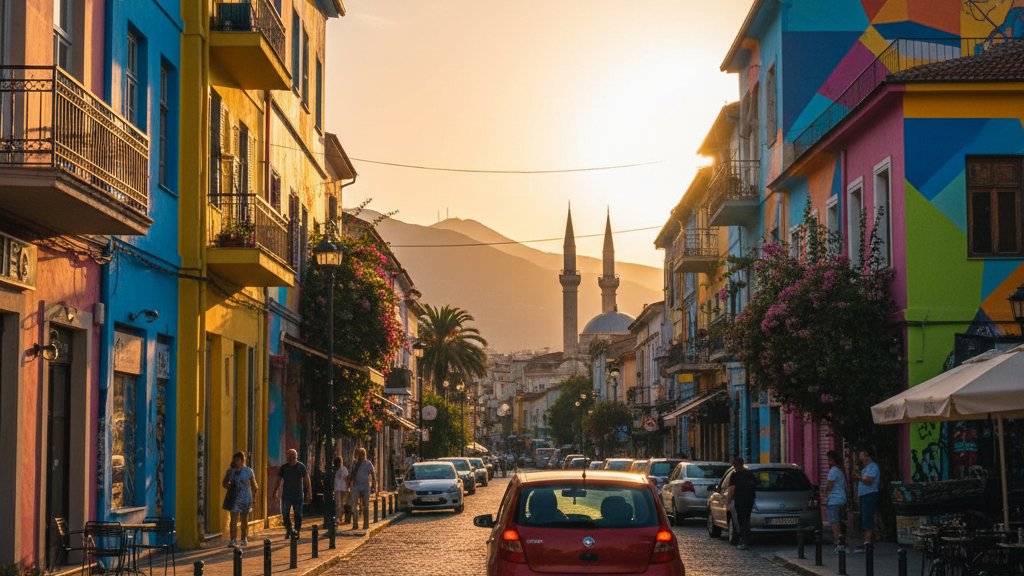
Compact, fuel-efficient vehicles from local Albanian rental companies at Tirana Airport, Durres, Saranda, and 18+ other locations. Economy cars combine low rental rates with practical features for city exploration and coastal drives.
Search economy class vehicles at your preferred pickup location. Results show total rental price with all mandatory fees included.
Manual transmission, 4-5 seats, front-wheel drive. Ideal for couples and small families.
Petrol engines optimized for efficiency. Diesel options available from select providers for longer trips.
Tirana streets, Durres-Vlora coastal road, Saranda town center. Not recommended for mountain gravel tracks.
Trunk space approximately 250-300 liters. Sufficient for weekend trips and beach holidays.
Small dimensions help in tight Tirana parking zones and narrow streets of Berat or Gjirokaster.
High demand during summer peak. Book 4-6 weeks ahead for coastal pickups in July and August.
Select Tirana Airport TIA or city center location, dates, and filter for economy class. Widget displays available cars from multiple local companies.
Review fuel type, transmission, air conditioning, and total price. Check if unlimited mileage is included or if daily limits apply.
Pay the advance by card through secure checkout. You will receive a voucher with rental company contact and final pickup instructions.
Present your voucher, driving licence valid 1+ years, passport, and credit or debit card at the rental desk. Sign contract and inspect vehicle before driving.
Economy cars have the most competitive daily rates among all classes. Combined with 5-6 liter fuel consumption, total travel expenses remain modest even on longer itineraries.
Narrow streets in Tirana Blloku district, tight parking near Skanderbeg Square, and hillside roads in Kruja become manageable with a compact wheelbase and responsive steering.
The paved SH8 coastal highway from Vlora to Saranda, the A1 motorway to Durres, and access roads to Butrint National Park are all well within economy car capabilities.
Standard third-party liability insurance is mandatory. Many providers include basic roadside assistance with contact numbers in the rental agreement for flat tires or mechanical issues.
Economy class availability extends to Tirana city offices, Tirana Airport TIA terminals, Durres port area, Vlora seafront, Saranda town, and Shkodra near Lake Skadar.
Most economy contracts include unlimited mileage on weekly bookings, clear fuel policy (full-to-full), and transparent deposit block on the card at pickup, released after return inspection.
| Road Type | Economy Car Suitability | Driving Notes |
|---|---|---|
| Tirana city streets | Excellent | Compact size ideal for narrow lanes and parallel parking. AC essential in summer heat. |
| A1 motorway to Durres | Excellent | Smooth asphalt, 90 km/h limit. Economy engines handle overtaking comfortably on flat terrain. |
| SH8 coastal road Vlora-Saranda | Very Good | Paved two-lane road with sea views. Some curves near Llogara Pass require moderate speed. |
| SH1 north to Shkodra | Very Good | Well-maintained route through plains. Fuel stops available every 40-50 km. |
| Gravel access to Theth or Valbona | Not Recommended | Low ground clearance and front-wheel drive struggle on steep rocky sections. Choose SUV for mountain villages. |
| Berat and Gjirokaster old town access | Good | Narrow cobblestone streets require slow driving. Park outside historic center and walk when permitted. |
Local providers in Albania maintain fleets of European compact cars known for reliability and parts availability. The Fiat Panda dominates the economy segment with its nimble handling on Tirana's stop-and-go traffic and affordable maintenance. Volkswagen Polo offers slightly more interior space and a refined ride quality on highways, preferred by travelers planning multi-day coastal tours. Hyundai i10 and Kia Picanto appear in younger fleets with modern infotainment and better warranty coverage. All models feature manual five-speed gearboxes as standard; automatic transmission economy cars exist but command higher rates and limited stock. Air conditioning is included in most 2020+ model year vehicles, critical for June-September temperatures exceeding 30 degrees Celsius in coastal areas. Trunk capacity varies from 230 liters in the Fiat Panda to 280 liters in the VW Polo, sufficient for two roller suitcases and a backpack but tight for four passengers with full luggage.
The country's road network divides into well-paved arteries and rougher secondary routes. Economy cars perform best on the former. The 38 km A1 motorway linking Tirana to Durres offers dual lanes and smooth asphalt where even a small engine maintains highway speeds comfortably. The reconstructed SH4 from Tirana to Elbasan cuts through the Erzen Valley with gentle gradients suitable for compact cars. Coastal driving from Vlora south to Ksamil follows the SH8, a scenic two-lane road hugging the Ionian Sea with occasional switchbacks near Llogara National Park at 1027 meters elevation - economy cars handle the climb in second gear without strain. Urban exploration in Tirana, Durres, Shkodra, Vlora, and Saranda benefits from small dimensions: parallel parking on Bulevardi Deshmoret e Kombit in Tirana, navigating the port area in Durres, or squeezing through Saranda's waterfront promenade during August crowds becomes manageable. The UNESCO sites of Berat and Gjirokaster have paved access roads though the cobblestone lanes inside the castle districts are better explored on foot after parking outside.
Where economy cars struggle: unpaved mountain access. The gravel road from Shkodra to Theth in the Albanian Alps requires 25 km of rocky surface with stream crossings, better suited to four-wheel-drive SUVs. Similarly, reaching Valbona Valley or the remote monasteries near Permet demands higher ground clearance than a Fiat Panda provides. Winter driving above 800 meters between December and March may encounter snow and ice; while not prohibited, economy cars lack the traction and weight distribution of larger vehicles. Fuel efficiency shines on flat and rolling terrain but expect consumption to rise to 7-8 liters per 100 km when climbing mountain passes or driving extended periods in Tirana traffic jams.
Booking an economy car through carrentalinalbania.com requires an advance payment by bank card during online checkout. This advance is a portion of the total rental cost, not a refundable deposit. Cash is not accepted for the advance. The remaining rental amount is settled at the pickup desk with the local company, typically by the same card used for booking or another credit/debit card in the renter's name.
At pickup, the rental company will place a refundable security block on your card. This block amount varies by provider and contract but serves as coverage for potential damages, traffic fines, or fuel discrepancies. The block is released 7-14 days after the car is returned in the agreed condition. Some economy car offers qualify as no-deposit rentals, where no security block is required - these are clearly marked during booking and remain subject to the rental company's final approval and terms stated in the voucher.
To collect an economy car in Albania, you must present a valid driving licence held for at least one year. EU and EEA licences are accepted without additional documents. Drivers with licences from the United States, Canada, Australia, New Zealand, and most European countries outside the EU should carry an International Driving Permit alongside their national licence - this is a translation document, not a replacement. Your passport or national ID card serves as proof of identity. The rental company requires a credit or debit card in the driver's name for the security block and any additional payments. Some providers accept debit cards for the block, but credit cards offer smoother processing. If you prefer rental without a credit card, check availability during booking as this option is limited.
Economy cars like the Fiat Panda or VW Polo consume approximately 5.5-6.5 liters per 100 km on the Tirana-Saranda route via SH8, which covers roughly 280 km. Most economy models run on unleaded petrol (benzine), widely available at stations in Vlora, Himara, and Saranda. Diesel economy cars exist but are less common. Expect one refueling stop midway; fuel prices hover around 200 lek per liter as of 2026. The coastal road has moderate elevation changes near Llogara Pass, slightly increasing consumption compared to flat highway driving.
Economy cars are not suitable for the gravel and rocky mountain access roads leading to Theth from Shkodra or Valbona from Fierza. These routes involve 20-30 km of uneven surfaces, loose stones, and occasional water crossings that require high ground clearance and preferably four-wheel drive. Attempting these roads in a Fiat Panda or similar compact risks undercarriage damage and violates most rental agreements. For Albanian Alps destinations, book an SUV or 4x4 vehicle. Economy cars handle the paved roads to Shkodra and other lowland cities perfectly well.
Tirana city center has metered on-street parking in the Blloku district and near Skanderbeg Square, costing 40-100 lek per hour depending on zone, payable via mobile app or parking attendants. Blue zone markings indicate paid areas; white markings are free but scarce. An economy car's compact size simplifies finding spots in tight spaces. Avoid parking overnight on main boulevards as street cleaning schedules cause towing. Secure hotel parking or paid lots near the National Museum cost 300-500 lek for 24 hours. Durres and Saranda have similar metered systems; smaller towns like Berat have free street parking outside the castle area.
Most Albanian rental companies operate a full-to-full fuel policy: you receive the economy car with a full tank and must return it full. Locate a fuel station within 5 km of the return location (Tirana Airport TIA has a Kastrati petrol station 3 km away on SH60). Keep the final fuel receipt as proof. If you return the car without refueling, the rental company charges a refueling fee plus the cost of fuel at a higher rate than pump price, typically 1.5-2 times standard cost. Some providers offer a prepaid fuel option where you pay for a full tank upfront and return the car empty, but this rarely provides value as you pay for unused fuel.
All Albanian rentals include mandatory third-party liability insurance covering damage to other vehicles and property. This does not cover damage to your rental car. Most economy packages include Collision Damage Waiver (CDW) with an excess amount, meaning you pay the first portion of repair costs (often 300-800 EUR equivalent) in case of an accident. For a coastal trip on paved roads like the SH8 from Vlora to Saranda, standard CDW is usually sufficient. Consider Super CDW or theft protection if you plan to leave the car unattended in remote beach parking overnight or want zero excess liability. Glass, tires, and undercarriage damage may be excluded; clarify coverage in the voucher before accepting the car.
August is peak season for Albanian tourism, especially along the Ionian coast. Economy car availability tightens, and rental rates rise by 30-50 percent compared to May or September shoulder months. Book 6-8 weeks ahead for August pickups to secure a vehicle and avoid premium last-minute pricing. If your dates are flexible, traveling in May, June, or September offers better rates, fewer crowds on roads and beaches, and easier reservation process. October through April is low season with the most competitive pricing, though some coastal rental offices reduce hours or close in winter. Early booking always locks better rates regardless of season.
Most Albanian rental companies set a minimum age of 21 for economy cars, though some require 23 depending on the provider. Drivers aged 21-24 often face a young driver surcharge of 5-10 EUR per day, added at pickup. Maximum age limits are less common but some companies cap drivers at 70 or 75 years; confirm during booking if you are over 65. The voucher states any age-related fees. Additional drivers must meet the same age and licence requirements; adding a second driver costs 3-5 EUR per day in most cases. All drivers must be present at pickup to present their documents and sign the rental agreement.
Albania experiences a Mediterranean climate with hot dry summers and mild wet winters, influencing both rental demand and driving conditions. June through September sees peak tourist arrivals, especially along the coast from Vlora to Ksamil. Economy car availability shrinks during July and August; booking 6-8 weeks ahead is advisable. Summer temperatures in Tirana and coastal cities reach 32-36 degrees Celsius, making air conditioning non-negotiable - verify AC functionality during the pickup inspection. Parking in direct sun for hours can turn a compact car interior into an oven; use sunshades and crack windows slightly when parked. Coastal roads like the SH8 become congested near popular beaches on weekends; plan departures early morning or late afternoon to avoid traffic.
April, May, September, and October offer pleasant temperatures (18-26 degrees), reduced rental rates, and less competition for vehicles. Wildflowers bloom in April across the countryside; September brings calm seas and comfortable beach weather without the August crowds. Winter months (December-February) see minimal tourist traffic, resulting in the lowest rental prices of the year. However, mountain passes above 800 meters may experience snow, and rural roads can be wet and slippery. Economy cars handle winter conditions on main routes like the A1 and SH8 but struggle in ice or deep snow. Daylight hours shorten to 9-10 hours in December, requiring earlier return to accommodation. Regardless of season, inspect tire tread depth at pickup - worn tires compromise safety on wet roads or mountain curves.
Albania drives on the right side of the road with speed limits of 40 km/h in residential zones, 80-90 km/h on main roads, and 110 km/h on the A1 motorway. Seatbelts are mandatory for all passengers. Headlights must be on at all times while driving, even in daylight - this applies year-round. Mobile phone use is prohibited without hands-free devices; police conduct spot checks and issue fines. Blood alcohol limit is 0.1 milligrams per milliliter, lower than many Western countries - do not drink and drive. Parking regulations are enforced in Tirana, Durres, and major cities; blue zones require payment via attendants or mobile app. Yellow curbs indicate no parking; white curbs are usually free but competitive.
Fuel stations are plentiful on highways and in cities, with brands like Kastrati, Tamoil, and Shell operating networks. Most stations are full-service; attendants pump fuel and accept cash lek or cards. Keep small denomination lek notes for tolls (the Kardhiq-Delvina tunnel charges 200 lek) and parking fees. Albanian drivers can be assertive; expect lane changes without signaling and close following distances. Maintain defensive driving habits, especially at unmarked rural intersections where right-of-way is ambiguous. Livestock occasionally wander onto roads outside cities - stay alert in agricultural areas. If you encounter a police checkpoint, slow down and present your licence, passport, and rental documents calmly. Officers may speak limited English; showing the rental voucher clarifies you are a tourist.
For road trip inspiration and practical driving advice, explore our guide on what to know before renting a car in Albania, which covers insurance nuances, fuel policies, and common first-timer questions.
Compare real-time offers from local rental companies at Tirana Airport, city centers, and coastal towns. Economy cars deliver budget-friendly mobility on Albania's paved roads, from urban exploration to scenic coastal drives.
Search Economy Cars Now