Your Essential Guide to Beach Resorts in Albania
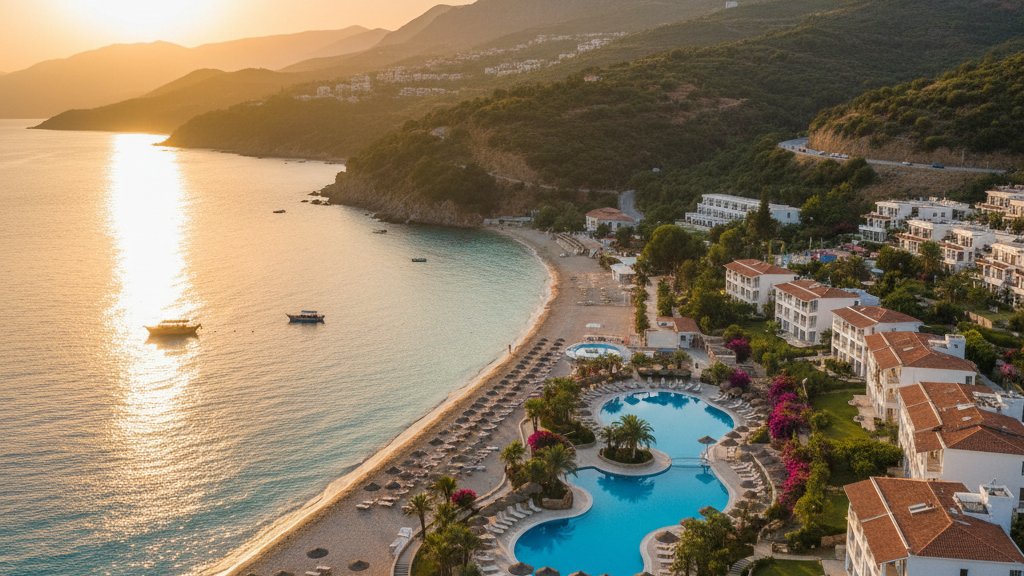
Albania's 362-kilometer coastline along the Adriatic and Ionian Seas transforms from a regional secret into a recognized Mediterranean destination each summer season. Beach resorts cluster around Saranda, Durres, Vlora, Himara, and Ksamil, offering everything from family-friendly properties with shallow swimming areas to boutique hotels perched on hillsides above secluded coves. This guide covers the practical considerations for selecting and reaching Albanian coastal resorts, the activities and facilities they offer, and the cultural and natural sites within day-trip distance of major beach zones.
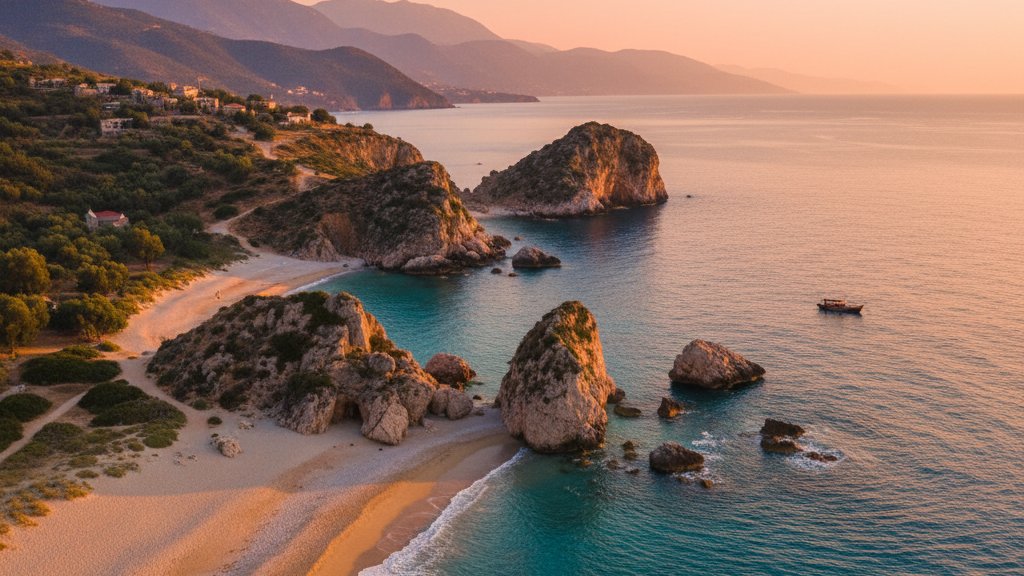
The Albanian coastline divides into two distinct characters. The northern Adriatic section from the Montenegro border to Vlora features wider sandy beaches, calmer waters, and flatter terrain. The southern Ionian coast from Vlora through the Albanian Riviera to the Greek border presents dramatic mountain-to-sea topography, pebble and mixed-sand beaches, and deeper turquoise waters. Resort development reflects these differences: northern properties tend toward larger hotel complexes with extensive grounds, while southern resorts often occupy smaller footprints with terraced layouts following the steep coastal contours.
Understanding Albania's Coastal Resort Landscape
Albanian beach resorts operate primarily from May through September, with July and August representing peak season when advance booking becomes essential and rates reach their highest levels. June and September offer a compelling middle ground: sea temperatures remain comfortable at 22-24 degrees Celsius, facilities operate at full capacity, yet occupancy rates drop noticeably from the summer peak. Properties range from budget guesthouses 100-200 meters inland from the beach to premium beachfront hotels with private beach sections, multiple pools, and full-service spas.
The resort infrastructure has expanded significantly since 2015. Major properties now provide international-standard amenities including air-conditioned rooms with sea-view balconies, multiple restaurant concepts serving Albanian and international cuisine, dedicated children's areas with supervised activities, and evening entertainment programs. Smaller boutique properties emphasize personalized service, direct beach access, and integration with the surrounding landscape rather than extensive facilities. Understanding this spectrum helps match expectations to available options.
Transportation to coastal resorts typically routes through Tirana International Airport (TIA), located 17 km northwest of the capital. From TIA, rental cars provide the most flexible option for reaching coastal destinations and exploring multiple resort areas during a single trip. The drive from TIA to Durres takes 35-40 minutes via the A1 highway, to Vlora approximately 2 hours via SH4, to Saranda 4-4.5 hours via SH4 and SH8, and to Himara 3 hours following the coastal SH8. Public buses connect Tirana to all major coastal cities, though schedules become limited for smaller resort villages.
Selecting Your Ideal Albanian Beach Resort
Saranda serves as the primary resort hub in southern Albania, positioned 12 km north of the Greek border on a wide bay facing Corfu. The city hosts 15+ beachfront hotels ranging from budget to four-star properties, with the main beach extending 800 meters along the waterfront promenade. Saranda's advantages include proximity to Butrint National Park (20 km south), the Blue Eye spring (22 km east), and the traditional stone villages of the Riviera highlands. The beach itself consists of mixed pebbles and imported sand, with designated swimming areas marked by buoys. Rental cars in Saranda enable exploration of nearby Ksamil beaches (15 km south) and the coastal villages between Saranda and Himara.
Ksamil represents Albania's most photographed beach destination, positioned at the southernmost point of the coast opposite four small islands visible 100-300 meters offshore. The main Ksamil beaches feature bright white sand and shallow turquoise water, creating an appearance more associated with tropical destinations than the Mediterranean. Resort development here emphasizes smaller properties - guesthouses, family-run hotels, and rental villas - rather than large hotel complexes. The compact nature of Ksamil (the built-up area covers approximately 2 square kilometers) means most accommodations sit within 5-10 minutes' walk from the beach. Summer crowds peak in August when day-trippers from Saranda add significantly to the beach occupancy.
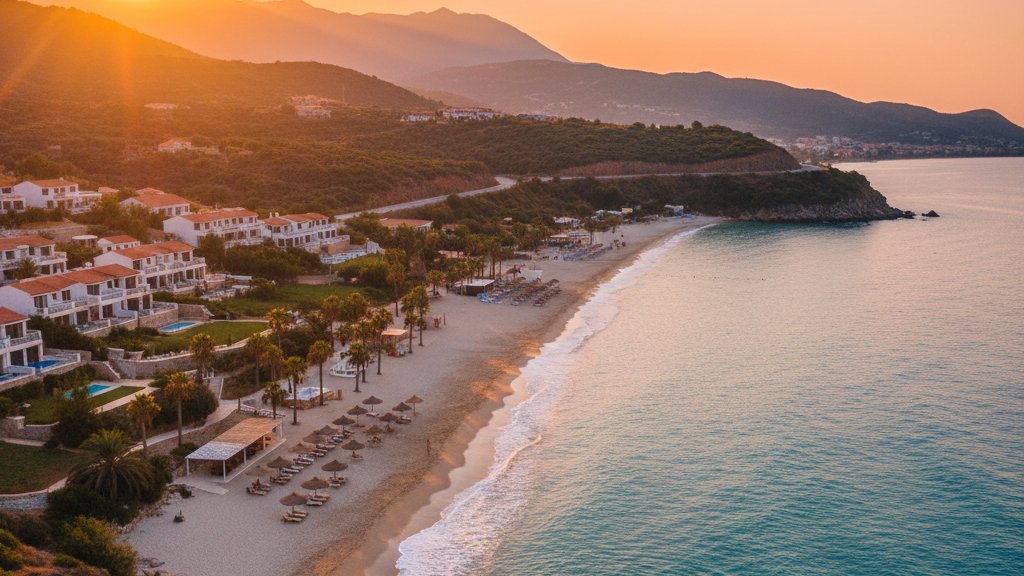
Himara occupies a hillside location on the Ionian coast 50 km south of Vlora, with properties distributed between the old hilltop village and the newer beachfront development. The Himara area encompasses several distinct beach sections: Livadhi beach extends 1.2 km as the main resort zone, Spille beach offers a quieter pebble alternative 2 km south, and Filikuri beach serves the northern approach. Accommodation options range from hillside guesthouses with panoramic views requiring a 10-minute walk downhill to the beach, to modern hotels directly on Livadhi beach with private beach sections. The hillside setting creates natural ventilation and cooler evening temperatures compared to sea-level properties.
Durres serves Albania's largest beach resort concentration, with development extending 10 km north and south from the city center along a continuous sandy beach. The proximity to Tirana (39 km) and the port's ferry connections to Italy position Durres as both a standalone beach destination and a convenient coastal stop for those arriving by ship. Rental cars from Durres facilitate exploration of the Adriatic coast and access to Tirana's restaurants and cultural sites. The northern Durres beach section from Plepa to Currila features newer resort developments with larger properties, while the southern stretch toward Golem presents a mix of hotel sizes and price points. The Adriatic water here reaches depth gradually, creating extensive shallow areas suitable for families with young children.
Vlora anchors the transition point where Albania's Adriatic and Ionian coasts meet, with the city positioned on a bay where the two seas converge. Resort properties cluster in three main zones: the city beach extending south from the center toward the Narta Lagoon, the northern Adriatic beach toward Radhima, and the southern Ionian coast through the Llogara Pass to Himara and beyond. Car rental in Vlora enables exploration of both coastal characters within a single stay. The city beach features imported sand and developed waterfront infrastructure including the promenade with cafes and restaurants. Properties range from Soviet-era hotels undergoing renovation to contemporary beachfront developments opened since 2015.
Resort Facilities and On-Site Activities
Albanian beach resorts typically structure their offerings around all-inclusive, half-board (breakfast and dinner), or bed-and-breakfast packages. All-inclusive properties concentrate in the Durres area and northern Saranda, where larger resort complexes maintain the facilities to support comprehensive packages. These include buffet restaurants serving three meals, poolside snack bars, and designated times for alcoholic and non-alcoholic beverages. Half-board arrangements dominate in Himara and smaller resort villages, where guests take breakfast and dinner at the hotel but venture to beach bars and local restaurants for lunch and variety.
Pool facilities extend beyond simple swimming at many properties. Larger resorts operate multiple pool zones: a main pool with depths from 0.8 to 2 meters for general use, a shallow children's pool with water features, and sometimes a separate adults-only quiet pool. Aqua parks with water slides function at several Durres properties and one large Saranda resort, operating daily during July and August with shortened hours in shoulder seasons. Pool bars serve throughout the day, with sunbed areas surrounding the pools as an alternative to beach lounging.
Beach services vary significantly between properties. Beachfront hotels typically provide sunbeds and umbrellas for guests without additional charge, either on private beach sections or through arrangements with adjacent beach bars. Properties located one or two rows back from the waterfront generally do not include beach equipment, requiring guests to rent from the beach bars (typical cost: 500-800 lek per sunbed, 300-500 lek per umbrella for the day). Some upscale resorts maintain beach attendant services, delivering drinks and snacks to sunbeds, while others require guests to visit the beach bar directly.
Water sports availability concentrates at the larger beach zones. Jet ski rentals operate from beach stations in Saranda, Ksamil, Himara, Durres, and Vlora during peak season, with typical rates of 30-40 EUR for 15 minutes. Parasailing launches from specially equipped boats at Durres and Saranda beaches. Stand-up paddleboard and kayak rentals function at most resort beaches through independent operators setting up seasonal stations. Scuba diving centers operate in Saranda and Himara, offering both introductory dives from the beach (40-50 EUR) and boat trips to offshore sites including underwater archaeological features near Saranda and rock formations along the Himara coast.
Children's programs operate primarily at larger properties in Durres and northern Saranda. These typically include supervised activities from 10:00 to 12:30 and 15:00 to 17:30 for ages 4-12, incorporating pool games, simple crafts, and playground time. Evening mini-discos run 20:30-21:30 at family-oriented resorts. Teen facilities remain limited: some properties provide volleyball nets, table tennis, and organized tournaments, but dedicated teen clubs do not commonly feature. Babysitting services can be arranged through resort reception, though advance notice of 24 hours is advisable.
Dining and Culinary Experiences
Resort dining in Albania blends Mediterranean coastal cuisine with Balkan traditions. Breakfast buffets typically present both continental and cooked options: fresh bread, local honey, yogurt, seasonal fruits, cheeses, cold cuts, eggs prepared multiple ways, and often a regional specialty such as byrek (filled pastry) or tave (oven-baked dishes). Coffee service ranges from filter coffee at budget properties to espresso machines at mid-range and premium hotels.
Dinner menus emphasize seafood given the coastal location. Grilled fish - sea bream (koce), sea bass (levrek), and mullet (krapi) - appears at every resort restaurant, typically priced by weight (1200-1600 lek per 100 grams). Mussels from the Butrint Lagoon near Saranda feature in risottos, pasta dishes, and as standalone appetizers. Squid and octopus preparations vary from simple grilled with olive oil and lemon to regional stews incorporating tomatoes, peppers, and white wine. Non-seafood options include lamb slow-roasted with seasonal vegetables, beef or chicken grilled with traditional spice combinations, and vegetarian dishes featuring aubergines, courgettes, and peppers.
Albanian wine production has expanded notably since 2010, with several coastal wineries now producing internationally recognized bottles. Resort wine lists increasingly feature Albanian labels alongside familiar Italian, Greek, and French options. Raki, the traditional grape-based spirit, appears both as a digestif and in cocktail preparations. Local beers including Korca, Tirana, and Stela provide lighter alternatives.
Venturing beyond resort restaurants reveals the depth of Albanian coastal cuisine. Beach bars (called 'plazh' in Albanian) serve grilled meats, fresh salads, and seafood in informal settings directly on the sand. Traditional tavernas in the old quarters of Himara, Vlora, and Saranda's hillside neighborhoods present family recipes passed through generations. The daily fish market in Saranda (operating 07:00-13:00) allows visitors to select their own fish, which nearby restaurants will prepare for a cooking fee of 300-500 lek per kilogram.
Beyond the Beach: Regional Exploration
Butrint National Park sits 20 km south of Saranda, protecting 29 square kilometers encompassing an ancient city occupied from the 8th century BC through the medieval period. The archaeological site preserves a Greek theatre, Roman baths, Byzantine baptistery, and Venetian fortifications, all positioned on a peninsula within a coastal lagoon. UNESCO designated Butrint a World Heritage Site in 1992. The site opens daily 08:00-20:00 in summer (shorter hours off-season), with entry costing 1000 lek for adults. Walking the complete circuit requires 2-3 hours. The combination of archaeological remains and wetland habitat creates unique character: visitors may observe ancient stone foundations while herons fish in adjacent lagoon channels.
The Blue Eye (Syri i Kalter) spring emerges 30 km east of Saranda, where a deep karst source produces striking blue water at a constant 12 degrees Celsius year-round. The spring forms the source of the Bistrica River, which flows west to meet the sea near Saranda. A wooden platform allows viewing into the spring basin, where underwater explorations have documented a depth exceeding 50 meters before the main conduit angles beyond technical diving limits. The site operates with a small entrance fee (100 lek) and functions as both a natural phenomenon and a swimming spot where brave visitors can test the cold water. The access road from SH99 requires careful driving on a narrow section for the final 4 km.
Llogara National Park occupies the mountain pass where the coastal road climbs from Vlora toward Himara, reaching an elevation of 1027 meters at the summit. The park protects 1010 hectares of black pine forest on the western flank of the Ceraunian Mountains. The SH8 coastal road traverses the park, creating what many consider Albania's most scenic drive: 8 km of tight switchbacks ascending the mountain face, with viewpoints overlooking Vlora Bay to the north and the Ionian coast stretching south toward Greece. Several traditional restaurants operate at the pass, serving grilled meats and local specialties. The descent to the southern beaches presents even more dramatic views as the road hugs steep cliff faces with the sea visible far below.
Porto Palermo Castle occupies a small peninsula 9 km north of Himara, positioned to control the entrance to a natural harbor. The fortress dates from 1804-1807, constructed under Ali Pasha Tepelena's rule. The triangular fortification features walls 20 meters high with corner bastions and a central keep. Access requires a walk of approximately 15 minutes from the parking area along a causeway connecting the peninsula to the mainland. The castle interior opens to visitors (entry 200 lek), with rampart walls providing views of the bay and surrounding coastline. The Porto Palermo beach directly below the castle offers clear water and a dramatic setting, though the pebble beach and steep entry make it less suitable for young children than the sand beaches further south.
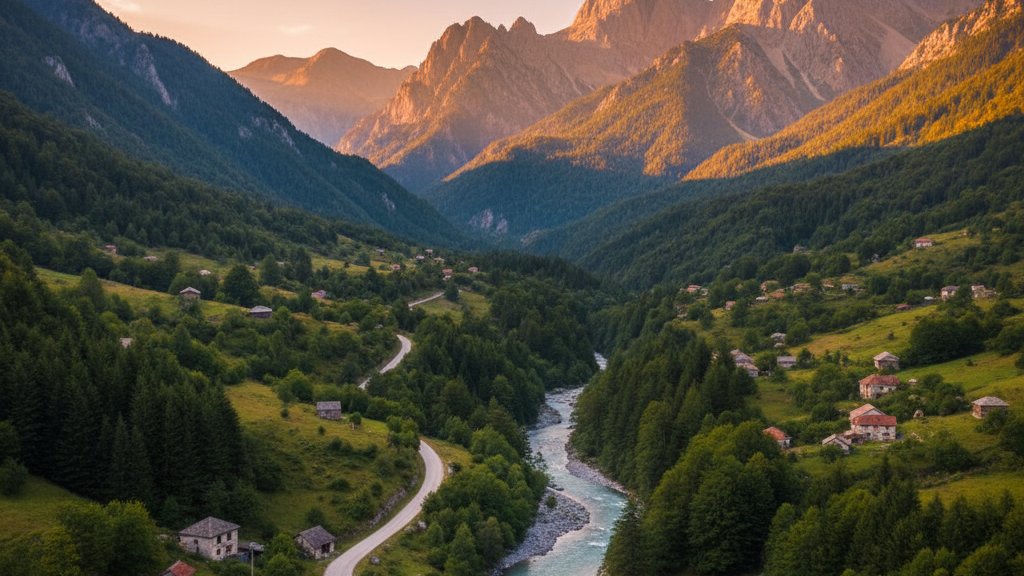
The traditional stone villages of the Himara highlands - Qeparo, Pilur, Kudhes, and Vuno - occupy mountain slopes 5-8 km inland from the coast at elevations between 350-450 meters. These settlements preserve traditional architecture: stone houses with slate roofs arranged along narrow lanes, fortified tower houses, and small Byzantine churches with frescoes. The cooler mountain climate created summer grazing areas for flocks while the coast provided winter settlements and fishing access. Today the old quarters remain partially inhabited, with some houses restored as guesthouses. Driving to these villages requires navigating steep unpaved sections for the final 1-2 km beyond the main mountain road.
Practical Considerations for Beach Resort Stays
Albanian beach resorts price their offerings in three currency units: Albanian lek (ALL), Euro (EUR), or occasionally US dollars (USD). While establishments legally must accept lek, many quote and prefer payment in Euro for advance bookings and final settlement. ATMs function in all resort towns, dispensing lek at standard exchange rates. Credit cards see acceptance at mid-range and premium properties, while budget guesthouses and local restaurants may require cash. The July-August peak season typically shows 30-40 percent higher rates than June or September, with minimum stays of 3-7 nights commonly required during this period.
Beach season officially runs May through September, though actual swimming conditions extend this window. May water temperatures reach 18-20 degrees Celsius, comfortable for active swimmers but cool for extended leisure swimming. June warms to 22-23 degrees, July and August peak at 25-27 degrees, and September maintains 23-25 degrees. October water remains swimmable at 20-21 degrees, though air temperatures drop enough that beach lounging loses appeal for most visitors. Properties operate full services June through mid-September, with reduced facilities, restaurant options, and sometimes limited hot water available in shoulder periods.
Sun protection requires attention given Albania's southern latitude (40-41 degrees north). July and August midday sun reaches intensity levels requiring factor 30-50 sunscreen reapplication every 2 hours, particularly during the first days before developing a base tan. Beach umbrellas provide essential shade, though UV exposure remains significant in reflected light from water and sand. Afternoon sea breezes moderate air temperature but can mask the ongoing UV exposure. Local pharmacies stock international sunscreen brands, though at higher prices than northern European markets - travelers should consider bringing adequate supplies.
Medical facilities in Albanian resort areas range from adequate to basic. Saranda maintains a hospital (Spitali Rajonal Sarande) with emergency services, general practitioners, and basic diagnostic equipment. Himara, Ksamil, and Vlora operate health centers (qendra shendetesore) staffed by GPs and nurses, capable of handling minor injuries, common illnesses, and providing prescriptions. Serious conditions requiring specialist intervention or advanced diagnostics may necessitate transfer to Tirana's university hospital. European Health Insurance Cards (EHIC) provide coverage for EU visitors at Albanian public facilities, though service standards may not match home countries. Travel insurance with emergency evacuation coverage provides peace of mind for extended stays.
Transportation and Beach Access
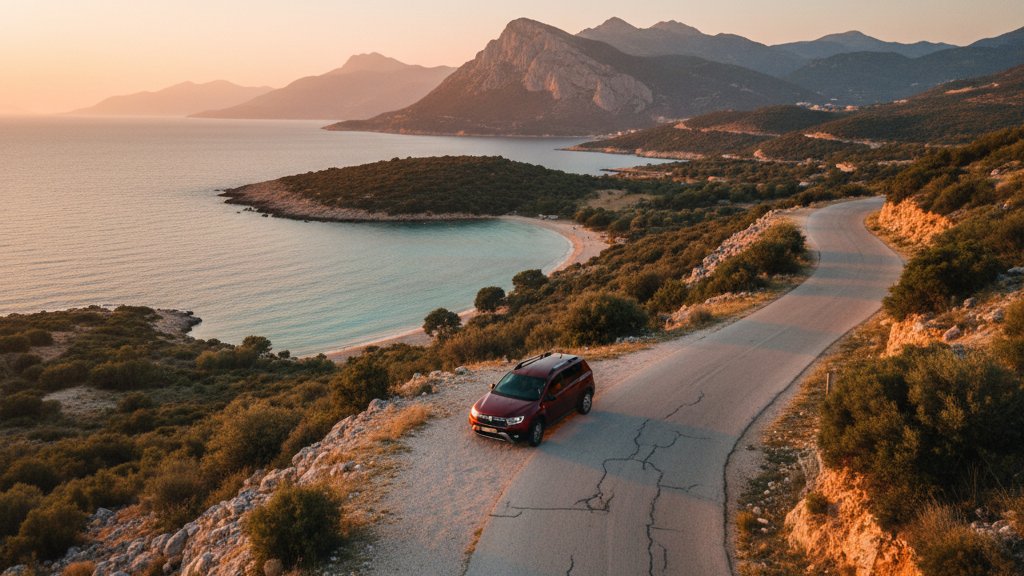
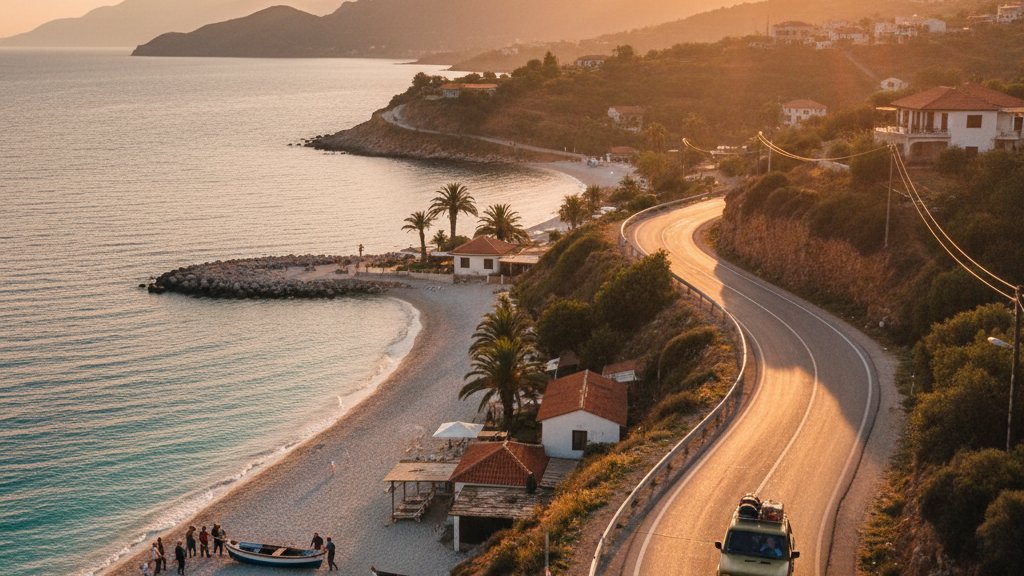
The coastal road SH8 connects Vlora through Himara to Saranda, covering 128 km of the Albanian Riviera. This route has achieved near-legendary status for dramatic scenery: sections carved into cliff faces hundreds of meters above the sea, passages through tunnels blasted from solid rock, and viewpoints overlooking the entire Ionian coast. The road surface received significant upgrading between 2018-2022, though some sections remain single-lane with passing places requiring careful attention. Summer traffic concentrates on this route, with July-August weekends creating queues at key passes. The drive from Vlora to Saranda requires 2.5-3 hours without stops, longer when pausing for photographs or meals.
Public transportation between coastal resorts operates through furgon - privately operated minibuses that depart when full rather than on fixed schedules. Furgon stations function in each major town, with vehicles announcing destinations as they prepare to depart. The flexibility suits local travel patterns but proves less convenient for tourists with luggage and specific timing needs. Fares remain modest: Saranda to Himara typically costs 500 lek, Himara to Vlora 700 lek. The informal nature means routes can change and departures become sporadic on quiet days. Rental cars from Tirana or the coastal cities themselves provide superior convenience for beach resort access and regional exploration.
Beach access varies by resort type and location. Properties with private beach sections maintain their own sunbed and umbrella setups, with access controlled through wristbands or room numbers. Public beaches operate on free access with commercial facilities provided by independent beach bars: you select your sunbed, order drinks or food, and settle the bill (which includes sunbed rental) when departing. Some premium beach bars near Ksamil and Himara require minimum spending commitments in July-August, displayed on signboards at the beach entrance. Free beach areas without facilities exist but prove challenging to locate in developed resort zones - most accessible free beach requires walking 10-15 minutes beyond the main resort clusters.
When is the best time to visit Albanian beach resorts?
June and September offer the best balance: water temperatures remain comfortable at 22-24 degrees Celsius, resort facilities operate fully, and beach occupancy drops 40-50 percent below July-August peaks. September additionally benefits from lower accommodation rates (15-25 percent below peak) while maintaining reliable weather - September sees less than 40mm average rainfall across the coastal zone. The sea often reaches its warmest temperatures in early September after accumulating heat through July and August. Families restricted to school holiday periods accept the July-August crowds but should book 3-4 months ahead to secure preferred properties and room types.
How much should I budget daily for a beach resort stay in Albania?
Daily spending varies significantly by accommodation type and dining choices. Budget travelers selecting inland guesthouses with breakfast included, self-catering lunches, and modest restaurant dinners can maintain 40-50 EUR per person daily including accommodation. Mid-range visitors choosing beachfront hotels with half-board packages, adding lunch at beach bars, and including regular activities spend 70-90 EUR daily. Premium stays at four-star properties with all-inclusive packages, spa treatments, and excursions require 120-150 EUR per person. These figures exclude rental car costs but include typical resort spending. Cash remains important for beach bars, water sports operators, and smaller restaurants despite increasing card acceptance at hotels.
Are Albanian beaches suitable for families with young children?
Albanian beaches divide sharply in family suitability based on composition and sea depth. The northern Adriatic beaches from Durres to Shengjin feature sand and gradual depth increases, creating extensive shallow zones where children wade safely while parents observe from nearby sunbeds. The southern Ionian beaches present pebbles, steeper entries, and greater wave action - manageable for swimmers aged 7-8+ but challenging for toddlers. Ksamil stands as the southern exception with sand and shallow water, though summer crowds reduce the relaxed atmosphere families often prefer. Resort pools provide controlled alternatives, with most properties maintaining separate children's pools at 0.4-0.6 meter depths. Lifeguard presence remains inconsistent even at major beaches - parental supervision provides the primary safety measure.
What driving considerations apply when exploring coastal areas by rental car?
The coastal SH8 road through the Albanian Riviera demands attention despite recent improvements. Sections feature blind curves on cliff faces where opposing traffic appears suddenly, steep grades requiring lower gears for engine braking on descents, and narrow passages where full-size SUVs must slow nearly to stops when meeting oncoming vehicles. Summer heat creates additional concerns: radiator overheating can occur on long climbs, air conditioning reduces power on grades, and tire pressures increase requiring daily checks. Parking in Himara, Ksamil, and peak-season Saranda often requires patience - beach areas fill by 10:00 in July-August, with overflow parking extending 500+ meters from the water. Compact cars navigate these conditions more easily than larger vehicles while providing adequate comfort for 2-4 passengers and luggage.
How does Albanian beach resort culture differ from other Mediterranean destinations?
Albanian coastal culture operates more informally than established Mediterranean resorts in Greece, Spain, or southern France. Service standards vary widely: premium properties match international expectations while budget and mid-range establishments may show inconsistent attention to detail, slower response times, and language barriers among staff. This creates both frustrations and charm - the same informality that produces service gaps also generates spontaneous hospitality when staff go beyond job descriptions to help guests. Beach culture emphasizes social interaction: groups occupy adjacent sunbeds, music plays from multiple sources, and the atmosphere trends lively rather than serene. Visitors seeking quiet contemplation should select smaller properties away from main beaches, specify upper floors away from pools, and plan beach time for mornings when crowds and music remain modest.