
What to See in Valbona Albania: A Journey into the Northern Alps
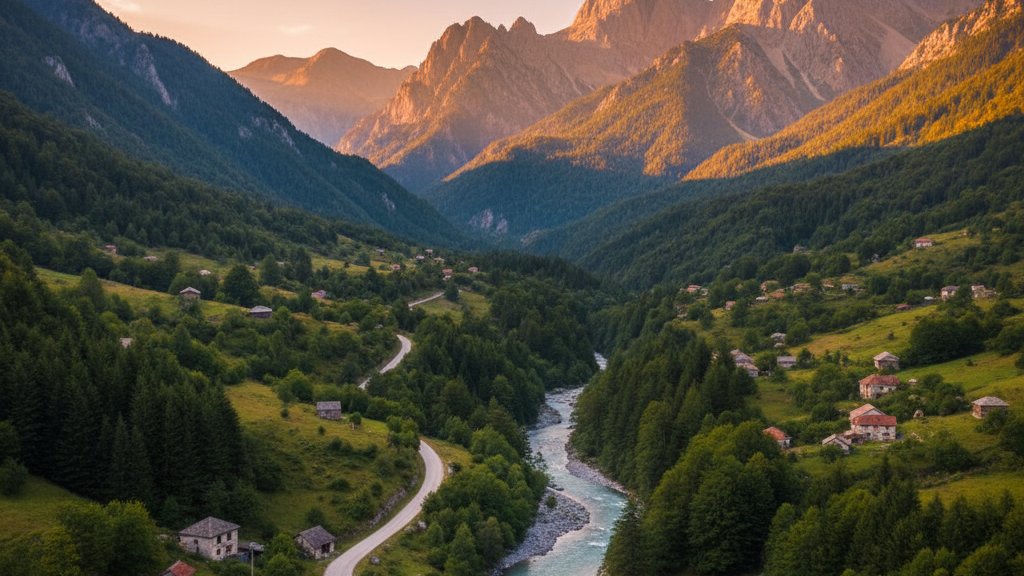
Valbona is a remote mountain village in northern Albania that sits at the heart of one of Europe's last true wildernesses. Nestled at 800 meters elevation in the Valbona Valley, this destination offers glacier-fed rivers, towering peaks above 2,400 meters, and hiking trails that connect Albania to Kosovo and Montenegro. The village itself has approximately 150 permanent residents, though this number swells during the trekking season from May through October.
Reaching Valbona requires commitment. The most common route from Tirana International Airport involves a 180-kilometer drive north to Fierza Lake, followed by a 45-minute ferry crossing and a final 20-kilometer drive up a gravel road through the valley. Total journey time typically exceeds 5 hours. The alternative route via Shkodra and the Koman Ferry adds a spectacular 2-hour boat journey through flooded canyon landscapes but increases total travel time to 7-8 hours.
Valbona National Park: Albania's Alpine Wilderness
Valbona National Park covers 80 square kilometers of protected mountain terrain in the Prokletije range, known locally as the Accursed Mountains. The park was established in 1996 and forms part of the cross-border Balkans Peace Park initiative connecting Albanian, Montenegrin, and Kosovar protected areas. Elevations within the park range from 750 meters at the valley floor to 2,694 meters at Maja Jezerce, Albania's highest peak after Korab.
The park supports populations of brown bears (estimated at 15-20 individuals in the wider region), gray wolves, Balkan lynx, and Balkan chamois. Bird species include golden eagles, peregrine falcons, and alpine choughs. The forested slopes contain beech, fir, and spruce stands, while above 1,800 meters the landscape transitions to alpine meadows with endemic wildflowers including Wulfenia baldaccii and various Crocus species that bloom in May and June.
Hiking permits are not formally required, but the park charges a nominal voluntary contribution of 100 lek at the trailheads. Trail maintenance is minimal - waymarking exists but can be faint, and weather conditions change rapidly above 1,500 meters. Mobile phone coverage is absent throughout most of the park.
The Valbona to Theth Trek: Albania's Most Famous Trail
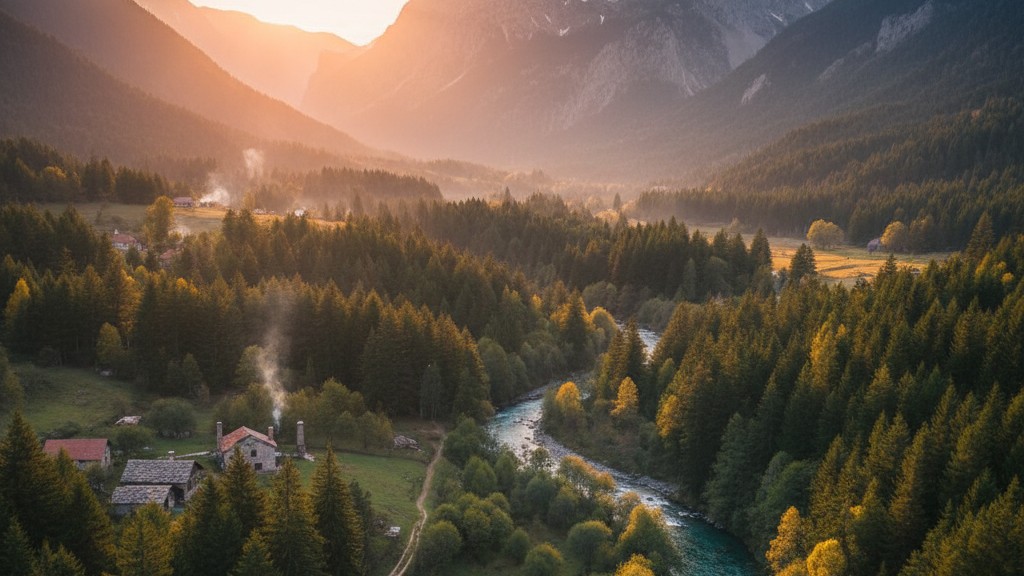
The 14-kilometer trail connecting Valbona to Theth crosses Valbona Pass at 1,795 meters and ranks among the Balkans' most popular single-day mountain hikes. The route gains 850 meters in elevation from Valbona village, levels across the pass plateau, then descends 1,100 meters into Theth Valley. Hiking time ranges from 6 to 8 hours depending on fitness level and weather conditions.
Starting from the southern end of Valbona village, the trail follows the Valbona River upstream for 3 kilometers before beginning switchbacks through beech forest. The tree line sits at approximately 1,600 meters, after which the landscape opens to alpine meadows. The pass itself is a broad saddle marked by a wooden signpost and a metal marker indicating the border between Shkodra and Kukes counties.
The descent into Theth is steeper and more demanding on knees than the Valbona ascent. Stone steps in the upper section give way to loose gravel and exposed tree roots lower down. In spring (May-early June) and after heavy rain, sections of the descent can be muddy and slippery. The trail emerges at Theth village near the iconic Lock-in Tower, a traditional stone fortification that now serves as a museum.
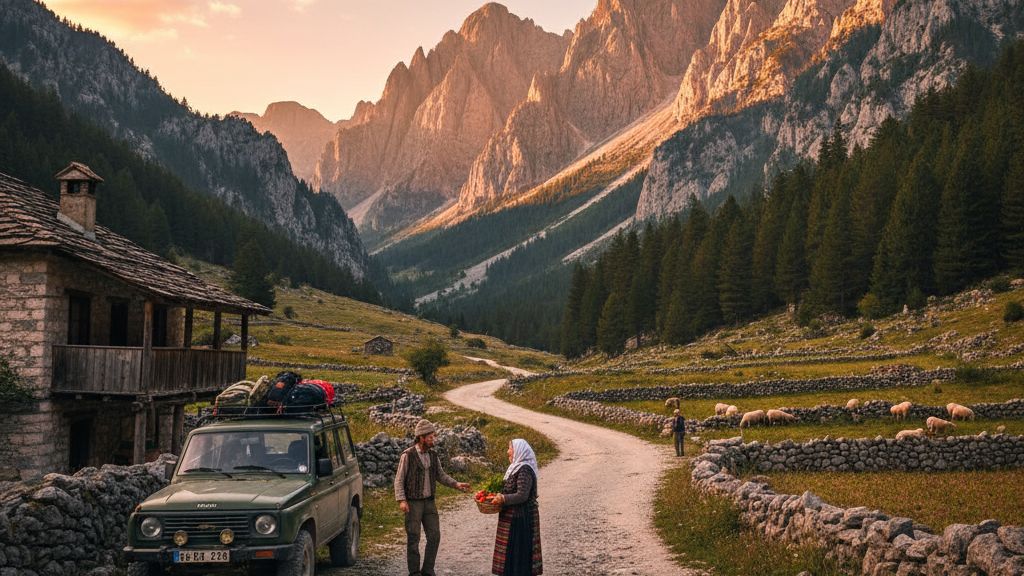
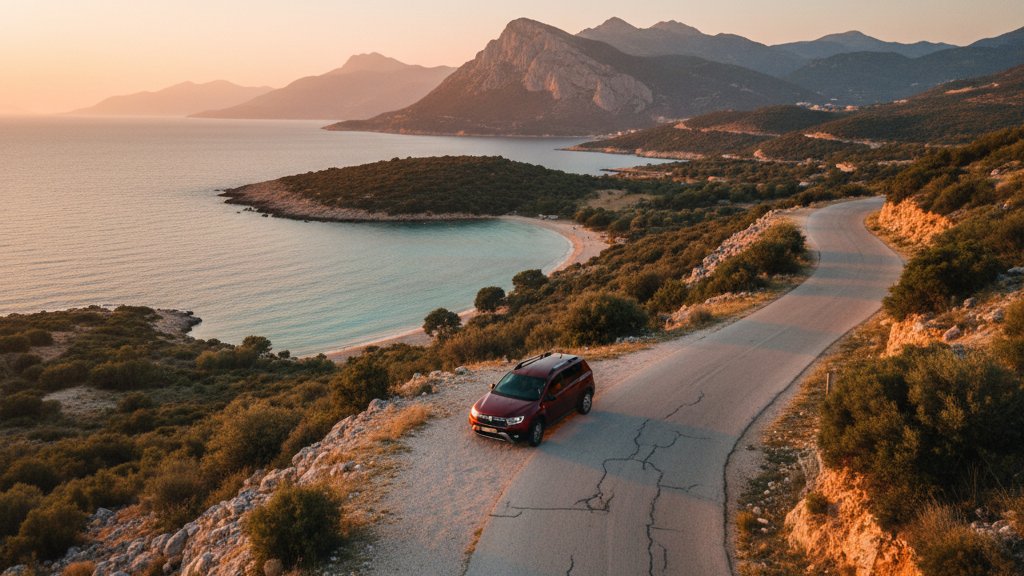
Planning to drive to Valbona from Tirana or Shkodra? The gravel roads in the northern valleys require a vehicle with good ground clearance. Compare SUV and 4x4 rental options from Shkodra for the smoothest approach to the Albanian Alps region.
Rrogam Waterfall: A 25-Meter Alpine Cascade
Rrogam Waterfall lies 4 kilometers upstream from Valbona village along a well-established trail that follows the eastern bank of the Valbona River. The waterfall drops 25 meters over a limestone cliff into a plunge pool surrounded by beech and spruce forest. The trail gains approximately 200 meters in elevation and takes 45-60 minutes to reach from the village center.
The path crosses several small tributaries on wooden footbridges before arriving at a viewing platform positioned 30 meters from the waterfall base. In spring, snowmelt increases the waterfall's volume dramatically, creating a thundering cascade visible and audible from several hundred meters away. By late summer (August-September), the flow diminishes to a more modest but still photogenic curtain of water.
A small hydroelectric installation built in 2015 captures water from upstream of the falls to provide electricity to Rrogam village. The infrastructure is relatively unobtrusive, though the diversion does reduce the waterfall's volume during low-water periods. The waterfall area contains several flat rocks suitable for picnicking, and the pool temperature (around 10-12 degrees Celsius in summer) attracts hardy swimmers.
Valbona River: Source Waters and Fly Fishing
The Valbona River originates from springs below Maja Kolata (2,555 meters) and flows 28 kilometers through the valley before joining the Drin River near Fierza Lake. Water temperatures remain between 6 and 8 degrees Celsius throughout the year due to snowmelt and groundwater sources. Discharge varies from 8 cubic meters per second in late summer to 45 cubic meters per second during spring snowmelt.
The river supports native brown trout and the endemic Balkan trout (Salmo farioides), with fish typically ranging from 20 to 35 centimeters, though specimens above 50 centimeters are occasionally caught. Fishing season runs from March 15 to September 30. A permit from the local guesthouse association costs 1,000 lek per day and includes access to approximately 15 kilometers of river. Fly fishing is the only permitted method, and catch-and-release is strongly encouraged for conservation.
Kayaking the Valbona River is limited to the lower 8 kilometers before Fierza Lake, where gradient decreases and water volume increases. The upper sections near the village contain Class II-III rapids suitable only for experienced paddlers, while Class IV-V sections exist in the narrow gorges upstream - these are rarely attempted due to access difficulty and high risk.
Theth National Park: Valbona's Sister Valley
Theth National Park, accessible via the Valbona Pass trek or by a 70-kilometer gravel road from Shkodra, covers 26,000 hectares and contains some of Albania's most photographed landscapes. The centerpiece is the 25-meter Grunas Waterfall (also called Theth Waterfall), reached by a flat 2-kilometer trail from Theth village. Unlike Valbona's steeper valley, Theth sits in a broader glacial basin at 780 meters elevation.
Theth village contains 80-90 traditional stone houses, many built in the 18th and 19th centuries using local limestone and chestnut timber. The Church of Theth, constructed in 1892, and the Lock-in Tower (Kulla) from the 1800s represent the area's architectural heritage. The tower served as a refuge under Albania's Kanun law code, which governed blood feuds - families involved in disputes could find temporary sanctuary in these fortified structures.
The Blue Eye of Theth (Syri i Kalter) is a natural spring pool 12 kilometers from the village center, reachable by a rough 4x4 track or a 3-hour hike. The pool depth exceeds 50 meters, and the water maintains a striking turquoise color due to limestone dissolution and suspended calcite particles. Temperature at the spring source is approximately 10 degrees Celsius year-round.
Practical Information for Visiting Valbona
Accommodation in Valbona consists of approximately 15 guesthouses, most offering shared or private rooms with meals included. Prices range from 2,500 to 4,000 lek per person per night including breakfast and dinner. Electricity is available but can be intermittent. Hot water comes from solar panels or wood-fired systems. Advance booking through phone or email is strongly recommended from June through September.
The village contains one small shop selling basic provisions, bottled water, and snacks. No restaurant or cafe operates independently of the guesthouses. The nearest ATM is in Bajram Curri, 30 kilometers away - bring sufficient cash in lek. Credit cards are not accepted anywhere in the valley.
Mobile phone coverage from Vodafone Albania reaches the village center but becomes unreliable on trails. ALBtelecom has no coverage. There is no public Wi-Fi. The nearest medical facility is a basic health center in Bajram Curri; serious medical emergencies require evacuation to Shkodra (3-4 hours) or Tirana (5-6 hours).
| Season | Conditions | Trail Status | Best For |
|---|---|---|---|
| May-June | 15-22 deg C, occasional rain, high river levels | Snow-free from late May, muddy sections | Wildflowers, waterfalls at peak volume |
| July-August | 20-30 deg C, dry, afternoon thunderstorms possible | Dry and dusty, excellent waymarking visibility | Multi-day treks, camping, swimming |
| September-October | 10-20 deg C, stable weather, cool nights | Optimal conditions, fewer hikers | Photography, leaf color, solitude |
| November-April | Below 10 deg C, snow above 1,200m, road closed | Impassable without winter equipment | Not recommended for casual visitors |
Getting to Valbona: Route Options and Road Conditions
The Fierza Lake route from Tirana follows the A1 highway north for 80 kilometers to Milot, then the SH1 road through Lezha and Shkodra to Vau i Dejes. From there, an increasingly rough road continues 90 kilometers through Bajram Curri to Fierza Ferry landing. The ferry operates from April through October only, with 4-6 departures daily depending on demand, crossing time 45 minutes, fare 200 lek per person plus 1,000 lek per vehicle.
The gravel road from Fierza landing to Valbona village is 20 kilometers of deteriorating surface with potholes, stream crossings, and sections of loose rock. A high-clearance vehicle is mandatory; 4x4 is advisable but not strictly required in dry weather. Allow 60-90 minutes for this final section. The road is maintained irregularly and worsens throughout the season as traffic increases.
The alternative Koman Ferry route offers more dramatic scenery but adds time. From Shkodra, take the road east toward Koman Dam (65 kilometers, mostly paved). The Koman to Fierza ferry journey threads through flooded canyons for 2-3 hours (departure times: 9:00 AM daily, 1,500 lek per person, 3,000 lek per vehicle). This route is popular with tourists but the ferry has limited vehicle capacity and advance booking is essential in peak season.
FAQ
Can I drive a standard rental car from Tirana to Valbona village or do I need a 4x4 SUV for the gravel roads?
The paved sections from Tirana to Fierza Ferry are manageable in any car, but the final 20-kilometer gravel stretch from the ferry landing to Valbona village requires high ground clearance. Deep ruts, stream crossings, and loose rocks make this section unsuitable for standard sedans. An SUV or crossover with at least 180mm clearance is strongly recommended. During spring snowmelt or after heavy rain, even 4x4 vehicles may struggle. Most rental companies based in Shkodra specify that their standard cars are prohibited on this road, and insurance may be voided if you proceed against their terms.
Is it safe to hike from Valbona to Theth alone or should I hire a local guide for navigation?
The Valbona to Theth trail is well-traveled during summer months and the route is generally obvious, marked by painted rocks and wooden signs at key junctions. Solo hikers complete it regularly without guides. However, conditions demand mountain experience: the trail crosses exposed ridges above 1,700 meters where weather changes rapidly, no mobile phone coverage exists along most of the route, and if injured you may wait hours before another hiker passes. Navigation errors are possible in fog or snow. Local guides cost 4,000-6,000 lek and provide security plus ecological knowledge. If you lack alpine hiking experience or visit in shoulder seasons (May, late September), a guide is advisable.
What time should I start the Valbona to Theth hike to reach Theth before sunset and where can I stay overnight?
Most hikers start between 6:30 and 8:00 AM from Valbona to allow 7-8 hours for the trek plus breaks. Starting after 9:00 AM risks arriving in Theth at dusk, which is hazardous on the steep descent where footing is treacherous in low light. Guesthouses in Theth fill quickly in July and August - book at least 2-3 days ahead by phone. If you arrive without booking, walk to the village center and ask at the church; locals will direct you to available rooms. Alternatively, camping is tolerated in designated areas near the village, though facilities are basic. In peak season, some guesthouses in Valbona arrange phone bookings for sister properties in Theth.
Does the Fierza Ferry operate year-round and what happens if I miss the last departure?
The Fierza Ferry runs only from approximately April 15 through October 31, with exact dates varying by weather and lake level. During operation, departures occur every 2-3 hours from 8:00 AM to 5:00 PM, though the schedule is flexible and boats may wait for late passengers if notified. If you miss the last ferry, your only options are to backtrack via Shkodra (adding 4-5 hours) or overnight in Bajram Curri and catch the first ferry next morning at 8:00 AM. There are no hotels at the ferry landing itself, though locals occasionally offer basic rooms. The ferry does not operate after dark due to navigation hazards in the narrow lake channels.
Can I swim in the Valbona River and are the waters safe given the cold temperatures?
Swimming is physically possible in calmer sections of the Valbona River near the village, where the flow is moderate and pools form around bends. However, water temperature remains 6-8 degrees Celsius even in July, cold enough to cause rapid muscle cramping and hypothermia if you stay in longer than a few minutes. Locals and acclimatized visitors do swim briefly on hot days, but it is shock-inducing for most people. The river has no lifeguards or rescue infrastructure. Current can be deceptively strong, especially in May and June when snowmelt increases flow. Wading and foot-soaking are safer alternatives. If you do swim, stay close to shore and never enter alone.
Are there any restaurants or cafes in Valbona where I can buy meals outside of guesthouse arrangements?
No independent restaurants or cafes operate in Valbona village. All meals are provided by guesthouses, typically included in the room rate as half-board (breakfast and dinner) or full-board arrangements. If you are not staying overnight, some guesthouses will sell you a meal for 800-1,200 lek per person if you ask in advance, but this is not guaranteed. The village shop sells snacks, canned goods, and drinks. Day-hikers should bring their own food or arrange lunch with their guesthouse before departing. The nearest restaurant options are in Bajram Curri, 30 kilometers away, where a handful of simple eateries serve traditional Albanian dishes.
What wildlife might I encounter on trails in Valbona National Park and what precautions should I take?
Brown bears inhabit the park but are rarely seen due to their avoidance of humans and the limited trail network. Bear encounters occur perhaps once per season and almost never result in conflict if you make noise while hiking (talking, using trekking poles). Do not leave food outside overnight at campsites. Wolves and lynx are extremely elusive; your chance of sighting either is near zero. Shepherd dogs guarding flocks on high pastures pose a more realistic concern - give flocks wide berth and do not approach if dogs are present. Snakes including nose-horned vipers exist but are uncommon and non-aggressive if left alone. The greatest wildlife risk is actually livestock guardian dogs, which can be territorial. Carry a trekking pole and avoid sudden movements if confronted.
Can I rent hiking equipment like trekking poles or sleeping bags in Valbona or should I bring everything from Tirana?
No equipment rental services exist in Valbona. Bring all necessary gear from Tirana or Shkodra, where outdoor shops near the city centers stock basic hiking equipment. Trekking poles are valuable on the rocky descents. Sleeping bags are unnecessary if staying in guesthouses, which provide bedding, but essential if camping. Waterproof jackets and layers are critical as weather above 1,500 meters changes without warning even in summer. Guesthouses can provide packed lunches for trail days if requested the night before. Water bottles can be refilled from springs along trails, as the water is generally safe to drink, though some hikers prefer purification tablets as a precaution.
Comments (16)
I was looking for some ideas for tourist attractions in Valbona, Albania and came across this article. It provided some great recommendations on places to visit and things to see in this beautiful area. I liked how it also included information on hiking trails, local accommodations and dining options. As a first-time visitor, this article gave me a solid overview of what to expect and what not to miss. Overall, a helpful guide for anyone planning a trip to Valbona, Albania.
Thank you for your feedback! It's great to hear that the article was helpful in providing recommendations and information for your trip to Valbona, Albania. We hope you have a wonderful time exploring the area and enjoying all it has to offer.
Valbona is a must-visit destination in Albania for nature lovers. The breathtaking Valbona Valley National Park offers stunning views of rugged mountains, crystal-clear rivers, and lush greenery. Visitors can hike to the Theth and Valbona Passes, explore Valbona River's source, or take a dip in the refreshing Blue Eye. Cultural enthusiasts can also visit the historic Kulla houses and experience local hospitality while trying authentic Albanian cuisine. Make sure to visit Valbona during the summer months to enjoy sunny days and clear skies. A visit to Valbona is a chance to unwind and experience the raw beauty of Albania.
This comment highlights the natural beauty and cultural attractions of Valbona, Albania. The Valbona Valley National Park is a popular destination for hiking and enjoying the scenery, while the historic Kulla houses offer a glimpse into local culture and hospitality. Summer months are recommended for visiting to take advantage of the clear skies and warm weather. Overall, Valbona is a great place to relax and appreciate the beauty of Albania's nature.
Valbona, Albania offers breathtaking natural scenery that is a must-visit destination for nature lovers. The Valbona River, surrounded by the Valbona Valley National Park, is an excellent place to explore by foot or horseback. Make sure to visit the enchanting Kukaj waterfall and hike the Valbona pass to see stunning views of the Albanian Alps. In addition to the natural beauty, Valbona has a rich cultural heritage. Visitors can experience traditional Albanian hospitality in local guesthouses and taste delicious homemade cuisine. Valbona is truly a hidden gem that offers a unique and unforgettable experience.
I completely agree that Valbona, Albania is a hidden gem that offers stunning natural beauty and a rich cultural experience. The Valbona Valley National Park is a must-visit for outdoor enthusiasts, with hiking trails, horseback riding, and picturesque waterfalls like the Kukaj waterfall. The area is also steeped in history and tradition, with opportunities to stay in local guesthouses and taste delicious homemade Albanian cuisine. Valbona is truly a unique and unforgettable destination that shouldn't be missed.
"I recently visited Valbona in Albania and it truly exceeded all my expectations. The stunning mountain peaks and crystal clear rivers were simply breathtaking. The village is incredibly charming with friendly locals who are more than happy to share their culture and traditions. The hiking trails are well-maintained and offer spectacular views of the valley. One highlight for me was visiting the Valbona National Park which is home to several rare and endangered species. If you're looking for a unique and unforgettable travel experience, I highly recommend visiting Valbona. Trust me, the beauty of this place will leave you speechless!"
thank you for your comment =)
As someone who hasn't visited Valbona Albania personally, I can only speak from what I've researched and heard from others. From my understanding, Valbona is a beautiful, mountainous region with stunning views and a rich cultural history. Some of the top sights and activities recommended include hiking in the Valbona Valley National Park, exploring the nearby villages and traditional houses, and visiting the Grunas Waterfall. It also seems like a great destination for those interested in eco-tourism and experiencing a more rural, untouched part of Albania.
It sounds like you have done your research on Valbona, Albania and have a good understanding of the region's natural beauty and cultural heritage. The Valbona Valley National Park, nearby villages and traditional houses, and Grunas Waterfall are all popular attractions worth exploring. Valbona is indeed a great destination for eco-tourism and offers visitors a chance to experience a more rural and authentic side of Albania.
I cannot express enough appreciation for the absolute beauty of Valbona, Albania. The stunning mountain range in the backdrop of the small village creates an unforgettable view that everyone should see. The hiking trails offer a challenging yet fulfilling adventure for nature lovers. The Valbona River is a sight to behold with its crystal-clear blue water that's perfect for a refreshing dip after a long journey. The locals are welcoming and hospitable, adding to the charm of this wonderful place. Valbona is truly a hidden gem that deserves more recognition for its unparalleled beauty and natural wonders.
nice answer, thank you =)
Valbona is a must-visit destination for nature enthusiasts. The Valbona Valley National Park boasts stunning mountain views, pristine rivers, and diverse flora and fauna. Hiking in Valbona is a popular activity, and there are many trails suitable for all levels of fitness. The Valbona Pass is a challenging trek that rewards you with breathtaking views of the surrounding mountains. The village of Valbona is also worth exploring, with its traditional architecture and welcoming locals. Overall, Valbona is an ideal destination for those seeking a peaceful retreat in nature.
nice experience, thank you
I am interested in exploring what Valbona, Albania has to offer as a tourist destination. I have heard that it has stunning natural beauty, including scenic hiking trails and a beautiful valley. I would also like to learn more about the local culture, including traditional music and dances. It seems like a peaceful and serene location for a relaxing getaway, and I am excited to plan a trip and experience all that Valbona has to offer.
Oleg, it`s great