
What is Albania Most Known For? Discovering the Hidden Gem of Southeast Europe
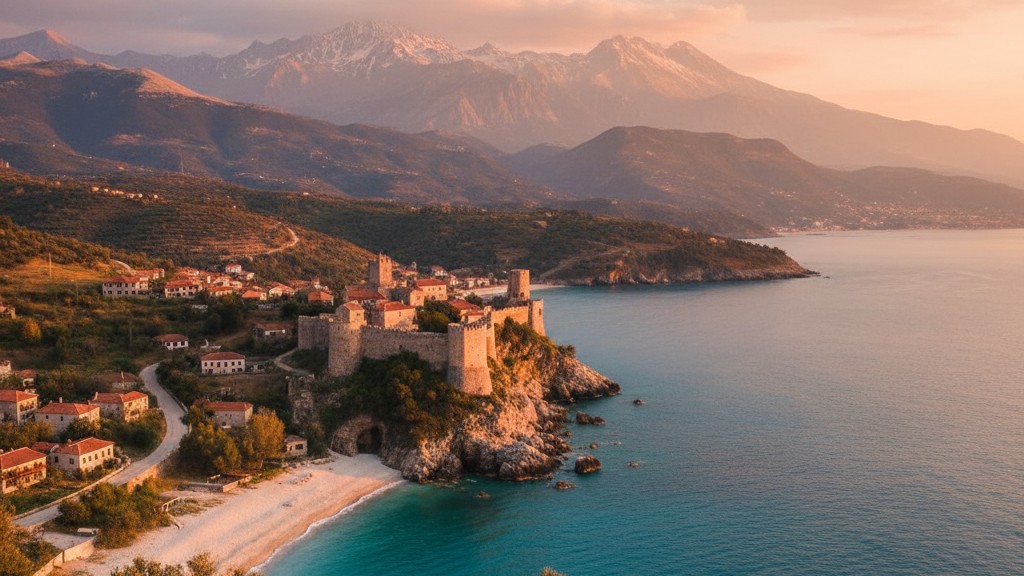
Albania, a small Balkan country positioned where the Adriatic meets the Ionian Sea, remains one of Europe's best-kept secrets despite its remarkable transformation since opening to the world in 1991. While neighboring Greece and Italy draw millions of tourists annually, Albania quietly offers an authentic Mediterranean experience - pristine beaches untouched by mass tourism, UNESCO World Heritage sites predating the Roman Empire, mountain ranges rivaling the Swiss Alps, and a hospitality culture that turns first-time visitors into lifelong advocates.
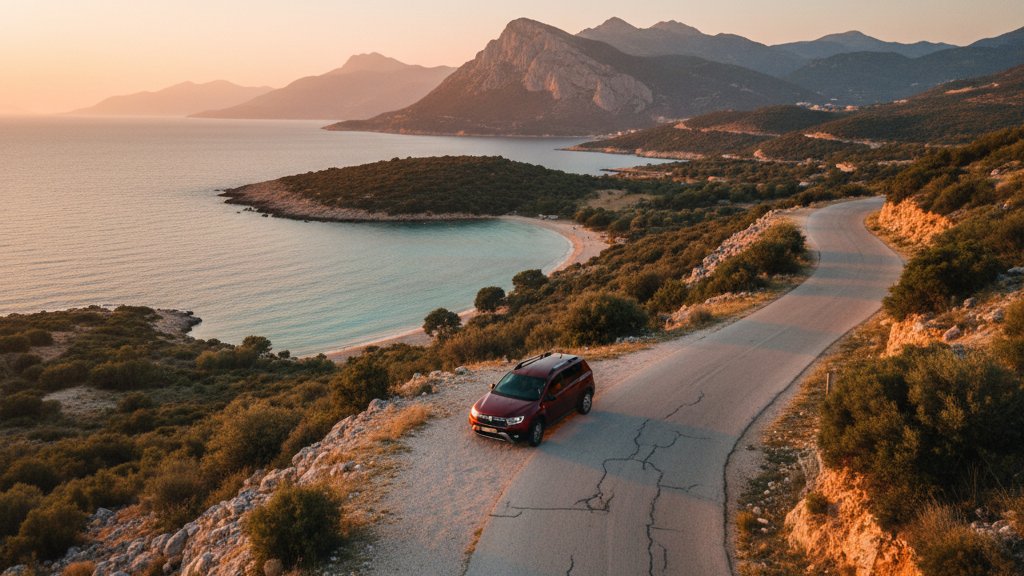
This guide explores what Albania is genuinely known for among those who have discovered it - not through marketing brochures but through the lived experiences of travelers who ventured beyond the typical European circuit. From the moment you drive south on the SH8 coastal road from Vlora toward Saranda, you understand why Albania's reputation is spreading: this is a country where authenticity still exists, where medieval castles overlook bays so blue they seem digitally enhanced, and where a rental car unlocks access to villages that operate on rhythms unchanged for centuries.
The Albanian Riviera - Europe's Last Untouched Mediterranean Coast
Albania's coastline reputation stands on a simple truth: 360 kilometers of Mediterranean shore remain relatively undeveloped compared to the concrete sprawl that has consumed much of the French Riviera, Costa del Sol, or Amalfi Coast. The beaches from Vlora south to Saranda - collectively known as the Albanian Riviera - offer something increasingly rare in Europe: you can arrive at a cove in July and find space to spread a towel without negotiating with beach club attendants or walking past rows of rented umbrellas.
Ksamil, just 15 kilometers south of Saranda, exemplifies this phenomenon. Four small islands sit within swimming distance of the mainland beach, accessible by rented kayak or confident swimmers. The water here achieves that impossible turquoise transparency found elsewhere only in the Maldives or Greece's most remote islands. Unlike those destinations, Ksamil charges no entrance fee, requires no advance booking, and maintains reasonable prices in beachfront restaurants where grilled octopus costs what a coffee costs in Milan.
Dhermi and Gjipe Beach represent the adventure end of the coastal spectrum. Gjipe requires either a 20-minute hike down a canyon from the SH8 or arrival by boat - this natural barrier keeps crowds manageable even in August. The beach sits where a river canyon meets the sea, creating a freshwater-saltwater mixing zone that attracts sea turtles. A small number of tent platforms allow overnight stays for those wanting to watch the Milky Way appear over the Ionian without light pollution.
The coast's reputation extends beyond beaches to the dramatic Llogara Pass, where the SH8 climbs to 1,027 meters above sea level before descending through 18 hairpin turns to the sea at Palasa. Rental cars with functioning brakes become important here - the gradient reaches 12 percent in sections, and Albanian drivers treat the road as a personal rally stage. The viewpoint at the top provides sight lines 40 kilometers south, encompassing the entire curve of the Riviera down to Karaburun Peninsula.
UNESCO World Heritage Sites - Layers of History in Stone
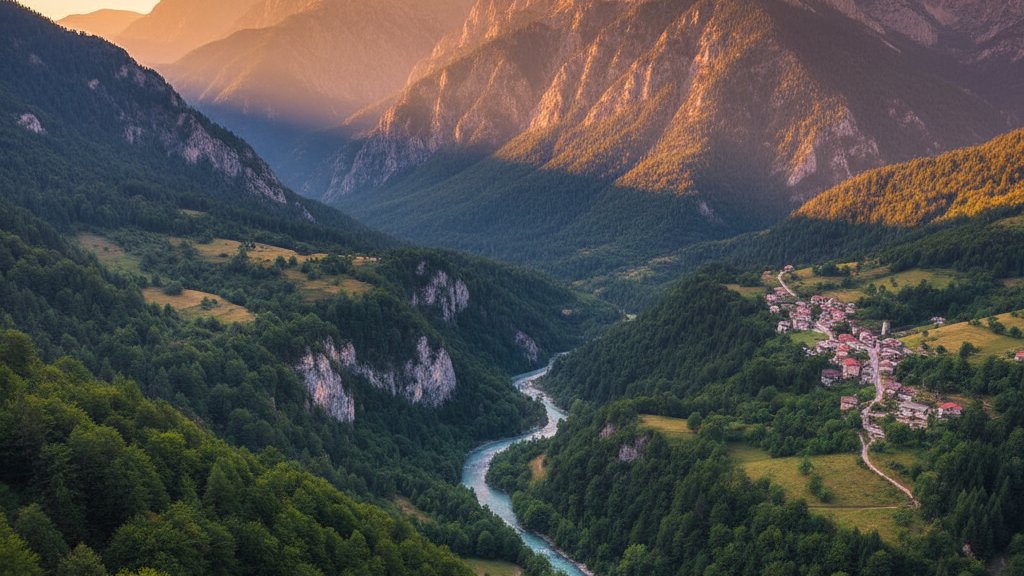
Albania holds three UNESCO World Heritage sites, each representing a distinct civilization layer. Butrint, 20 kilometers south of Saranda, remains the most archaeologically significant. Greek colonists founded Butrint in the 7th century BCE, Romans expanded it into a major port, Byzantines fortified it, Venetians modified its defenses, and Ottomans finally allowed it to return to nature. You can walk from a Greek theater that once seated 2,500 spectators to Roman baths with intact mosaics to a Venetian fortress in 90 minutes - each structure built upon or beside the previous civilization's work.
The site's location on the Vivari Channel connecting Lake Butrint to the Ionian Sea created strategic value for 2,500 years. Modern visitors arrive by rental car from Saranda, though boat tours from Ksamil offer water-level perspectives of the fortress walls. The on-site museum displays artifacts spanning the entire occupation period - Greek pottery, Roman statuary, Byzantine religious items, Venetian weapons. Entry costs 1,000 lek (approximately 10 euros), and the site opens at 08:00 year-round.
Berat, 120 kilometers southeast of Tirana on the SH72, earned its UNESCO designation for perfectly preserved Ottoman-era architecture. The Mangalem and Gorica quarters rise on opposite sides of the Osum River, their white houses stacked up steep hillsides in a pattern unchanged since the 18th century. The nickname "City of a Thousand Windows" understates reality - Ottoman builders designed houses with maximum fenestration to capture winter sun and summer breezes, creating a facade that appears more window than wall.
Gjirokastra, 60 kilometers northeast of Saranda, represents Albanian highland culture preserved in stone. Houses here use massive slate blocks for roofs - some roofs weigh more than the walls beneath them, requiring foundations built directly on bedrock. The castle overlooking the town dates to the 12th century, though current structures mostly reflect 19th-century Ottoman reconstruction. Inside the castle grounds, a captured American Air Force plane remains on display - a Cold War relic from when Albania aligned with China and claimed to have shot down a US spy plane in 1957.
Planning to visit these UNESCO sites? Rent a car in Saranda for direct access to Butrint and easy drives to both Berat and Gjirokastra through Albania's improving road network.
The Albanian Alps - The Balkans' Answer to Switzerland
Northern Albania's mountain reputation has grown rapidly since 2015, when European hiking communities discovered the Valbona to Theth trail. This single-day trek crosses Valbona Pass at 1,795 meters, connecting two valleys that remained accessible only by foot until 2018. The eastern approach via Valbona Valley requires driving from Shkodra to Komani Lake, taking a ferry through flooded canyons to Fierze, then continuing by car or minibus to Valbona village. The western approach via Theth involves 25 kilometers of gravel road from the SH1 near Koplik - a drive requiring either a genuine 4x4 or acceptance that your rental car's suspension will experience significant stress.
The peaks here exceed 2,600 meters. Radohima reaches 2,570 meters directly above Theth, while Jezerca, Albania's second-highest peak at 2,694 meters, marks the border with Montenegro. Snow persists in north-facing cirques into July, feeding rivers that remain cold enough to numb feet within seconds throughout summer. These mountains attracted virtually no foreign visitors before 1991 - Communist-era travel restrictions designated the entire region a military zone, and locals required permits to move between valleys.
Theth's reputation has shifted from isolated mountain village to adventure tourism hub within a decade. Stone tower houses originally built as defense against blood feuds now operate as guesthouses charging 20-25 euros per night including dinner. The Blue Eye waterfall, a 30-minute walk from Theth center, drops into a pool maintaining turquoise coloration even at peak spring flow. The 18th-century Lock-in Tower, where men sought refuge under traditional law, stands as a museum to Albania's complex honor code traditions.
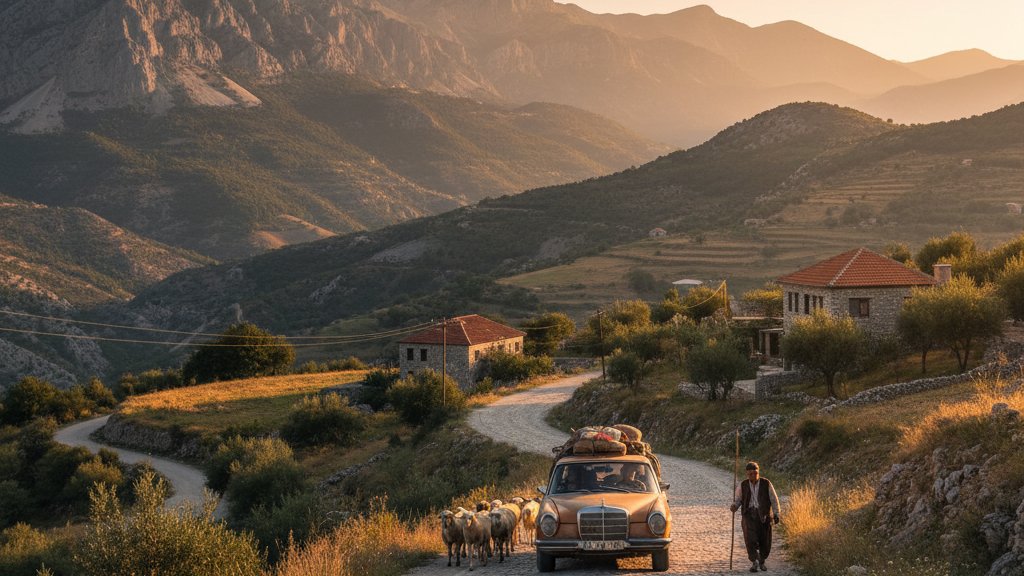
The practical reality of exploring the Albanian Alps requires honest assessment of driving capability and vehicle suitability. The Theth road includes sections with 15 percent gradients, tight switchbacks, and surfaces ranging from decent gravel to barely-defined track. Local drivers navigate it in decades-old Mercedes diesel sedans with worn suspension; rental companies increasingly restrict this road to designated 4x4 vehicles. The alternative - hiking in from the valley mouth - adds 4-5 hours each direction but guarantees vehicle survival.
Albanian Cuisine - Mediterranean Fusion Before Fusion Was Trendy
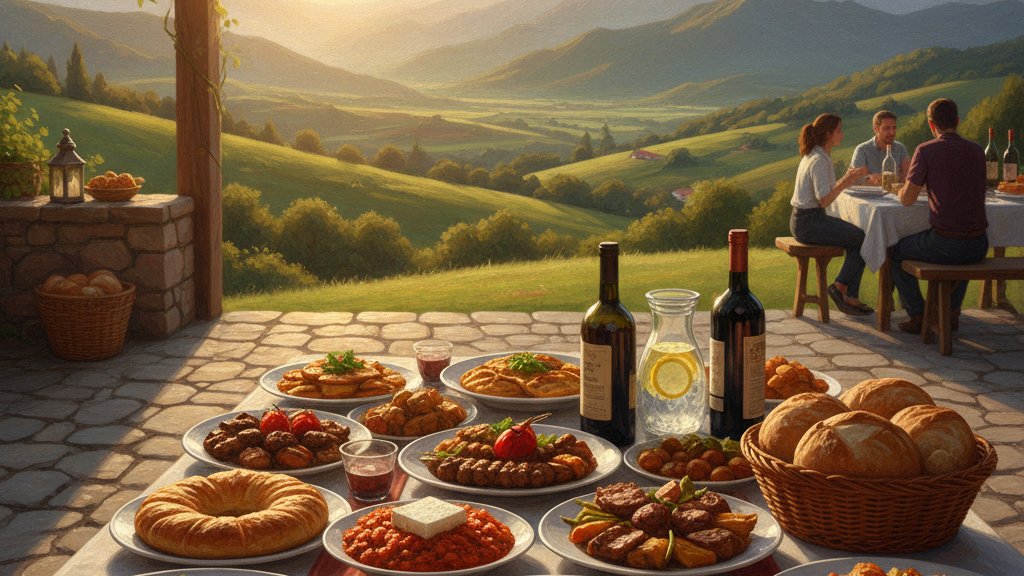
Albanian food reputation suffers from lack of international presence - you will find Albanian restaurants in New York, London, or Berlin, but far fewer than Greek, Turkish, or Italian establishments despite Albania's position at the crossroads of all three culinary traditions. This absence creates opportunity for travelers: Albanian cuisine remains affordable and authentically regional because it hasn't been standardized for export or adapted to international palates.
Byrek anchors daily eating patterns. This layered pastry - phyllo dough brushed with oil or butter, filled with cheese (typically white feta-style cheese), meat (ground lamb or beef with onions), or spinach - appears in bakeries by 06:00 and sells out by mid-morning. Albanians eat byrek for breakfast with yogurt, as a snack between meals, or as a light dinner. Regional variations include Vlora's byrek me kungull (pumpkin byrek) and northern Albania's petka (thicker dough, spiral shape, baked in wood ovens).
Tave kosi - baked lamb with rice in a yogurt and egg sauce - represents Albania's national dish. The yogurt sauce sets during baking, creating a texture between custard and souffle. Quality versions require yogurt made from sheep's milk, rice cooked separately before baking to prevent mushiness, and lamb shoulder cut into large pieces rather than ground. Coastal restaurants sometimes substitute fish or vegetables, but traditional versions from Elbasan or Berat stick to lamb.
The coast's seafood reputation relies on morning catches sold directly from boats. Saranda's fish market operates 06:00-09:00 daily; fishermen price by species and size rather than weight, making negotiation more about recognizing fair market rates than haggling. Grilled sea bass, bream, or small squid appear on beach restaurant menus by 11:00, typically served whole with lemon, olive oil, and a basic salad. Prices remain reasonable compared to Italian or Greek coastal towns - a grilled fish dinner with wine costs 15-20 euros per person in most locations.
Raki - Albania's grape-based spirit - concludes most meals. Albanians distill raki from wine must left after pressing, resulting in a clear spirit typically 40-50 percent alcohol. Homemade raki varies wildly in quality; restaurant versions tend toward commercial brands like Skenderbeu or Konjaku. The custom involves small glasses consumed after rather than during meals, often accompanied by heated debates about whose village produces the best version.
| Traditional Dish | Primary Ingredients | Regional Origin | Best Paired With |
|---|---|---|---|
| Byrek me djath | Phyllo dough, white cheese, eggs | Nationwide | Fresh yogurt, morning coffee |
| Tave kosi | Lamb, rice, yogurt, eggs | Elbasan | Pickled vegetables, red wine |
| Qofte | Ground meat, onions, mint | Nationwide | Grilled peppers, bread, yogurt |
| Fergese | Peppers, tomatoes, cottage cheese | Tirana | Crusty bread, white wine |
| Speca te mbushur | Bell peppers, rice, ground meat | Southern regions | Yogurt, tomato sauce |
| Baklava | Phyllo, walnuts, honey syrup | Gjirokastra | Turkish coffee, afternoon rest |
The Hospitality Culture - Where Guests Become Family
Albania's reputation for hospitality traces to the Kanun code - a traditional law system predating written records. One Kanun principle, mikpritja (hospitality), obligates households to protect and provide for guests regardless of circumstances. While modern Albania operates under standard legal codes, cultural memory of mikpritja persists. This manifests practically: rural guesthouses serve portions sized for manual laborers, families invite strangers to join celebrations if you happen to arrive during an event, and directions often involve someone walking with you partway rather than simply pointing.
The shift from Communist isolation to open tourism economy occurred within one generation's adulthood. Albanians in their 40s and 50s remember when foreign visitors were rare enough that encountering one created neighborhood news. This living memory affects service quality variably - some hosts overcompensate with excessive attention, others maintain reserved distance until rapport develops, most simply treat foreign guests as they would Albanian visitors while accounting for language barriers and unfamiliarity with local customs.
Language creates the primary hospitality friction point. English proficiency exists widely in Tirana and coastal tourist zones, decreases substantially in smaller cities like Berat or Shkodra, and approaches minimal in mountain villages. Italian functions as a second option in southern Albania due to geographic proximity and pre-1991 Italian television broadcasts that reached Albanian homes. German appears occasionally in northern regions with emigrant connections to Austria and Germany. Successful navigation requires either basic Albanian phrases or comfort with gesture-based communication.
The practical expression of Albanian hospitality means problems get solved through personal intervention rather than institutional processes. Car trouble in a village results in the nearest resident helping locate a mechanic, probably calling their cousin who owns a garage, potentially driving you there personally. This system works remarkably well for immediate problems; it becomes less effective for issues requiring formal procedures like police reports or insurance claims, where relationships matter less than documentation.
Emerging Reputation as an Adventure Destination
Albania's adventure sports reputation lags behind established Balkan destinations like Slovenia or Montenegro, primarily because infrastructure developed only recently. The Osumi Canyons near Berat opened to commercial rafting in 2015, offering Class II-III rapids through limestone gorges 30-40 meters deep. Via ferrata routes appeared in Theth and along the Accursed Mountains border in 2018-2019, providing secured climbing paths at altitudes reaching 2,300 meters. Paragliding launch sites on Llogara Pass and above Himara began operating commercially in 2020, delivering tandem flights over the Riviera coastline.
Mountain biking potential exceeds current usage significantly. The Albanian Alps contain hundreds of kilometers of shepherd trails and old military roads suitable for trail riding, but mapped routes remain scarce and trail maintenance nonexistent. The Permet area in southeast Albania offers thermal springs and canyon trails within 90 minutes of Gjirokastra, yet bike rental options exist only in Permet town itself - a limitation for travelers arriving by rental car rather than organized tour.
Rock climbing development focuses on Dhermi and areas near Berat, where limestone faces offer sport routes from 5.8 to 5.12 difficulty ratings. The Dhermi sector includes 40+ bolted routes on sea cliffs overlooking the Ionian; access requires scrambling down steep paths that become treacherous when wet. Local climbing guidebooks exist in Italian and Albanian but not yet in English - international climbers currently rely on online route databases and social media trip reports for beta.
The adventure tourism limitation involves safety infrastructure rather than natural resources. Albania possesses the raw elements - mountains, rivers, coastline - but lacks consistent standards for guides, equipment maintenance, and emergency response. This creates a two-tier system: organized tours through established companies provide European-standard safety protocols, while independent adventurers accept elevated self-rescue responsibility. The situation improves annually as tourism ministry regulations tighten and professional guide associations form, but the transition from informal to regulated adventure sector remains incomplete.
FAQ
What is the single thing Albania is most famous for internationally?
Among travelers who have visited, Albania's coastline generates the most consistent praise - specifically the Albanian Riviera's combination of clear water, undeveloped beaches, and affordable prices compared to other Mediterranean destinations. Among people who have not visited, Albania's reputation still ties to its Communist past under Enver Hoxha and the isolationist period that ended in 1991, though this association fades as tourism increases and newer generations encounter Albania through travel content rather than historical references.
How does Albanian hospitality compare to other Balkan countries?
Albanian hospitality operates with less formal structure than Greek or Turkish traditions but similar underlying generosity. The key difference: Albanians rarely treat hospitality as commercial performance, meaning service can appear unpolished while simultaneously being more personally genuine. A family-run guesthouse in Theth may lack hot water consistency but will share their dinner wine without charging extra; a Tirana hotel offers professional service standards approaching Western European norms. Both expressions reflect hospitality values, but through different economic contexts.
Is Albania's food genuinely different from Greek or Turkish cuisine?
Albanian cuisine shares ingredients and cooking methods with both neighbors - olive oil, yogurt, grilled meats, phyllo-based pastries - but combines them differently and maintains distinct regional dishes like tave kosi or fergese that have no direct Greek or Turkish equivalents. The Ottoman occupation influenced Albania more recently than Greece (independence came in 1912 versus 1821), meaning Turkish culinary elements remained stronger. Simultaneously, Italian proximity and 20th-century connections created fusion dishes like Albanian pizza (more like focaccia with toppings) that don't exist in Turkey.
What time of year shows Albania at its best?
May through June and September through early October provide ideal conditions for experiencing Albania's full range. Spring brings wildflowers to mountain meadows while keeping coastal temperatures comfortable (20-25 degrees Celsius). September maintains warm sea temperatures for swimming while clearing summer crowds from beach towns. July and August deliver guaranteed sun and hot weather but also maximum tourist presence and inflated prices in coastal areas. Winter suits only specific purposes like visiting Tirana's Christmas markets or skiing near Korca - coastal hotels close from November through March.
How does Albania's UNESCO heritage compare to neighboring Greece in terms of visitor experience?
Albania's three World Heritage sites receive far fewer visitors than comparable Greek sites, creating substantially different experiences. Butrint averages perhaps 200 visitors on summer weekdays versus thousands at Delphi or Olympia. This means you can photograph the Greek theater without waiting for crowds to clear and examine Roman mosaics without jostling for position. The tradeoff: Greek sites offer more comprehensive interpretation, better facilities, and English-language guided tours readily available. Albanian sites assume more visitor initiative in learning historical context through independent research or hiring private guides arranged in advance.
What surprises first-time visitors most about Albania?
The disconnect between reputation and reality generates the most consistent surprise. Many visitors arrive expecting primitive infrastructure based on Albania's historical isolation, then encounter modern highways (the A1 from Montenegro to Tirana meets European motorway standards), reliable mobile data coverage (4G functions in surprisingly remote areas), and coastal towns with sophisticated restaurant scenes. Conversely, some expect Albanian development to match Greek or Italian standards, then face challenges with accommodation consistency, English-language limitations outside tourist zones, and informal business practices where receipts and fixed prices don't always apply.
Does Albania have unique wildlife or natural phenomena?
Albania hosts Europe's largest wild population of Egyptian vultures, substantial brown bear numbers in northern mountains (estimated 180-250 individuals), and the rare Balkan lynx in remote border regions with North Macedonia. Lake Ohrid (shared with North Macedonia) contains species found nowhere else - including ancient trout lineages predating the last ice age. The Divjaka-Karavasta Lagoon system provides critical habitat for the endangered Dalmatian pelican, with the Mediterranean's largest breeding colony nesting there annually. These ecological treasures remain accessible with minimal impact - no entrance fees, limited crowds, and opportunities to encounter wildlife without commercial safari infrastructure.
How does the cost of traveling in Albania compare to Western Europe?
Albania consistently costs 40-60 percent less than Italy, France, or coastal Spain for equivalent experiences. A seafood dinner overlooking the Ionian costs 15-20 euros per person in Albania versus 35-50 euros for similar quality in Sicily or the Amalfi Coast. Guesthouse accommodation averages 25-35 euros for doubles with breakfast in most locations outside Tirana. Rental car rates match Western European prices during summer peak but drop significantly in shoulder seasons. The main exception: imported goods (electronics, certain foods, international brand clothing) cost similar to or more than Western European prices due to import duties and limited retail competition.

Comments (10)
I recently discovered Albania and I am highly impressed by its rich history and natural beauty. Albania is known for its stunning coastline of the Adriatic and Ionian Seas with clear blue waters and sandy beaches. The country also has an impressive collection of ancient historical sites such as the UNESCO World Heritage Site of Butrint and the colorful Ottoman-era town of Berat. Not to mention the delicious Albanian cuisine, friendly people, and warm hospitality. Albania surely deserves more recognition for its amazing treasures, and I cannot wait to explore this enchanting country more in the future.
It sounds like you had a great experience discovering Albania and were impressed by its natural beauty, rich history, and delicious cuisine. You mentioned being particularly drawn to the stunning coastline and ancient historical sites such as Butrint and Berat. You also appreciated the friendly people and warm hospitality you encountered. Overall, you believe that Albania deserves more recognition for its many treasures and look forward to exploring more in the future.
Albania is a small nation located in the Balkan Peninsula. It is known for its scenic mountains, beautiful beaches, and rich cultural heritage. Albania's history is closely intertwined with that of the Ottoman Empire, and this is reflected in the country's architecture, cuisine, and music. Albania is also famous for its hospitality and warm, friendly people. However, many people associate Albania with organized crime and corruption, which is a reputation the country is trying hard to shake off. Overall, Albania's cultural and natural attractions offer much to explore and enjoy for those who visit.
Albania is a Balkan country known for its beautiful mountains, beaches, and rich cultural heritage influenced by the Ottoman Empire. It has a reputation for hospitality and friendly people but is also trying to overcome associations with organized crime and corruption. Overall, Albania offers a lot to explore and enjoy for visitors.
Albania is a small European country with a rich history and culture that is just starting to gain recognition in the international community. While it may not be a household name, Albania is most known for its stunning natural beauty, including its rugged coastlines, snow-capped mountains, and clear Mediterranean waters. Albania is also known for its ancient ruins, including the UNESCO World Heritage sites of Butrint and Berat. Additionally, Albania's lively cities, unique cuisine, and hospitable people make it an up-and-coming destination for travelers seeking something new and authentic.
Albania is a European country that boasts a rich history and culture, though it is only just beginning to make a name for itself on the international stage. Known for its breathtaking natural beauty, including picturesque coastlines, mountain ranges and turquoise Mediterranean waters, Albania also offers numerous ancient ruins, such as the UNESCO World Heritage sites of Butrint and Berat. The country's vibrant cities, distinctive cuisine and welcoming locals also make it an exciting destination for travelers looking for a unique and authentic experience.
I am absolutely blown away by the beauty, culture, and history of Albania. This stunning country, located in Southeast Europe, is truly a hidden gem. Albania is known for its breathtaking scenery, including pristine beaches, majestic mountains, and crystal-clear lakes. Additionally, this country is famous for its delicious cuisine, vibrant music and dance, and fascinating historical sites. From the ancient ruins of Butrint, to the colorful city of Tirana, Albania has something for everyone. I am so grateful to have discovered this wonderful country and can't wait to explore more of what it has to offer.
It's great to hear that you're impressed by Albania's beauty and culture! Indeed, Albania has a lot to offer with its stunning natural landscapes, rich cultural heritage, and delicious cuisine. From its ancient ruins to its modern cities, Albania truly has something for everyone to explore and enjoy.
As a site visitor, I would say that Albania is known for its beautiful coastline along the Adriatic and Ionian seas, its ancient history and architecture, particularly the UNESCO World Heritage Site of Butrint, its delicious cuisine with influences from the Mediterranean, Balkan, and Ottoman regions, and its friendly and hospitable people. It is also worth mentioning that Albania is becoming increasingly popular as a tourist destination, with its natural beauty and affordability attracting visitors from all over the world.
I completely agree with your assessment of Albania. The country is indeed known for its stunning coastline, rich history and architecture, delectable cuisine, and warm hospitality. It's exciting to see that Albania is gaining popularity as a tourist destination and becoming recognized for all its amazing attributes. It's definitely a country worth exploring and experiencing firsthand.