Top 10 Hidden Gems to Visit in Albania
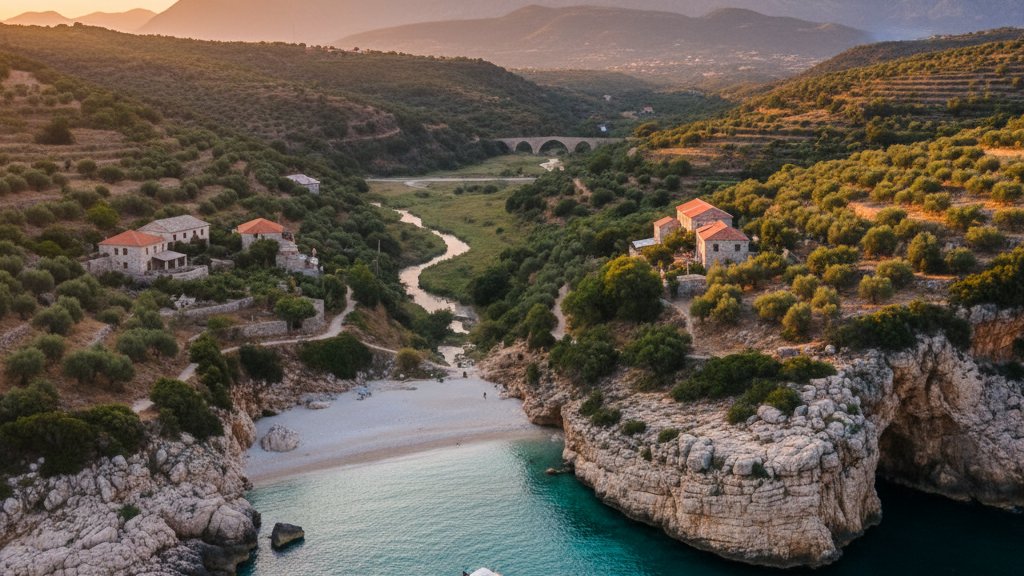
Albania is rapidly emerging as a sought-after destination in the Balkans, yet it still guards secrets that many travelers overlook. While coastal cities like Saranda and Vlora draw summer crowds, the country conceals remarkable archaeological sites, thermal springs, and mountain valleys that see only a fraction of the visitor numbers. This guide reveals ten destinations where you can experience Albania's natural beauty, ancient history, and traditional culture away from the main tourist routes.
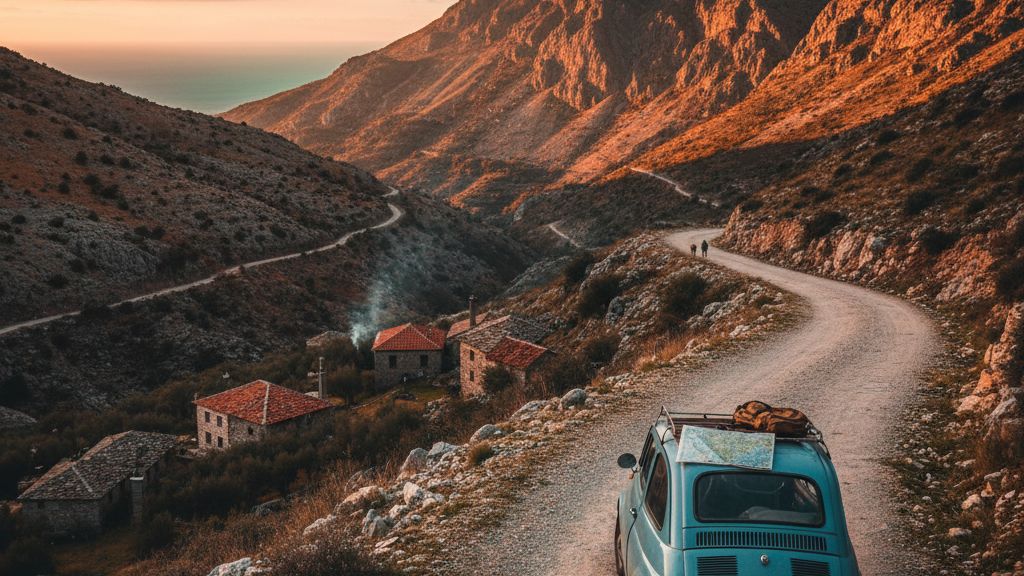
With a rental car from Tirana Airport, these hidden gems become accessible. Most lie 90 to 200 kilometers from the capital, connected by mountain roads that reward patient driving with panoramic views. The journey to these places is often as memorable as the destinations themselves.
Butrint National Park - Ancient Ruins by the Ionian Sea
Butrint National Park occupies a peninsula 18 kilometers south of Saranda, near the Greek border. This UNESCO World Heritage Site preserves layers of habitation from Greek colonization in the 8th century BC through Byzantine, Venetian, and Ottoman periods. The archaeological zone contains a Roman amphitheater with capacity for 2,500 spectators, a baptistery with intact mosaic floors depicting aquatic creatures, and fortification walls that span multiple construction phases.
The site sits within 2,500 hectares of wetlands and forests that form a protected habitat for 246 bird species. Walking trails connect the major ruins through Mediterranean scrubland, with views across Lake Butrint to the Vivari Channel. The combination of historical significance and natural setting makes Butrint unique among Albanian archaeological sites. Entry costs 1,000 lek for adults. The on-site museum displays artifacts excavated from the area, including Roman sculptures and Greek ceramics.
Butrint receives approximately 120,000 visitors annually, concentrated in July and August. Arrive before 10:00 to explore the ruins before tour groups from Corfu ferries. The shaded forest paths offer respite from summer heat, and the elevated acropolis provides cooling breezes off the Ionian Sea.
Llogara Pass - Hairpin Bends Above the Albanian Riviera
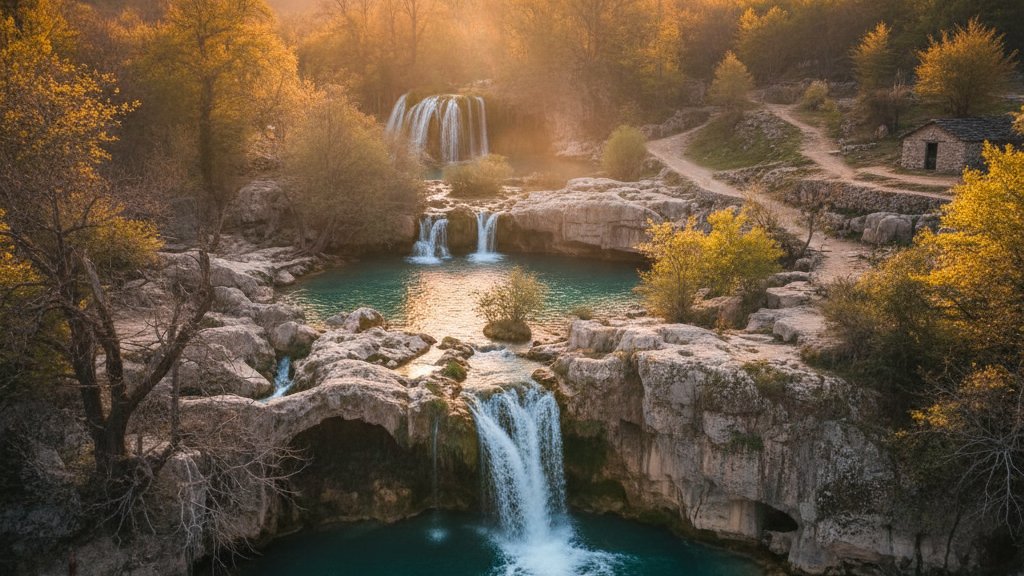
Llogara Pass ascends to 1,027 meters on the SH8 road between Vlora and Himara, crossing the Ceraunian Mountains. The route features 47 switchbacks carved into the mountainside, with each hairpin turn revealing expanded views of the Ionian coastline. From the summit observation point, the panorama extends from Karaburun Peninsula in the north to Palasa Beach directly below, where the turquoise water meets white gravel shoreline.
Llogara National Park surrounds the pass, protecting 1,010 hectares of Bosnian pine and black pine forest. The microclimate at the summit differs markedly from the coast 30 kilometers away - temperatures drop 8 to 10 degrees Celsius, and mist frequently shrouds the upper slopes even when sunshine bathes the beaches. The Caesar Pass Trail, a 6-kilometer loop from the summit, follows the route Julius Caesar reportedly used when pursuing Pompey in 48 BC.
Several mountain lodges near the summit serve traditional mountain cuisine - roasted lamb, byrek with wild greens, and raki distilled from local plums. The pass remains open year-round, though snow occasionally closes the road for 24 to 48 hours in January and February. Drive cautiously - the road surface varies, and oncoming vehicles sometimes cut corners on blind turns.
Valbona Valley National Park - Remote Alpine Wilderness
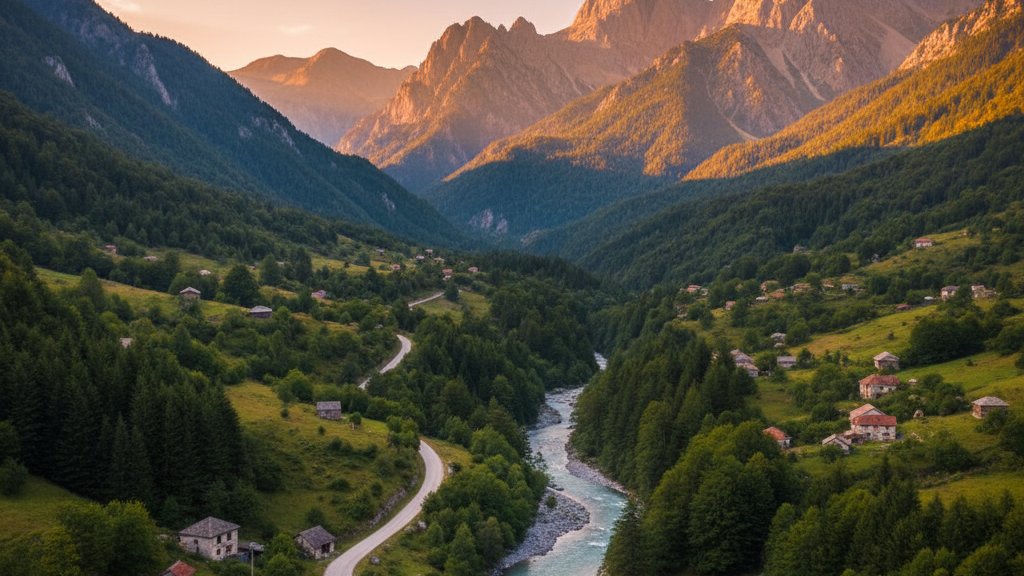
Valbona Valley extends 35 kilometers into the Albanian Alps in Tropoja District, accessible via an unpaved road from Bajram Curri or by ferry across Lake Komani. The valley floor sits at 800 meters elevation, flanked by limestone peaks that exceed 2,400 meters. The Valbona River, fed by snowmelt and alpine springs, maintains remarkable clarity even during spring runoff.
The park protects 8,000 hectares of beech forest, alpine meadows, and glacial cirques. Brown bears inhabit the upper reaches, though sightings are rare. More commonly observed are chamois on rock faces above the tree line, golden eagles riding thermals, and stone martens in the riverside forests. The valley supports 22 endemic plant species, including several alpine orchids found nowhere else in Europe.
Valbona Village serves as the main base for hikers, with a dozen guesthouses offering half-board accommodation. The classic trek connects Valbona to Theth via Valbona Pass at 1,795 meters - a 7-8 hour walk through spectacular mountain scenery. Less demanding trails follow the river valley to Rragam village or climb to Cerem viewpoint. The valley receives snow from November through April; the trekking season runs May to October.
Reaching Valbona requires careful planning. Consider renting a capable vehicle in Shkoder for the rough mountain approach, or combine the lake ferry with a local 4x4 transfer for the final unpaved section.
Blue Eye Spring - Mesmerizing Karst Phenomenon
The Blue Eye Spring emerges from a karst aquifer near Muzina village, 25 kilometers east of Saranda. Water wells up from a depth exceeding 50 meters - divers have descended to 50 meters without reaching the source - creating a circular pool 20 meters wide with impossibly blue water. The intensity of the color varies with sunlight angle and cloud cover, ranging from deep sapphire to brilliant turquoise.
The spring maintains a constant temperature of 10 degrees Celsius year-round, regardless of air temperature. This cold upwelling creates a microclimate around the pool, supporting moisture-loving plants including ferns and mosses unusual for the Mediterranean zone. The water flows into a small river that joins the Bistrica downstream, maintaining crystalline clarity for several hundred meters.
A boardwalk encircles the main spring, allowing close viewing without damaging the fragile karst formation. Swimming is now prohibited to protect the ecosystem after years of unregulated tourism degraded water quality. The site charges 100 lek entry. Arrive early in summer - by midday in July and August, crowds diminish the experience. The dappled shade of plane trees makes the area pleasant even in afternoon heat.
Gjirokastra - Stone City of the South
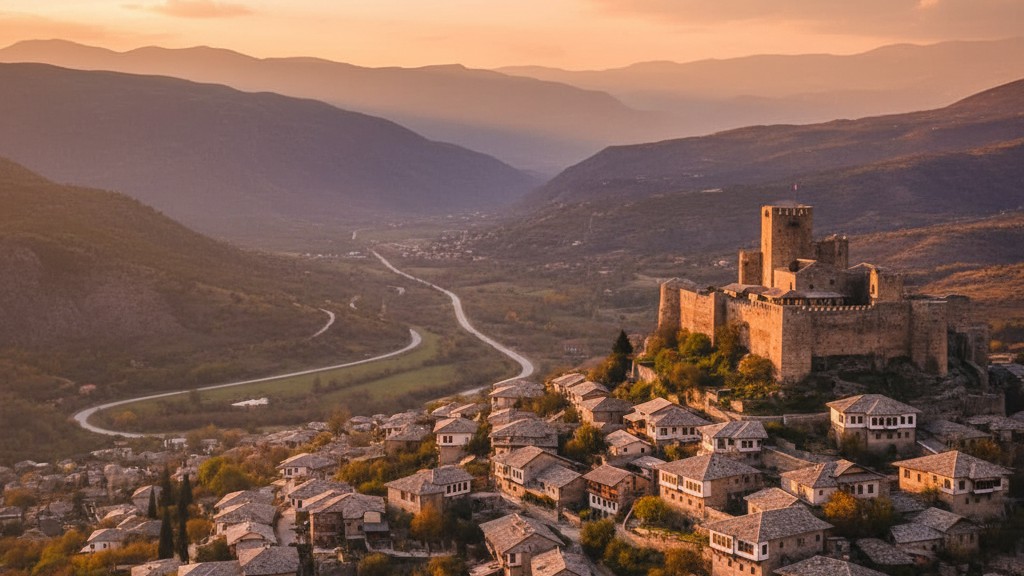
Gjirokastra rises in tiers on the slopes of the Gjere Mountains, 230 kilometers south of Tirana. The old quarter consists of approximately 600 stone houses built in the characteristic local style - thick limestone walls, slate roofs, and chardak wooden balconies. These houses date from the 17th to 19th centuries, when Gjirokastra prospered as a commercial center on Ottoman trade routes.
The castle dominates the skyline from a rocky spur 336 meters above sea level. Originally constructed in the 12th century, it received its current form under Ali Pasha in the early 1800s. The fortress interior now houses a military museum displaying captured Italian artillery from the 1940 Greek-Italian conflict, and an American Air Force jet that made a forced landing in 1957 during the Cold War.
The old bazaar on Sheshi Cerciz Topulli retains its original layout, with shops selling copper goods, textiles, and local food products. Skenduli House, built in 1700, opens for guided tours showing traditional wealthy-family life - ornate carved ceilings, secret rooms, and an elaborate water cistern system. Gjirokastra specializes in qifqi - rice balls with herbs and eggs - and pasha qofte - meatballs in tomato sauce with cheese.
Kruja - Mountain Town of National Legend
Kruja sits on a hillside 32 kilometers north of Tirana, overlooking the coastal plain from 600 meters elevation. The town served as Skanderbeg's headquarters during his 25-year resistance against Ottoman expansion in the 15th century. Kruja Castle, perched on a cliff edge, withstood three Ottoman sieges between 1450 and 1478 before finally falling 10 years after Skanderbeg's death.
The castle complex now contains the Skanderbeg Museum, opened in 1982 in a building designed to evoke medieval Albanian architecture. Exhibits display weapons, armor, documents, and maps related to the Albanian-Ottoman conflicts. The ethnographic museum, housed in a restored 18th-century Ottoman house, recreates traditional room arrangements with authentic furnishings and household objects.
The old bazaar extends along a cobbled lane below the castle, occupying buildings from the 17th to 19th centuries. Artisans produce traditional crafts using historical methods - handwoven kilims, copper vessels hammered from sheet metal, and filigree silver jewelry. Unlike tourist markets elsewhere, Kruja's bazaar remains a working market where locals purchase household items alongside visitors buying souvenirs.
Syri i Kalter - The Other Blue Eye
Syri i Kalter emerges from limestone bedrock near Delvina, 20 kilometers from Saranda and distinct from the more famous Blue Eye near Muzina. This spring forms a circular pool approximately 35 meters in diameter, with a visible depth gradient - shallow turquoise at the edges deepening to dark sapphire at the center. The water temperature remains steady at 13 degrees Celsius.
The surrounding area has been developed as a small park with walking paths, picnic tables, and a cafe. Unlike its better-known namesake, Syri i Kalter near Delvina still permits swimming. The cold water provides refreshing relief on summer days, though extended immersion is inadvisable. The spring basin supports diverse aquatic life including rare Ohrid trout that enter from connecting waterways.
A footpath climbs to a hilltop viewpoint approximately 1 kilometer from the spring, offering a bird's-eye perspective of the pool and surrounding countryside. The hike takes 20 minutes uphill. This spring sees far fewer visitors than the Muzina Blue Eye, making it preferable for travelers seeking a quieter experience.
Permet - Thermal Springs and Stone Bridges
Permet occupies a valley where the Vjosa River cuts through the southern mountains, 132 kilometers from Saranda. The town serves as a gateway to the Vjosa Wild River, one of Europe's last free-flowing rivers unimpeded by dams. Stone bridges spanning tributary streams date from the 18th century, including the Kadic Bridge and the Leusa Bridge, both built using traditional Ottoman techniques without mortar.
The Benja Thermal Baths lie 13 kilometers east on a rough gravel road following the Lengarica Canyon. Hot springs emerge at temperatures between 26 and 30 degrees Celsius, flowing into stone pools at the canyon base. The canyon walls rise 100 meters, creating a dramatic setting for bathing. Recent development added changing facilities and a small parking area, but the site retains its natural character.
Permet specializes in gliko - fruit preserves made from sour cherries, figs, walnuts, and pumpkin, slowly cooked in sugar syrup. Every household produces gliko following family recipes. The town's other culinary claim is its wine - small-scale producers cultivate indigenous grape varieties on terraced hillsides, making robust reds that pair with grilled lamb. The local brandy, distilled from cornelian cherries, has a distinctive tart finish.
Shkoder - Lake City of the North
Shkoder spreads along the southeastern shore of Lake Shkoder, the largest lake in the Balkans at 368 square kilometers. The city dates to Illyrian times - the ancient settlement Scodra served as capital of the Illyrian Labeates tribe before Roman conquest in 168 BC. Rozafa Castle, 2 kilometers from the city center, occupies a strategic position on a rocky hill commanding views of the lake, the Buna River, and the approach from the Adriatic coast.
The castle's fortifications span multiple periods - Illyrian, Roman, Byzantine, Venetian, and Ottoman builders each left their mark. The innermost walls date to the 3rd century BC. Excavations uncovered a Roman-era basilica, Byzantine cisterns, and an Ottoman mosque. The name derives from a legend about Rozafa, a young woman allegedly immured in the walls as a foundation sacrifice.
Shkoder's pedestrian streets in Rruga Kol Idromeno and around Sheshi Demokracia retain Austro-Hungarian architectural character from the early 20th century. The Marubi National Museum of Photography contains 500,000 negatives documenting Albanian life from the 1850s through the communist period. Lake Shkoder provides boat excursions to Shiroke Island and the traditional fishing villages on the lake's eastern shore, where methods unchanged for centuries still catch carp and eel.
Benja Thermal Baths - Natural Hot Springs in Limestone Canyon
The Benja Thermal Baths deserve separate mention for their unique combination of natural and cultural features. The hot springs emerge at eight separate points along a 200-meter section of the Lengarica River, with temperatures varying from 23 to 32 degrees Celsius depending on the specific source. Local residents constructed stone pools centuries ago to capture and channel the thermal water, creating bathing areas of varying temperatures.
The canyon itself is geologically significant - the Lengarica has carved a passage through Permian limestone, creating vertical walls decorated with tufa formations where mineral-rich water has deposited calcium carbonate over millennia. Small caves pocket the canyon walls, some containing fragments of medieval inscriptions. The river maintains a strong flow even in late summer, fed by karst springs upstream.
The thermal water contains elevated concentrations of calcium, magnesium, and sulfur compounds. Local tradition attributes healing properties to the springs, particularly for joint problems and skin conditions. While no clinical studies validate these claims, the warm mineral water certainly provides a relaxing soak after hiking in the mountains. The site charges a small fee of 200 lek for parking and facilities maintenance.
Planning Your Journey to Albania's Hidden Places
These ten destinations span Albania from north to south, with most requiring 2-3 hours driving from Tirana or 1-2 hours from coastal cities. Road conditions vary significantly - while the SH1, SH4, and SH8 highways connecting major towns have improved dramatically since 2020, many approach roads to remote sites remain gravel or rough asphalt. A vehicle with adequate ground clearance helps, particularly for Valbona Valley and the Benja Thermal Baths access road.
Timing matters. The Albanian Riviera and southern sites like Butrint and the Blue Eye function year-round, though winter brings rain and cooler temperatures. Mountain destinations including Valbona Valley and Llogara Pass experience heavy snow from December through March. The ideal window for visiting all ten sites runs from May through October, with May-June and September-October offering the best combination of weather and fewer crowds.
Most of these hidden gems lack on-site accommodation - plan to base yourself in nearby towns. Shkoder serves the north, Saranda or Vlora work for the south, and Gjirokastra makes a good midpoint. Only Valbona Valley requires staying in the valley itself due to its remoteness.
What is the best season to visit Albania's hidden gems?
May through June and September through October provide optimal conditions for exploring Albania's lesser-known destinations. Spring brings wildflowers to mountain meadows and full rivers in canyons, while autumn offers stable weather and fewer tourists. July and August see peak crowds at accessible sites like the Blue Eye and Llogara Pass, though mountain destinations like Valbona remain relatively quiet. Winter limits access to high-elevation sites but keeps the south open for exploration.
How much driving time should I budget between these destinations?
Distances are deceptive in Albania - mountain roads require more time than flat-country equivalents. Budget 3 hours for Tirana to Shkoder via the SH1, 4 hours for Tirana to Saranda via the SH4 and SH8, and 5-6 hours for Tirana to Valbona Valley including the unpaved final section. Between southern sites, allow 45 minutes for Saranda to Blue Eye, 1 hour for Saranda to Butrint, and 2.5 hours for Saranda to Gjirokastra. The Llogara Pass crossing takes 30-40 minutes despite covering only 20 kilometers due to the switchback road.
Do I need a guide for visiting these sites?
Most hidden gems require no guide - Butrint, Gjirokastra, Kruja, Llogara Pass, and both Blue Eye springs are self-explanatory with basic orientation. Valbona Valley benefits from local knowledge if you plan to hike beyond the main valley trail. Consider hiring a mountain guide in Valbona Village for the Valbona-Theth crossing or for routes above 2,000 meters. Archaeological sites like Butrint offer more context with a guide, but audio guides and information panels provide adequate background for independent visitors.
What type of vehicle works best for reaching remote destinations?
A compact or mid-size car handles all paved routes including Llogara Pass, the SH8 coastal road, and approaches to Butrint, the Blue Eye sites, Gjirokastra, Kruja, Shkoder, and Permet town. For Valbona Valley access via Bajram Curri, the Benja Thermal Baths, and any exploration of mountain side roads, a vehicle with increased ground clearance proves valuable. SUVs and crossovers from local rental companies manage rough sections more confidently than low-clearance sedans, though Albania's improving infrastructure makes these roads navigable with careful driving in any vehicle.
Are these sites suitable for families with young children?
Several hidden gems work well for families - Butrint's archaeological park has wide paths suitable for strollers on main routes though not to all ruins, Kruja's bazaar and castle involve moderate uphill walking, and the Blue Eye springs require minimal walking from parking areas. Llogara Pass observation points are easily accessible. Gjirokastra's steep cobbled lanes challenge strollers. Valbona Valley suits families if you base yourselves in a guesthouse and take short valley walks rather than mountain hikes. The Benja Thermal Baths appeal to children who enjoy swimming, though the rough access road requires careful driving.
How do entrance fees and costs compare to major tourist sites?
Albania's hidden gems remain remarkably affordable. Butrint National Park charges 1,000 lek entry, Gjirokastra Castle 400 lek, Kruja museums 300 lek each, and the Blue Eye springs 100-200 lek. Compare this to popular beach clubs charging 1,500-3,000 lek for sunbeds and access. Most natural sites like Llogara Pass, Valbona Valley trails, and Permet stone bridges charge nothing. Parking typically costs 200-300 lek where formal lots exist. The Benja Thermal Baths charge 200 lek. Your main costs will be fuel and accommodation rather than entry fees.
Can I visit multiple hidden gems in a single day?
Geographic clusters allow multi-site days with planning. Combine Butrint and the Blue Eye near Muzina in a morning-afternoon split from Saranda. Gjirokastra and Permet fit a long day though both deserve separate visits to appreciate fully. Shkoder combines with Rozafa Castle easily. Kruja makes a convenient half-day trip from Tirana, allowing an afternoon at another site. Valbona Valley stands alone due to access time. Llogara Pass works as a stopping point when driving between Vlora and the southern coast rather than as an isolated destination. Rushing diminishes the experience - these places reward slower exploration.