
How Long Can I Stay in Albania? Understanding Visa Rules and Extensions
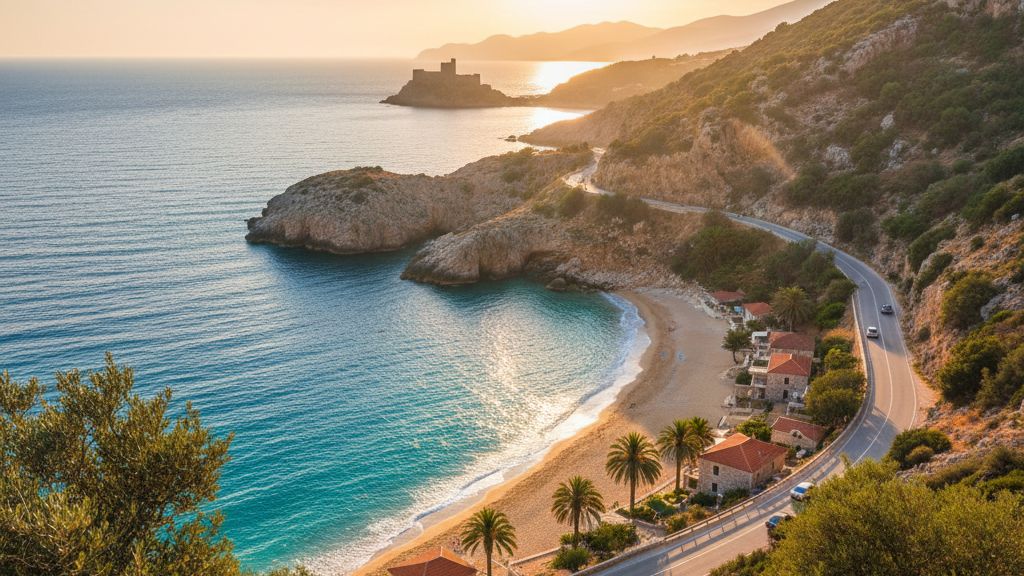
Albania has transformed from an isolated Balkan backwater into one of Europe's fastest-growing travel destinations since opening fully to tourism in the 1990s. The country's liberal visa policies for most nationalities, combined with dramatic mountain landscapes from the Albanian Alps to Llogara Pass and pristine Riviera beaches from Himara to Ksamil, attract digital nomads, retirees, and adventure travelers planning extended stays. Understanding exactly how long you can legally remain in Albania, what documentation the border police at Tirana International Airport (IATA: TIA) require, and how to extend your stay or obtain residence permits prevents complications that could result in fines, deportation, or future entry bans. This guide provides current regulations as of 2026, covering visa-free entry rules, the 90-in-180-day Schengen-aligned framework, extension procedures through the General Directorate of Border and Migration in Tirana, and pathways to temporary or permanent residence for those falling in love with Albania's affordable Mediterranean lifestyle.
Visa-Free Entry: The 90-Day Rule for Most Nationalities
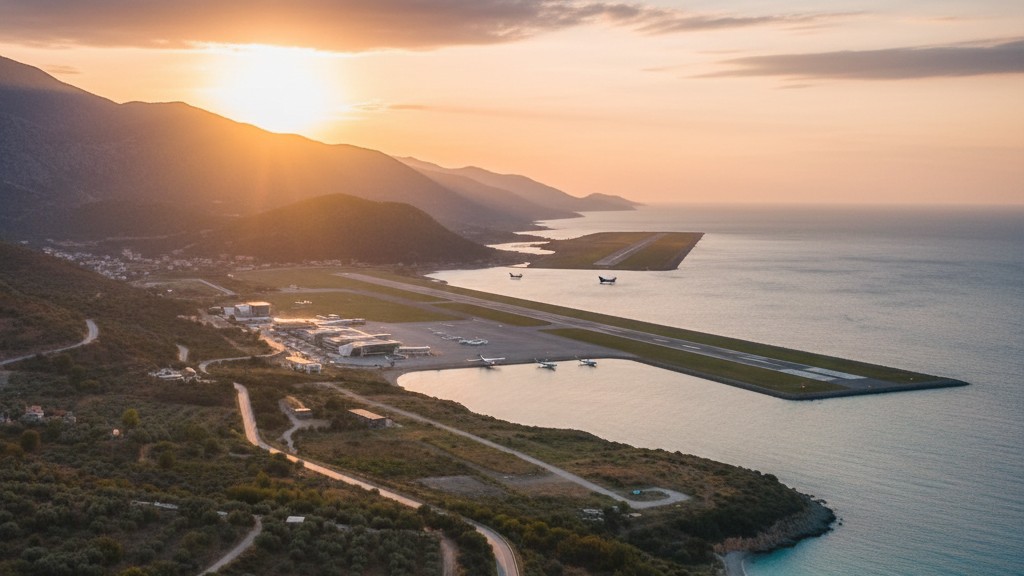
Albania implements a bilateral visa waiver system that permits citizens of over 90 countries to enter without prior visa application for tourism, business visits, or family purposes. The standard allowance grants 90 days within any 180-day period, mirroring the calculation method used in the Schengen Area despite Albania not being a Schengen member state. Citizens of the European Union, the United Kingdom, the United States, Canada, Australia, New Zealand, and most Latin American and East Asian nations benefit from this arrangement. Upon arrival at Tirana International Airport (TIA) located 17 km northwest of central Tirana, border officers stamp your passport with an entry date but typically do not mark an exit-by date, placing responsibility on travelers to track their own 90-day window accurately using the entry stamp as day one.
The 180-day calculation window rolls continuously rather than resetting on fixed calendar dates, meaning that each day you consider entering Albania, you must count back 180 days and verify you have not already used 90 days during that lookback period. For example, if you spent 60 days in Albania from January 1 to March 1, then left and returned on May 1, you would have 30 days remaining because your January-March stay still falls within the 180-day window calculated backward from May 1. Border guards at TIA have access to electronic entry-exit records and may refuse entry if their system shows you would exceed the 90-day limit, even if your passport lacks clear exit stamps from previous Albania visits. Crossing by land from Montenegro at Muriqan or from Kosovo at Morina or from North Macedonia at Qafe Thane follows identical rules, though remote crossings sometimes lack electronic scanning equipment, creating potential for manual stamp errors that travelers should verify immediately.
Citizens of countries not on Albania's visa-free list, including most African, South Asian, and Middle Eastern nations, must obtain a visa from an Albanian embassy or consulate before travel. Albania also issues visas on arrival at TIA for certain nationalities if they hold valid Schengen, US, or UK visas or residence permits, but this discretionary policy changes periodically and should not be relied upon without confirming current regulations through official Albanian Ministry of Foreign Affairs channels. All visitors regardless of nationality must present a passport valid for at least three months beyond intended stay and have sufficient funds to support themselves, typically demonstrated through bank statements, credit cards, or cash, though border officials rarely check financial documentation for tourists arriving from Western countries.
Extending Your Stay: Applying Through Border and Migration Services
Travelers who need to remain in Albania beyond their initial 90-day visa-free period must apply for an extension at the General Directorate of Border and Migration, headquartered at Rruga e Kavajes in central Tirana, before their authorized stay expires. The extension process requires submitting a formal application form available on the agency's website or at their offices, along with your passport, passport-size photos meeting biometric standards, proof of accommodation such as a rental contract or hotel bookings, proof of financial means to support the extended stay, travel medical insurance covering the extension period, and a written statement explaining the reason for extension. Valid grounds include unexpected illness or medical treatment, family emergencies involving Albanian relatives, delayed business negotiations, or pending real estate transactions, but simply wanting to continue traveling or enjoying the beaches is generally insufficient justification unless supported by substantial documentation.
Processing typically takes 7 to 10 working days, during which your passport remains with the authorities, making it advisable to retain photocopies of your passport information pages and entry stamps for any situations requiring ID. The extension fee as of 2026 stands at approximately 5,000 Albanian lek (roughly EUR 50), though fees increase if you apply after your authorized period has already expired, in which case you also face potential fines starting at 20,000 lek. Extensions are granted at the discretion of immigration officials and most commonly provide an additional 30 to 90 days depending on circumstances, but are not guaranteed. If your extension is denied, you must depart Albania immediately or face penalties for overstaying, including fines escalating daily, potential detention, deportation at your own expense, and entry bans ranging from one year to five years for serious violations.
Remote extension applications from outside Tirana prove difficult because the General Directorate operates with limited regional offices and requires in-person interviews for most cases. Travelers staying in southern Albania along the Riviera or in northern mountain regions should plan travel to Tirana with adequate time buffer before their visa-free period expires. The capital's position connected by the A1 motorway to Durres and by the SH4 highway to Shkoder and by the SH8 to Vlora means reaching Tirana from anywhere in Albania takes under five hours by rental car, making compliance with extension requirements logistically feasible even from distant locations like Theth or Ksamil.
Planning an extended Albania exploration? Secure a no-deposit car rental from Tirana airport to maximize flexibility when crossing borders or traveling to the Migration office.
Long-Term Stays: Residence Permits and Permanent Residency Pathways
Foreigners intending to reside in Albania longer than 180 days in any 365-day period must obtain a residence permit before their visa-free authorization expires, as extensions beyond 180 cumulative days are not granted to tourists. Albania issues three main categories of temporary residence permits valid for one year and renewable: employment-based permits for those with Albanian job offers or contracts with registered companies; study permits for students enrolled in recognized Albanian universities or educational institutions; and family reunification permits for spouses or dependent children of Albanian citizens or legal residents. The application process begins with the Albanian embassy in your home country for most permit types, though employment permits can sometimes be initiated in-country if you entered on business grounds with supporting invitation letters.
Employment permits require a labor market test proving no qualified Albanian citizen could fill the position, an employment contract meeting minimum wage requirements, registration of the employing company with tax and social security authorities, and payment of permit fees around EUR 100 plus social insurance contributions. Foreign entrepreneurs can obtain business residence permits by registering a company in Albania with minimum capital investment of EUR 5,000, demonstrating viable business plans, and employing Albanian staff in certain sectors. Digital nomads working remotely for foreign companies technically require employment permits though enforcement remains inconsistent as of 2026, with many long-term remote workers departing Albania for short border runs to Kosovo or Montenegro every 90 days to reset their visa-free clock rather than formalizing their status, a legally gray practice tolerated but not officially sanctioned.
Permanent residence becomes available after five consecutive years of legal temporary residence, requiring continuous physical presence in Albania with brief absences permitted for tourism or business travel not exceeding 180 days per year. Permanent residents gain the right to live and work in Albania indefinitely without renewals, though they must still depart and re-enter every 12 months until obtaining Albanian citizenship. Citizenship by naturalization requires ten years of legal residence, basic Albanian language proficiency, clean criminal record, and renunciation of other citizenships unless exempted by bilateral treaties. Real estate ownership, popular among foreign retirees purchasing beachfront properties near Saranda or renovating stone houses in Berat, does not automatically confer residence rights though property owners find employment or business permit applications processed more favorably given their demonstrated economic commitment to Albania.
Overstaying Consequences and Border Enforcement Realities
Remaining in Albania beyond your authorized period, whether the standard 90-day visa-free allowance or a granted extension expiration date, constitutes a violation of Albanian immigration law carrying mandatory fines and potential criminal charges for serious overstays. The fine structure as of 2026 starts at 20,000 lek (approximately EUR 200) for overstays under 30 days, escalating to 50,000 lek for overstays between 30 and 90 days, and 100,000 lek plus potential detention for overstays exceeding 90 days. These fines must be paid before departure, typically at Tirana International Airport or land border crossings, where overstay detection occurs through electronic database checks comparing your entry stamp date against current date and visa category.
Enforcement intensity varies significantly by departure point and traveler nationality, with TIA maintaining rigorous electronic screening and automated overstay calculations that flag violations immediately during exit passport scanning, leaving overstayers unable to board flights until fines are settled at the airport police office. Land border crossings to Montenegro, Kosovo, or North Macedonia implement less consistent screening, particularly at remote crossings like Vermosh or Bajram Curri where officers sometimes lack real-time database access and rely on manual stamp reading, creating occasional opportunities for overstayers to exit undetected though this gamble risks future entry bans if the overstay is later discovered in system records. Citizens of Western countries generally face only financial penalties, while travelers from countries with higher rates of illegal immigration to Europe may face detention and expedited deportation procedures in addition to fines.
Entry bans following significant overstays or repeat violations typically last one to three years for first offenses involving less than 90 days overstay, extending to five years or permanent bans for overstays exceeding six months or for individuals who worked illegally in Albania without proper permits. These bans apply across the entire Albanian border system including airports and land crossings and are shared with neighboring countries through regional law enforcement databases, potentially affecting your ability to visit Kosovo, Montenegro, or North Macedonia if you're flagged in Albanian systems. Travelers overstaying accidentally due to passport stamp confusion should visit the General Directorate of Border and Migration immediately upon discovering the error, as voluntary disclosure with reasonable explanation and prompt departure reduces penalties compared to detection at exit points.
Special Considerations for Seasonal Travelers and Border Runners
Albania's Mediterranean climate attracting summer beachgoers and winter mountain enthusiasts creates seasonal patterns where many travelers push visa limits by executing "border runs" - brief exits to Kosovo, Montenegro, or North Macedonia intended to reset the 90-day clock. While technically legal if sufficient time elapses between stays to comply with the 90-in-180-day calculation, immigration authorities increasingly scrutinize patterns suggesting pseudo-residence without proper permits, particularly for individuals maintaining Albanian rental properties or returning repeatedly on one-day exits followed by immediate re-entry. Officers at land borders may refuse entry to travelers whose passport shows multiple sequential 90-day Albania stays with minimal absences, demanding proof of genuine residence elsewhere or evidence the upcoming stay serves legitimate temporary purposes rather than unlawful de facto immigration.
The rolling 180-day calculation window means a single 90-day stay effectively locks you out of Albania for another 90 days before your full quota resets. For example, if you arrive January 1 and stay until March 31 consuming your full 90 days, you cannot return until July 1 when your January 1 entry falls outside the 180-day lookback window. Travelers attempting to game this system by splitting stays into 89-day periods followed by brief exits discover border officials can refuse entry based on overall pattern abuse even if the mathematical calculation technically permits re-entry. Digital nomads and long-term travelers planning extended Albania stays should seriously consider formalizing status through residence permits rather than relying on border runs that become increasingly risky as Albanian immigration enforcement modernizes and integrates with EU systems ahead of potential future Schengen accession.
Cross-border car rentals complicate border run logistics because most Albanian rental companies prohibit vehicles leaving Albania into neighboring countries without advance permission and additional insurance, making brief visa reset trips to Kosovo or Montenegro difficult unless you arrange a specialized rental allowing regional travel. Budget the added cost of international rental coverage or plan border runs using buses, shared taxis from Shkoder to Montenegro's Ulcinj, or the regular minibus service from Saranda to Corfu Greece requiring only ferry passage with foot passenger status. Some long-term Albania residents base themselves near land borders like Shkoder or Kukes to minimize border run travel time, though this compromises access to Albania's most attractive coastal and mountain destinations requiring hours of driving from northern frontiers.
| Nationality Group | Visa-Free Stay | Extension Possibility | Work Permit Required |
|---|---|---|---|
| EU/EEA/UK/USA/Canada/Australia | 90 days per 180 days | 30-90 days (discretionary) | Yes, for formal employment |
| China/India/Russia/Brazil | 90 days per 180 days | 30-90 days (discretionary) | Yes, for any employment |
| Most African/Middle Eastern | Visa required in advance | Built into visa duration | Yes, arranged with visa |
| Kosovo/Turkey/Ukraine | 90 days per 180 days | 30-90 days (discretionary) | Yes, for formal employment |
Documentation to Carry During Your Albania Stay
Albanian law requires all foreigners to carry valid identification at all times, enforceable through police checks that occur primarily at highway checkpoints on routes like the A1 motorway between Tirana and Durres, random inspections in tourist districts of Berat or Gjirokaster, and during traffic stops if you're driving a rental car. Your passport serves as primary identification and must be original - photocopies are insufficient though carrying a certified copy in addition to the original stored securely at your accommodation provides backup if theft occurs. Police checks targeting foreign drivers on Albanian roads increased after 2023 as car rental tourism exploded, with officers specifically verifying passport entry stamps match vehicle rental dates and seeking unpaid traffic fines in the national database linked to passport numbers.
Beyond your passport, maintain digital and physical copies of your accommodation details including rental contracts, hotel bookings, or host contacts, as police or immigration officers may request proof of where you're staying if questions arise about your visa status or local registration. Albanian law technically requires foreigners staying more than 10 days to register their presence with local police at the commissariat nearest their accommodation, though enforcement applies primarily to refugees and long-term residents rather than tourists, and most short-term visitors never complete this registration without consequence. However, formal residence permit holders must register at every new address within 5 days of relocation, with landlords sharing responsibility for reporting foreign tenants.
If you hold an extension approval or residence permit, carry the official document at all times separate from your passport because police officers may not recognize the permit stamp in your passport without seeing the formal approval letter on General Directorate letterhead. Travel medical insurance proof, required for visa extensions and residence permits, should also remain accessible on your phone or in physical form because Albanian hospitals, particularly private clinics in Tirana or Saranda, may demand insurance verification before providing non-emergency treatment to foreigners. The modest cost of comprehensive Albania travel insurance, typically under EUR 10 per week, provides legal compliance and peace of mind given Albania's limited public healthcare infrastructure outside major cities and high out-of-pocket costs for quality private medical care.
What happens if I enter Albania from Kosovo by land and have no entry stamp?
Kosovo-Albania land borders do not stamp passports for either entry or exit because Kosovo is not yet recognized by all states and Albania maintains an open border policy with Kosovo. This creates potential complications proving your Albania entry date to immigration officials. When you arrive in Albania from Kosovo, immediately visit the nearest police station in Shkoder, Kukes, or Bajram Curri and request a formal entry registration stamped into your passport with date. Without this, you risk being treated as an overstayer with no valid entry record when you eventually depart Albania through Tirana airport or another border crossing. Keep dated receipts, accommodation confirmations, and bank transaction records showing your Albania arrival date as backup evidence. Many travelers from Kosovo overlook this issue until facing serious problems at TIA when departing, resulting in detention while border police investigate how long you've actually been in Albania.
Can I work remotely in Albania on a tourist visa-free stay?
Albanian law technically prohibits any work activities, including remote work for foreign companies, without a proper employment or business permit. However, enforcement against digital nomads working online for non-Albanian employers while staying in Albania on tourist status is virtually non-existent as of 2026 because immigration authorities lack resources to monitor laptop workers in cafes and apartments. The legal risk remains that immigration officials at borders or during police checks could theoretically question your means of support and conclude you're working illegally if they discover you're conducting business activities. To minimize risk, avoid telling border officers you're working remotely - state tourism as your purpose and show sufficient funds suggesting you're genuinely vacationing. For stays exceeding six months annually, strongly consider formalizing your status through a business residence permit by registering an Albanian company, which costs under EUR 200 and provides full legal cover for remote work while also potentially offering Albanian tax residency benefits if your home country allows it.
Will overstaying in Albania affect my future Schengen visa applications?
While Albania is not a Schengen member, the country shares immigration violation data with EU member states through law enforcement cooperation channels and pre-accession integration programs. A serious Albania overstay creating an entry ban will appear in regional databases that Schengen consulates can access when evaluating your visa application, raising red flags about your compliance with visa rules and potentially leading to Schengen visa rejection. Even Albania overstays without formal bans may be discovered if consular officers specifically inquire about your Albania travel during visa interviews or notice suspicious passport stamp patterns showing extended Albania stays. Immigration violations in any European country, including non-EU Albania, damage your credibility as a visa applicant. If you've overstayed in Albania, be honest if asked directly during subsequent visa applications, explain circumstances, show you paid fines, and demonstrate it was an isolated incident rather than a pattern of visa abuse.
Comments (10)
"I have gathered that visa-free travel is permitted in Albania for a period of up to 90 days. However, it is always best to double-check the entry requirements and regulations with the Albanian embassy in your home country or with your travel agent. Additionally, it may be helpful to ensure that you have all necessary travel documents - including a valid passport - and sufficient funds to cover your stay. Overall, Albania offers a beautiful and unique travel experience that is definitely worth exploring!"
The comment mentions that visa-free travel is allowed for up to 90 days in Albania, but advises double-checking entry requirements with the Albanian embassy or travel agent. The commenter also recommends having all necessary travel documents and sufficient funds for the stay. Finally, they express that Albania is a beautiful and unique travel destination.
"I recently visited Albania and was pleasantly surprised with how welcoming and accommodating the locals were. I had the opportunity to explore various cities and attractions, and I wished I could have stayed longer! The country has so much to offer, from stunning beaches to historic sites and delicious cuisine. I highly recommend planning an extended stay to fully experience all that Albania has to offer. The visa process was simple, and I felt safe throughout my entire trip. I can't wait to visit again!"
It's great to hear that you had a positive experience during your visit to Albania! The country is known for its hospitable people and diverse attractions, including beautiful beaches, historic sites, and delicious cuisine. It's also good to know that the visa process was simple and that you felt safe throughout your trip. We hope that you'll have the opportunity to return soon and continue exploring all that Albania has to offer!
"Oh my gosh, I cannot wait to explore Albania for as long as possible! From the stunning Albanian Alps to the picturesque coastline, there is so much to see and do. And the best part? You can stay up to 365 days without needing a visa. That means I can fully immerse myself in the rich culture, tasty cuisine, and breathtaking scenery for as long as I want! I may even consider buying property and making Albania my new home. Albania, get ready because I'm staying for a while!"
It's great to hear that you're excited to explore Albania and have the opportunity to stay for up to 365 days without needing a visa. Albania certainly has a lot to offer in terms of natural beauty, culture, and cuisine. It's also important to note that the process for buying property in Albania can be complex, so it's recommended to do thorough research and seek professional guidance before making any decisions. Enjoy your stay in Albania!
Wow, I am absolutely thrilled with how long I can stay in Albania! I just discovered that as a foreign tourist, I can stay up to one year without a visa! That's amazing! I can't wait to take advantage of this and explore all the beautiful sights and experiences Albania has to offer. From the stunning beaches to the rich history and culture, I know I won't get bored staying here for a while. Albania, here I come!
That's great to hear! Albania is indeed a wonderful country to explore and experience. With the opportunity to stay up to one year without a visa, you can definitely take your time to discover all the hidden gems and immerse yourself in the local culture. Make sure to check out the diverse cuisine, vibrant cities, and breathtaking natural landscapes. Enjoy your stay in Albania!
As a frequent traveler to Albania and a lover of the country, I can say that the amount of time you can stay in Albania largely depends on your nationality and the purpose of your visit. EU citizens can stay for up to 90 days without a visa while non-EU citizens may need to apply for a visa beforehand. If you plan on staying for a longer period, you may need to apply for a residence permit. However, Albania is a wonderful country with so much to offer, from the stunning coastline to the beautiful mountain landscapes, so I highly recommend exploring as much as you can during your stay.
Thanks for your comment