Gas Stations and Fuel Prices in Albania
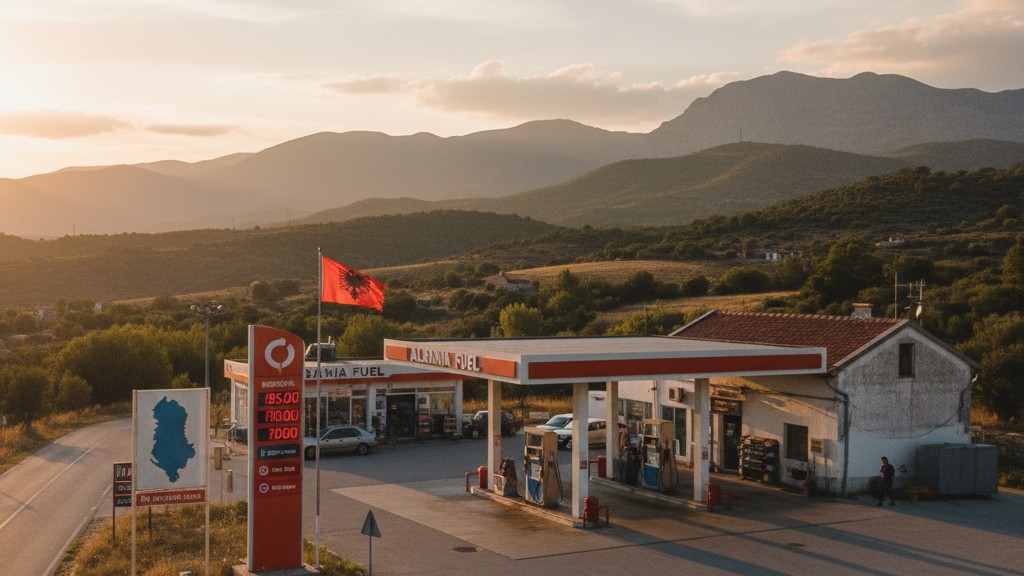
Albania's road network spans from the Adriatic coast through mountain passes to remote highland villages, and understanding the fuel infrastructure is essential for planning road trips across the country. The fuel distribution system has modernized significantly since 2020, with international chains and local operators competing across 300+ stations nationwide. For drivers picking up rental cars at Tirana airport or exploring the Albanian Riviera, knowing where to refuel and how to budget for fuel costs directly impacts trip planning and daily expenses.
This guide covers the current state of gas stations in Albania, regional availability patterns, pricing dynamics, fuel quality standards, payment methods, and practical strategies for efficient refueling during your journey. Whether you're driving the 140 km coastal route from Durres to Saranda or navigating mountain roads to Theth, fuel planning ensures you never run on empty in remote areas.
Gas Station Network and Geographic Distribution
Albania operates approximately 320 gas stations as of 2026, concentrated heavily in urban corridors and along major highways. Tirana municipality alone accounts for 45 stations, followed by Durres with 28 and Vlora with 22. The SH1 highway connecting Tirana to Kosovo maintains stations every 20-30 km on average, while the coastal SH8 corridor between Vlora and Saranda offers refueling points at Himara, Borsh, and Lukova despite longer gaps in mountainous sections.
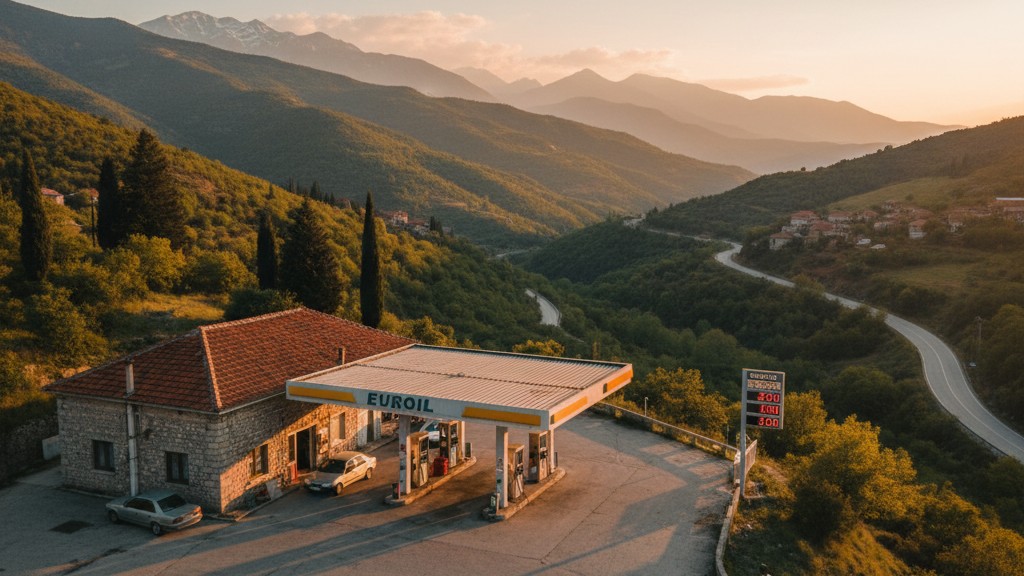
Major fuel retailers include Kastrati, Taras, Shell Albania, Total Energies, and EuroOil. Kastrati operates the largest network with 65+ stations nationwide, combining highway service areas with urban locations. International brands Shell and Total provide standardized quality assurance and credit card acceptance at their 40 combined locations, primarily in Tirana, Durres, Vlora, and Shkodra. Independent operators dominate rural areas, where smaller stations serve local traffic in towns like Korca, Permet, and Kukes.
Geographic distribution creates distinct patterns. The Tirana-Durres corridor maintains high station density with options every 5-8 km, while the mountainous northeast region between Peshkopi and Kukes shows gaps exceeding 50 km. The newly upgraded A1 toll highway from Tirana to Morine features three modern service areas at Milot, Rreshen, and Kalimash, each with fuel pumps, restrooms, and cafes. Drivers heading to Theth National Park must refuel in Shkodra, as the final 70 km gravel road offers no fuel services.
Fuel Types, Quality Standards, and Octane Ratings
Albanian gas stations offer three primary fuel categories: benzine (gasoline), diesel, and LPG (liquefied petroleum gas). Benzine comes in two octane ratings - 95 RON (standard) and 98 RON (premium), with 95 RON accounting for 85% of gasoline sales. The 98 RON premium fuel costs 10-15 Albanian lek more per liter and is recommended for high-performance vehicles or newer models with turbochargers, though most rental cars run efficiently on standard 95 RON fuel.
Diesel fuel dominates commercial and SUV markets, representing 60% of total fuel consumption in Albania. Modern diesel engines in rental vehicles like the Dacia Duster or VW Tiguan achieve 6-7 liters per 100 km on highway driving, making diesel economically favorable for long-distance trips despite slightly higher per-liter prices than gasoline. Euro 5 diesel standards became mandatory in 2024, improving air quality and ensuring compatibility with newer European vehicle emissions systems.
LPG infrastructure expanded to 45 stations by 2026, concentrated in Tirana, Durres, Fier, and Elbasan. LPG costs approximately 40% less than gasoline per liter but delivers lower energy density, requiring more frequent refueling. Rental companies rarely offer LPG-converted vehicles, making this option relevant primarily for visitors with personal vehicles or long-term renters considering conversion. The Albanian government incentivized LPG adoption through reduced taxation, positioning it as a budget-conscious alternative for drivers covering high annual mileage.
Planning a road trip across Albania? Compare fuel-efficient compact cars and SUVs to match your route demands and optimize fuel budgets for mountain and coastal driving.
Current Fuel Prices and Pricing Dynamics
Fuel prices in Albania fluctuate weekly based on global crude oil markets, the euro-lek exchange rate, and domestic tax policies. As of July 2026, average prices at Tirana stations range 173-178 Albanian lek per liter for 95 RON gasoline, 178-183 lek per liter for diesel, and 98-102 lek per liter for LPG. Regional price variations exist, with coastal resort areas like Saranda and Ksamil charging 5-8 lek more per liter during June-August peak season, while rural stations in Korca or Permet may undercut urban prices by 3-5 lek due to lower operating costs.
The Albanian government maintains an excise tax structure accounting for approximately 50 lek per liter on gasoline and 48 lek on diesel, plus 20% VAT on the final retail price. This taxation framework positions Albania's fuel prices in the lower-middle range among Balkan nations - cheaper than Greece and Croatia but higher than North Macedonia and Kosovo. International oil price shocks translate to Albanian pump prices within 7-10 days, with independent stations adjusting faster than major chains that hedge fuel purchases.
| Fuel Type | Price Range (Lek/Liter) | Price Range (EUR/Liter) | Typical Consumption (100km) |
|---|---|---|---|
| Benzine 95 RON | 173-178 | 1.50-1.55 | 6-8 liters |
| Benzine 98 RON | 188-193 | 1.63-1.68 | 6-8 liters |
| Diesel | 178-183 | 1.55-1.59 | 5-7 liters |
| LPG | 98-102 | 0.85-0.89 | 8-10 liters |
Fuel price tracking apps like FuelMap Albania and Benzina provide real-time crowdsourced pricing data, allowing drivers to identify the cheapest stations along planned routes. Price differences between competing stations in the same area rarely exceed 3-4 lek per liter, but savings accumulate over a week-long rental with 800+ km driven. Kastrati and Taras frequently run promotional discounts of 5 lek per liter when purchasing 40+ liters, advertised through roadside signage and mobile apps.
Payment Methods and Operational Hours
Credit and debit card acceptance varies significantly by station type and location. Major chains like Shell, Total, and Kastrati accept Visa and Mastercard at 95% of their locations, with contactless payment available at newer stations installed after 2023. Independent rural stations remain predominantly cash-only, particularly in mountainous regions where payment terminal connectivity proves unreliable. Drivers should carry at least 5,000 Albanian lek in cash when traveling outside Tirana-Durres-Vlora urban triangle.
Self-service pumps exist at approximately 40% of Albanian gas stations, most commonly at major chain locations in cities. The majority still operate with attendant service, where drivers remain in vehicles while staff pump fuel and collect payment. Tipping attendants is not customary, though rounding up to the nearest 10 or 20 lek is appreciated when receiving additional services like windshield cleaning or tire pressure checks.
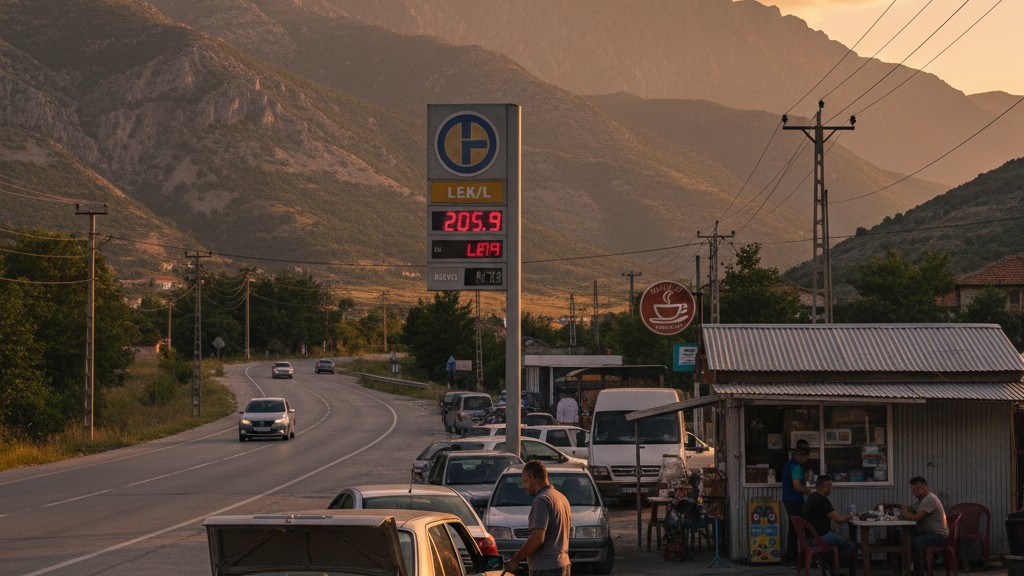
Operating hours follow regional patterns. Urban Tirana and Durres stations increasingly offer 24-hour service, with approximately 25 round-the-clock locations serving night traffic and airport transfers. Highway service areas on A1 and major national roads operate 24 hours during summer months (May-September) but may reduce to 06:00-23:00 during winter. Rural stations typically operate 07:00-21:00, closing earlier on Sundays. The Kastrati app and Google Maps indicate operating hours, though calling ahead is advisable when planning late-evening refueling in smaller towns.
Refueling Strategies for Road Trip Planning
Strategic fuel management prevents range anxiety on Albanian mountain roads and remote coastal sections. The golden rule: refuel when your tank reaches half-full rather than waiting for the low-fuel warning light, especially before entering areas with known station gaps. The 70 km Theth access road from Shkodra offers no fuel services, making a full tank mandatory before departure. Similarly, the scenic but isolated road from Permet to Leskovik via Benca Pass requires refueling in Permet, as the next station lies 55 km away.
Highway versus city refueling economics favor planning. Highway service area prices average 4-6 lek higher per liter than urban stations due to convenience premiums, meaning drivers save 200-300 lek by refueling in Durres center before joining the coastal highway rather than stopping at the Lezhe service area. Exception: when time-pressed or traveling with limited cash reserves, highway stations offer predictability and card payment reliability that remote rural stations cannot guarantee.
Rental car fuel policies require attention. Most Albanian rental companies operate full-to-full policies, delivering vehicles with full tanks and expecting full returns. Document the fuel gauge level with photos at pickup to avoid disputes, and allow 15 minutes before airport drop-off to refuel at the Shell station on Rruga e Durresit, 3 km from Tirana International Airport. Returning a car empty triggers refueling charges of 250-300 lek per liter, triple the market rate, making that final fill-up economically essential.
Fuel Consumption Factors on Albanian Roads
Terrain dramatically impacts fuel efficiency across Albania's diverse geography. A Volkswagen Golf averages 6.5 liters per 100 km on the flat Tirana-Durres highway but climbs to 9-10 liters per 100 km on the serpentine Llogara Pass road between Vlora and Himara, where constant gear changes and elevation gains of 1,000+ meters demand higher engine loads. Four-wheel-drive SUVs fare worse, with a Dacia Duster consuming 8 liters per 100 km on highways but 12-14 liters when navigating the gravel roads to Theth or Valbona.
Driving behavior significantly influences consumption. Albanian roads feature frequent hairpin turns, steep grades, and variable surfaces that reward smooth acceleration and anticipatory braking. Using lower gears on descents rather than riding brakes reduces fuel waste, while maintaining steady 80-90 km/h speeds on highways optimizes efficiency compared to 110 km/h bursts. Air conditioning adds 8-12% to fuel consumption, a consideration during 35-degree July afternoons but less impactful during mild spring and autumn months.
Vehicle selection for rental impacts trip fuel budgets substantially. A compact car like the Hyundai i10 achieves 5.5-6.5 liters per 100 km even on mixed terrain, consuming 55-65 liters for a 1,000 km week-long tour costing approximately 10,000 lek. By contrast, a Suzuki Vitara SUV burns 7.5-9 liters per 100 km under identical conditions, requiring 75-90 liters and costing 13,500 lek. The 3,500 lek difference offsets the SUV's ground clearance advantage unless your route specifically demands it for gravel roads or winter driving.
Regional Refueling Guides for Popular Routes
The Albanian Riviera coastal route from Vlora to Saranda spans 140 km with strategic refueling points determining range security. Stations exist in Vlora, Orikum, Dhermi, Himara, Borsh, Lukova, and Saranda, but the 45 km stretch from Himara to Lukova via Qeparo offers no services. Fill up in Himara before continuing south, especially if planning detours to Gjipe Beach or Porto Palermo requiring 20+ km additional driving on rough coastal access roads.
The mountain loop through Theth and Valbona demands meticulous planning. Refuel in Shkodra before the 70 km dirt road to Theth, where no fuel exists. The hiking trail to Valbona provides no motorized access, requiring return via the same route or a 180 km detour through Fierza and Bajram Curri. The Bajram Curri stations offer final refueling before the 35 km access road to Valbona, with no services until returning to Bajram Curri or continuing 110 km to Kukes.
The southern interior route from Tirana to Gjirokaster via Berat and Permet totals 310 km with ample refueling opportunities. Major stations operate in Berat (12 stations), Corovoda (3 stations), Permet (4 stations), and Gjirokaster (8 stations), with typical gaps of 30-40 km. The exception occurs on the Kelcyra Gorge road section between Permet and Gjirokaster, where a 65 km stretch offers only one small station at Libohova that sometimes experiences supply interruptions during winter months.
Is premium 98 RON fuel worth the extra cost?
For most rental cars in Albania, 95 RON standard gasoline provides adequate octane rating and engine performance. Premium 98 RON fuel costs 10-15 lek more per liter, adding 500-700 lek to a typical week-long rental's fuel expenses without measurable benefits in normally-aspirated economy engines. However, turbocharged vehicles or high-compression engines specifically requiring 98 RON (check the fuel cap label) benefit from reduced engine knock and optimal combustion efficiency. When in doubt, follow the rental car manual recommendation, which for 90% of Albanian rental fleet vehicles specifies 95 RON as sufficient.
How do I locate the nearest gas station in unfamiliar areas?
Google Maps provides the most reliable real-time gas station locations across Albania, with data regularly updated and user photos confirming operational status. Search "gas station" or "benzinare" (Albanian term) to display nearby options with distances, operating hours, and user ratings. Offline maps downloaded before your trip prove essential in mountain areas with limited mobile coverage. Local residents reliably provide directions when asked "Ku eshte benzinarja me e afer?" (Where is the nearest gas station?), though expect responses in kilometers rather than minutes given varying road conditions.
Can I refuel rental cars at any station or are there restrictions?
Albanian rental companies impose no restrictions on which gas stations you may use for refueling. Choose stations based on convenience, price, and payment method acceptance. However, always verify you're selecting the correct fuel type - petrol engines require benzine (gasoline), while diesel vehicles display clear "DIESEL" labels near the fuel cap. Misfueling triggers expensive mechanical damage and violates rental contracts, potentially leaving you liable for repair costs exceeding 2,000 EUR. When uncertain, ask the attendant to verify fuel type before pumping begins.
What should I do if I run out of fuel on a remote Albanian road?
Running out of fuel on Albanian mountain roads requires roadside assistance, as hitchhiking with fuel containers is impractical and potentially unsafe. Most rental contracts include roadside assistance contact numbers provided at pickup - call immediately and provide your GPS coordinates or nearby landmark descriptions. Response times vary from 45 minutes in accessible areas to 3+ hours in mountain regions. Preventive strategy: maintain your tank above half-full when traveling through areas with known 50+ km station gaps, carry the roadside assistance number in your phone, and inform someone of your route and expected arrival time when driving remote stretches.
How much should I budget for fuel costs during a week-long Albania road trip?
A typical week-long Albania road trip covering 800-1,000 km in a compact rental car consuming 7 liters per 100 km requires 56-70 liters of fuel at approximately 175 lek per liter, totaling 9,800-12,250 Albanian lek (85-105 EUR). SUVs or extensive mountain driving increases consumption to 9 liters per 100 km, raising budgets to 72-90 liters and 12,600-15,750 lek (110-135 EUR). Include a 10% buffer for detours, traffic delays, and air conditioning use during summer months. Drivers prioritizing fuel economy should select diesel engines for long-distance coastal routes or compact petrol cars for urban-centered itineraries.