Albania's Airports: Your Complete Guide to Air Travel in the Land of Eagles
Albania, a hidden gem nestled in the Balkans, has witnessed remarkable growth in tourism over recent years. With dramatic coastlines along the Adriatic and Ionian seas, ancient archaeological sites, and the rugged Albanian Alps, this country offers experiences that rival its more famous Mediterranean neighbors. Understanding Albania's aviation infrastructure is essential for planning your journey, whether you're arriving for a beach resort vacation or exploring the northern highlands.
The country's airport network has evolved significantly since 2023, adapting to accommodate growing visitor numbers while maintaining the accessibility that makes Albania such an attractive destination. This guide covers every major aviation facility in Albania, from the bustling international hub at Tirana to smaller domestic airports and facilities under development.
Tirana International Airport Nene Tereza: Albania's Main Gateway
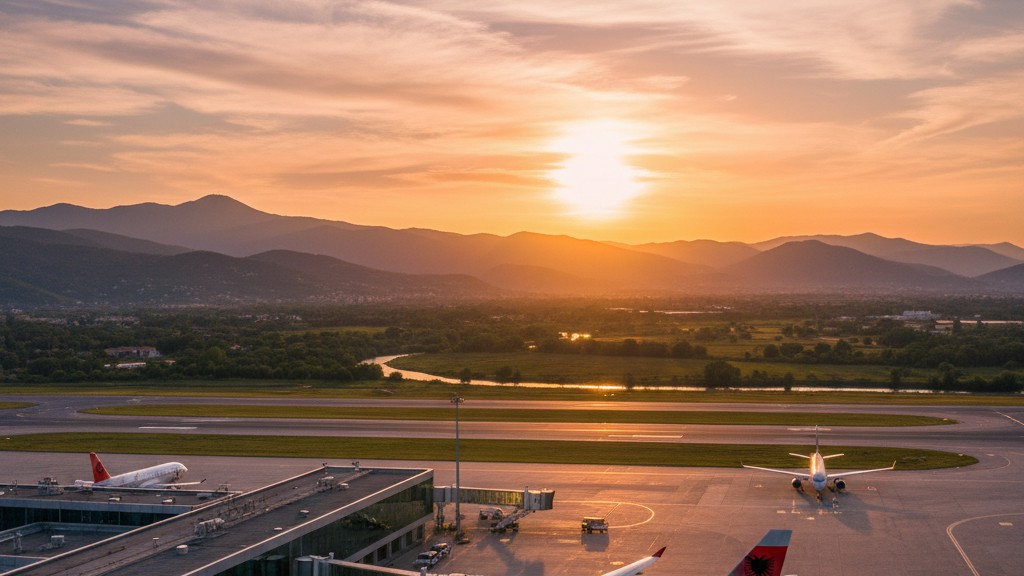
Located 17 kilometers northwest of Tirana in the Rinas area, Tirana International Airport (IATA code TIA) stands as Albania's principal aviation facility and the arrival point for the vast majority of international visitors. Named after Mother Teresa, the ethnic Albanian nun and Nobel Peace Prize laureate, the airport processed over 3.5 million passengers in 2023 and has continued expanding its capacity and route network.
The single terminal building underwent significant modernization in recent years, incorporating expanded immigration facilities, additional security lanes, and improved passenger amenities. TIA operates flights to over 50 destinations across Europe, with particularly strong connectivity to Italy, Greece, Turkey, Germany, and the United Kingdom. Low-cost carriers including Wizz Air, Ryanair, and easyJet provide budget-friendly connections, while legacy carriers such as Austrian Airlines, Lufthansa, and Turkish Airlines offer full-service options.
The airport's modern facilities include duty-free shopping areas featuring local Albanian products alongside international brands, several restaurants and cafes serving both Western and traditional Albanian cuisine, and comfortable lounges for business travelers. Currency exchange counters and ATMs are readily available throughout the terminal. Free WiFi covers the entire passenger area, and charging stations are positioned near gate seating areas.
Ground transportation from TIA connects efficiently to Tirana city center and beyond. The Rinas Express bus service operates every 30-60 minutes depending on season, with the journey taking approximately 25 minutes to Skanderbeg Square in downtown Tirana. Taxis are readily available outside the arrivals hall, with the ride to central Tirana typically costing 20-25 EUR using metered service. For travelers planning to explore beyond the capital, car rental services at Tirana Airport offer immediate vehicle collection upon arrival, allowing you to begin your Albanian adventure directly from the airport.
Tirana Airport Park: Private Aviation Facility
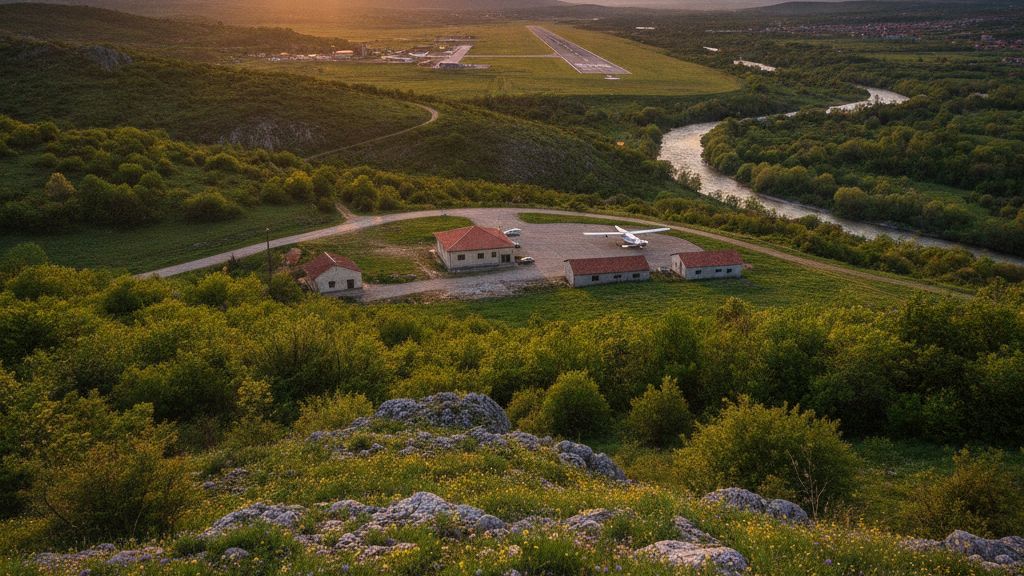
Adjacent to the main terminal complex, Tirana Airport Park (TIA-P) functions as Albania's dedicated facility for business aviation, private jets, and charter operations. This specialized terminal provides discrete, expedited handling for private aircraft passengers, with separate customs and immigration processing that reduces ground time significantly compared to commercial operations.
The facility accommodates aircraft ranging from light jets to large business aircraft, with dedicated hangar space, fueling services, and comprehensive maintenance capabilities. TIA-P has witnessed steady growth since its establishment, reflecting Albania's increasing integration into European business networks and the country's growing appeal as a destination for high-net-worth travelers. The facility coordinates with the main airport's air traffic control while maintaining its own dedicated ramp area and passenger services.
For travelers arriving via private aviation, ground transportation arrangements can be made in advance, including premium car rental in Tirana with delivery directly to the TIA-P terminal. This seamless transition from aircraft to road vehicle exemplifies the efficiency that makes Albania increasingly attractive for business travel.
Kukes Airport Zayed: Northern Albania's Domestic Hub
Situated in Albania's northeastern highlands approximately 5 kilometers from Kukes city, Kukes Airport Zayed (IATA code KUK) serves primarily as a domestic facility connecting this mountainous region with other parts of the country. The airport takes its name from Sheikh Zayed bin Sultan Al Nahyan, former president of the United Arab Emirates, reflecting the UAE's investment in Albanian infrastructure development.
The airport features a single runway measuring 2,300 meters in length, adequate for regional turboprop aircraft and small jets. While commercial scheduled service has been intermittent since the airport's opening, the facility remains operational and occasionally handles charter flights, particularly during summer months when tourism to the Albanian Alps peaks. The airport also serves general aviation and maintains capabilities for emergency medical flights.
Kukes itself sits along the main road corridor connecting Albania to Kosovo, making it a strategic location for air service. The region surrounding Kukes offers access to Lake Fierza, one of Albania's largest artificial lakes, and serves as a gateway to the Valbona Valley National Park. Visitors arriving at Kukes typically arrange ground transportation in advance, as public transport connections are less frequent than at TIA.
Planning to explore Albania's northern highlands? Rent a suitable vehicle in Shkoder to navigate mountain roads safely, or consider a 4x4 for remote areas like Theth and Valbona where standard sedans struggle with unpaved tracks.
Korce Northwest Airport: Southeastern Gateway
Located in Albania's southeastern corner near the city of Korce, approximately 3 kilometers from the city center, Korce Northwest Airport (IATA code not assigned) serves the region known for its rich cultural heritage, distinctive local cuisine, and proximity to both North Macedonia and Greece. The city of Korce sits at an elevation of approximately 850 meters above sea level on a plateau surrounded by mountains, creating unique meteorological considerations for aviation operations.
The airport currently operates with limited commercial service, primarily handling general aviation, agricultural flights, and occasional charter operations. The runway measures approximately 1,800 meters, suitable for smaller aircraft types. Korce's strategic location makes it theoretically attractive for future development, particularly given the region's growing tourism sector and its historical significance as one of Albania's most important cultural centers.
The surrounding region offers compelling reasons for visitors to explore southeastern Albania. Lake Prespa, one of Europe's oldest lakes, lies nearby and hosts important wetland habitats. The city of Korce itself features Ottoman-era architecture, a renowned brewery producing Birra Korce, and museums documenting Albanian medieval art and local history. Winter brings skiing opportunities at nearby Bigell mountain, though facilities remain modest compared to more developed Alpine resorts.
Vlore International Airport: Southern Coast Development
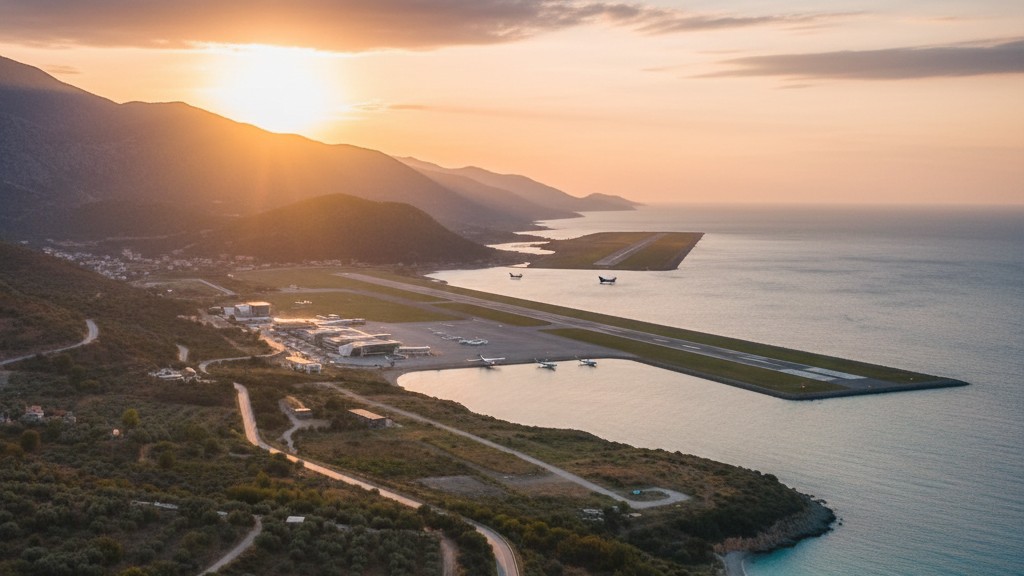
Perhaps the most anticipated aviation project in Albania's recent history, Vlore International Airport represents a significant infrastructure investment aimed at boosting tourism along the southern Albanian Riviera. Located near the coastal city of Vlore in the Akerni area, approximately 10 kilometers from the city center, this facility entered its development phase in the early 2020s with ambitious goals for transforming access to Albania's most celebrated coastline.
The planned airport design includes a terminal building capable of handling up to 3 million passengers annually in its initial phase, with expansion potential built into the master plan. The runway length specification of 3,000 meters will accommodate wide-body aircraft, enabling direct long-haul connections that could bring travelers from distant markets without requiring connections through larger European hubs. This capability positions Vlore as a potential game-changer for Albanian tourism, particularly for visitors targeting beach destinations like Saranda, Himara, and Ksamil.
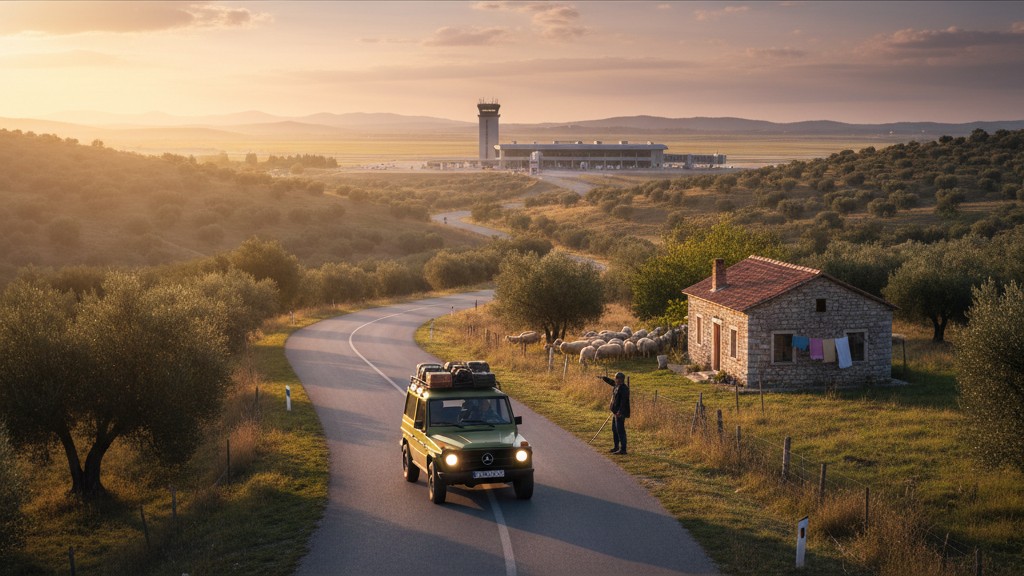
When operational, Vlore International Airport will dramatically reduce travel times for visitors heading to the Albanian Riviera. Currently, travelers flying into TIA face a 3-4 hour drive south along the SH4 and SH8 highways to reach southern coastal destinations. Vlore's location offers proximity to numerous high-demand tourist areas: the Llogara Pass and National Park lie just 30 kilometers south, Saranda sits approximately 100 kilometers distant, and the beaches of Dhermi and Himara fall within comfortable driving range. For travelers planning to explore Saranda by rental car, arriving at Vlore would eliminate several hours of highway driving.
The airport's development timeline has experienced adjustments, as is typical for major infrastructure projects, but progress continues with site preparation, runway construction, and terminal building work advancing through various phases. Local authorities project that the facility will significantly alter tourism patterns in southern Albania, potentially redistributing visitor flows and reducing pressure on northern regions while bringing economic development to communities along the southern coast.
Albania's Aviation Infrastructure: A Practical Comparison
| Airport | Location | IATA Code | International Service | Runway Length | Annual Capacity |
|---|---|---|---|---|---|
| Tirana International Nene Tereza | Rinas (near Tirana) | TIA | Yes, extensive European network | 2,750m | 3.5+ million passengers |
| Tirana Airport Park | Adjacent to TIA | TIA-P | Private/charter only | Shares TIA runway | N/A |
| Kukes Zayed | Kukes (northeast) | KUK | Occasional charters | 2,300m | Limited operations |
| Korce Northwest | Korce (southeast) | N/A | No scheduled service | 1,800m | Minimal operations |
| Vlore International | Vlore (southwest coast) | TBD | Planned international hub | 3,000m (planned) | 3 million (initial phase) |
Ground Transportation and Onward Travel from Albanian Airports
Efficient ground transportation from airports determines the success of your Albanian journey as much as the flight itself. While TIA offers the most developed infrastructure with regular bus service, taxis, and comprehensive car rental facilities, planning transportation from smaller airports requires advance coordination.
Car rental represents the most flexible option for exploring Albania beyond major cities. The country's road network has improved substantially, with the A1 highway connecting Tirana north to Kosovo providing modern expressway standards, and the SH8 coastal route offering spectacular scenery despite its narrower, windier character. Understanding Albanian driving conditions proves valuable, particularly regarding mountain roads, parking customs, and fuel availability in remote areas.
For visitors arriving at TIA with plans to explore multiple regions, collecting a rental vehicle immediately upon arrival maximizes flexibility. Most major car rental companies maintain counters at TIA, offering everything from compact economy cars suitable for city driving in Tirana to SUVs capable of handling the gravel roads leading to destinations like Theth in the Albanian Alps. Advance booking typically secures better rates and ensures vehicle availability, particularly during peak summer months from June through August when demand surges.
Travelers concerned about budget considerations will find that no-deposit car rental options in Tirana provide accessible entry points to self-drive Albanian exploration. These arrangements reduce the initial financial commitment required, making car rental feasible for a broader range of budgets while still delivering the freedom to travel at your own pace.
Seasonal Considerations and Flight Availability
Albania's aviation market exhibits pronounced seasonal variation, with summer months bringing peak flight frequencies and winter seeing reduced service. Understanding these patterns helps with planning, particularly if your travel dates offer flexibility or if you're targeting specific destinations during quieter periods.
Summer season, roughly spanning April through October, sees TIA operating at maximum capacity. Low-cost carriers add seasonal routes during these months, European leisure travelers fill flights heading to Albanian beaches, and diaspora Albanians return for summer visits. Booking advance becomes crucial during July and August, when both flights and rental cars face high demand. Flight prices typically peak during this period, though competition among carriers prevents extreme price inflation.
Winter presents a contrasting picture. While year-round routes to major European hubs continue operating, many seasonal routes suspend service. This creates both challenges and opportunities: fewer direct flight options may require connections, but lower fares and reduced tourist crowds make winter exploration appealing for travelers interested in Albanian culture, cuisine, and historical sites rather than beach activities. Coastal cities like Durres take on a different character in winter, with local life more visible once the summer tourist surge recedes.
Future Aviation Developments in Albania
Beyond Vlore International Airport, Albanian aviation authorities continue exploring options for enhancing connectivity. Discussions periodically surface regarding potential expansion or development at existing sites, upgrades to navigation and safety systems, and possibilities for additional international service.
The fundamental drivers behind these developments include Albania's sustained tourism growth, increasing business travel as the country integrates further into European economic networks, and infrastructure investment from both domestic and international sources. Each percentage point increase in tourist arrivals creates justification for enhanced aviation facilities, while improved air access itself stimulates additional tourist demand, creating a reinforcing cycle.
Regional factors also influence Albanian aviation development. Competition and coordination with neighboring countries' airports, particularly those in North Macedonia, Montenegro, and Kosovo, shape route development and pricing. Some travelers strategically choose airports in neighboring countries when fares or connections prove more favorable, then drive into Albania. The opening of Vlore International Airport may alter these calculations by providing competitive southern access.
Frequently Asked Questions
Which airport should international travelers use when visiting Albania for the first time?
Tirana International Airport Nene Tereza (TIA) serves as the primary and most practical choice for first-time visitors to Albania. It offers the widest selection of international connections, most frequent flight service, best ground transportation options, and immediate access to car rental facilities. Unless you have specific reasons to arrive elsewhere or are combining Albania with travel to neighboring countries, TIA provides the most straightforward entry point. Its location 17 kilometers from central Tirana means you can reach the capital quickly, or collect a rental vehicle and begin driving to other regions immediately.
How far in advance should I book flights to Albania during peak summer season?
For summer travel between June and August, booking flights 2-3 months in advance typically provides the best balance between fare availability and price. Waiting until the last minute often results in limited seat availability and higher prices, particularly on popular routes from major European cities. If your dates are completely fixed, booking even earlier causes no harm. Conversely, shoulder season travel in April-May or September-October offers more flexibility, with reasonable fares often available even 3-4 weeks before departure. Winter flights to Albania generally show the most flexible pricing and availability.
Can I fly directly to southern Albanian beach destinations like Saranda?
As of 2026, no commercial airport serves Saranda or the immediate southern coastal region directly. All visitors to the Albanian Riviera currently fly into Tirana International Airport, then travel south by road, which takes 3-4 hours to reach Saranda. This situation will change once Vlore International Airport becomes operational, significantly reducing travel time to southern coastal destinations. Until then, most travelers either drive themselves in rental vehicles or arrange private transfers. The drive itself offers spectacular scenery, particularly the section crossing Llogara Pass, making the journey part of the Albanian experience rather than merely a necessary connection.
What ground transportation options connect Tirana Airport to downtown Tirana?
Three main options serve the TIA-to-Tirana route. The Rinas Express bus operates every 30-60 minutes depending on time of day, costs approximately 300-400 lek, and stops at Skanderbeg Square in central Tirana with the journey taking about 25 minutes. Licensed taxis charge 20-25 EUR for the same trip using metered service. Finally, car rental services located at the airport allow immediate vehicle collection, ideal if you plan to explore beyond Tirana. Private transfers can be pre-arranged through hotels or transfer services, offering fixed pricing and reduced waiting time. During rush hours, add 10-15 minutes to journey times due to Tirana traffic congestion.
Does Tirana Airport operate 24 hours or have night flight restrictions?
Tirana International Airport operates 24 hours per day without night flight curfews, though flight activity peaks during daytime hours. Early morning departures around 6-7 AM are common, particularly for low-cost carriers optimizing aircraft utilization. Late evening arrivals typically land by 11 PM-midnight. Red-eye flights remain rare on European routes given the short flight distances involved. The 24-hour operation means that facilities including currency exchange and some food service remain available outside normal business hours, though options are more limited during overnight periods. Car rental desks typically staff only during peak arrival times, so if you have a late arrival and plan to collect a rental vehicle, confirm desk operating hours in advance.
Are there direct flights from North America to Albania?
No direct flights currently operate between North American airports and Albania. Travelers from the United States or Canada must connect through European hubs, with common routing options including Istanbul (Turkish Airlines), Vienna (Austrian Airlines), Frankfurt (Lufthansa), or Rome (ITA Airways). Some travelers find it economical to book separate tickets to a major European city, spend a night or two there, then continue to Tirana on a low-cost carrier. This approach adds flexibility and potentially reduces overall costs, though it requires managing two separate bookings and collecting baggage at the intermediate point.
Can I rent a car immediately upon arrival at Tirana Airport?
Yes, several international and local car rental companies operate counters at Tirana International Airport, allowing immediate vehicle collection upon arrival. Advance booking typically ensures better rates and vehicle availability, particularly during summer peak season. Counters are located in the arrivals hall, and vehicle parking sits nearby, making the collection process straightforward. If you plan to collect a rental car at TIA, ensure you carry the required documents: a valid driving license held for at least one year, passport, and a credit card for the refundable security authorization. International driving permits are recommended though not strictly mandatory for EU and US license holders, but they help if you encounter police checks or language barriers.
Conclusion: Planning Your Albanian Arrival
Albania's airport infrastructure, while more limited than that of larger European countries, adequately serves current demand while expanding to meet future growth. Tirana International Airport functions effectively as the country's primary gateway, offering reliable connections, modern facilities, and efficient ground transportation options. The planned addition of Vlore International Airport promises to transform access to southern coastal regions, potentially altering visitor patterns and spreading tourism benefits more widely across the country.
For practical purposes, most international visitors will arrive at TIA and should plan accordingly. Whether you choose bus service into Tirana, a taxi to your hotel, or immediate car rental collection at the airport, the process remains straightforward. Albania's compact size means that even with a single primary international airport, the entire country remains accessible for exploration. The drive from TIA to the furthest corners of Albania takes at most 4-5 hours, making day-of-arrival drives to distant destinations feasible if you have energy after your flight.
As Albanian tourism continues its upward trajectory, expect ongoing enhancements to aviation infrastructure. Each year brings new routes, increased frequencies on popular connections, and gradual improvements to passenger facilities. For travelers discovering Albania in 2026 and beyond, these developments promise increasingly convenient access to one of Europe's most compelling and underrated destinations.